






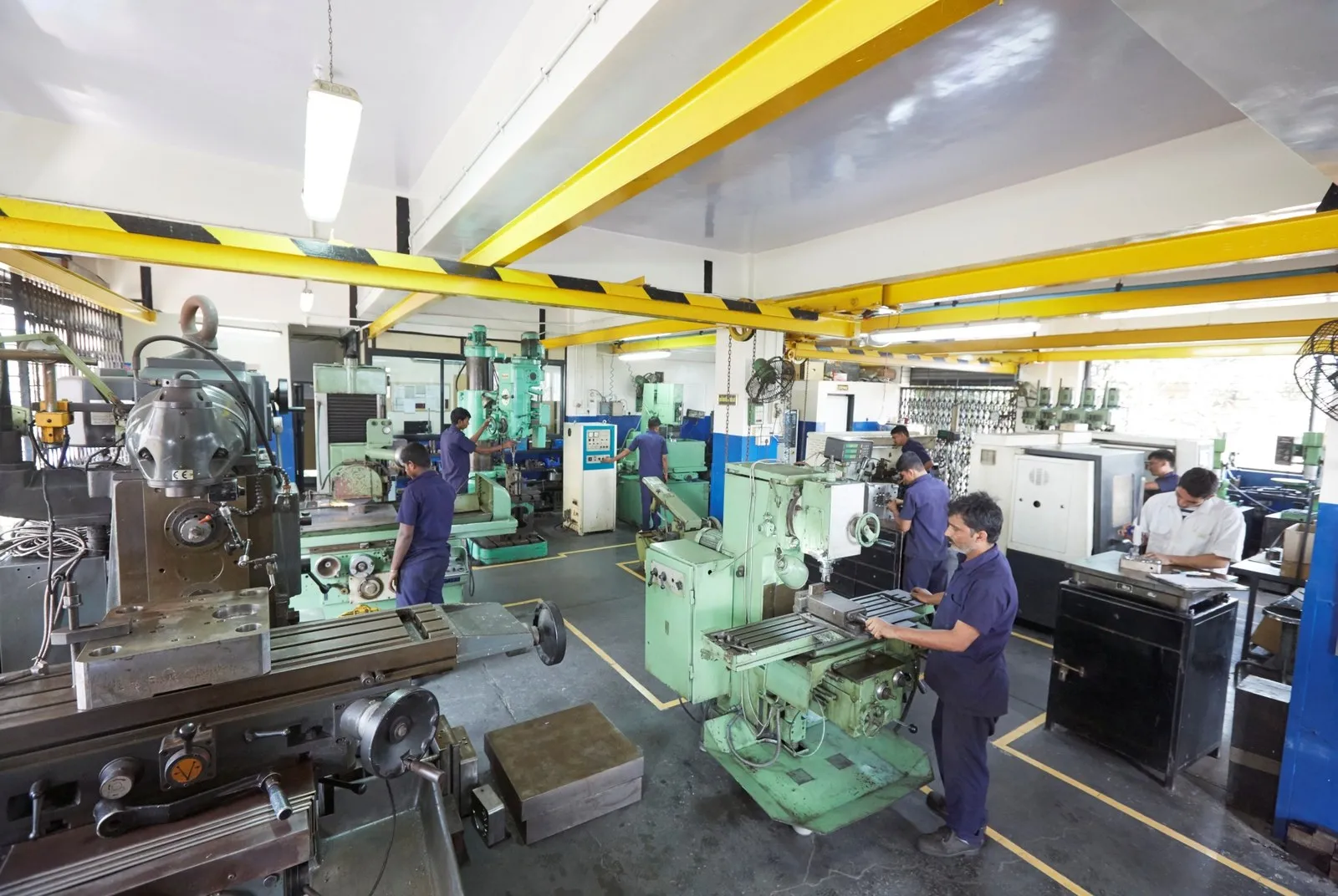

A special purpose injection moulding machine is a machine built or modified around one product, process or mould, rather than a wide range of general jobs. Think of it as a custom-built injection moulding machine on a standard base. One or more of its systems is changed: the clamp (opening stroke, daylight, platen size or tie-bar gap), the injection unit (pressure, speed, screw and barrel), mould handling (shuttle or rotary tables, core pulls) or the automation around it. The aim is to make a part that a standard machine cannot make well, or cannot make at the output you need.
Key Takeaways
- A special purpose machine keeps the basic injection moulding principle but changes the clamp, injection unit, screw, mould handling or automation for one job.
- Deep parts are a common reason: opening stroke should be at least 2.5 times part height, and daylight must clear the mould plus that stroke.
- Toggle and two-platen clamps handle stroke differently. On a two-platen clamp, the stroke shrinks as mould height grows.
- Change only the systems the part needs. Each special feature adds spares to stock and settings for your team to learn.
What makes a custom-built injection moulding machine different?
It differs in one or more systems sized for a specific part. The frame, hydraulics or drives and controls may be standard, while the clamp opening, platen size, injection pressure and speed, screw design, barrel materials or loading tables are changed to suit the product and mould.
Systems that a special purpose machine may change, and why
| System | Typical change | What drives it |
|---|---|---|
| Clamp opening and daylight | Longer stroke, more daylight | Deep parts such as buckets and battery containers |
| Platens and tie-bar gap | Larger platens, wider gap | Large or wide moulds on modest clamp force |
| Injection unit | Higher pressure and speed | Thin-wall packaging, long flow lengths |
| Screw and barrel | Different compression ratio, corrosion-resistant materials | PVC, PET and other demanding resins |
| Mould handling | Shuttle or rotary tables, core pulls | Insert moulding, side actions |
| Controls and automation | Robots, sensors, vision checks | Insert verification, part handling |
Each row is a separate decision. A buyer moulding deep containers may need only a longer stroke. A buyer moulding thin-wall cups may need a faster, higher-pressure injection unit and nothing else. The blog on when a moulder needs a special purpose machine, in this series, covers how to tell which change your part calls for.
How do stroke and daylight limit a standard machine?
The mould must open far enough to release the part. Guidance puts opening stroke at no less than 2.5 times part height. Daylight, the largest gap between platens, must hold the mould plus that stroke. Deep parts can run out of daylight long before they run out of clamp force.
Toggle and two-platen clamps behave differently here. On a toggle, maximum daylight equals maximum shut height plus stroke, so the full stroke is available at every mould height. On a two-platen or piston clamp, the opening available is maximum daylight minus mould height, so stroke falls as the mould gets taller.
The clamp type can itself be the special feature. Two-platen clamps with hydromechanical locking use split nuts to lock the moving platen and short-stroke cylinders to build tonnage, and they make the machine shorter overall than a toggle of similar size. Direct hydraulic clamping is reported to give finer pressure control and a wider die-height range, while toggles are reported to lock slightly faster and open with more force for deep-draw parts.
Mould size matters in both directions. The parts must sit inside the tie bars, because platens can pull in near the tie bars and wear the parting line. A rule of thumb asks the mould to cover at least 70% of the tie-bar gap; a much smaller mould can let the platens bow under clamp and flash in the centre.
So a deep, narrow mould can need more opening than a standard machine of the right tonnage offers, and a wide, shallow mould can need a bigger tie-bar gap. Both are typical starting points for a special purpose build.
Lead-acid battery containers show the deep-part case. In India they are covered by IS 1146:2026, which applies to single-cell and monobloc rubber and plastics containers for all types of lead-acid batteries. A tall monobloc container with deep cell walls can need a long opening stroke well before it needs a big clamp.
Is a special purpose machine a new design or a modified standard one?
It can be either. A modified standard machine keeps most parts common with the base model, which helps spares and service. A fresh design suits parts that sit outside every standard frame. The right choice depends on how far the part pushes beyond the base machine.
Safety does not change with the purpose. ISO 20430:2020 sets safety requirements for the design and construction of injection moulding machines with hydraulic or electric platen drives, and a longer stroke, a wider platen or an added table changes the guarded area. Ask how the modified machine is guarded and checked.
Our view: change the fewest systems the part needs. Every special feature is a spare part you must stock and a setting your team must learn, so a machine that is special in one place is easier to own than one that is special everywhere.
What should you measure before asking about a special purpose machine?
Measure the part height, the mould height, width and thickness, and the ejector stroke the part needs. Add the material, cavities and target output. With these, stroke, daylight, tie-bar gap and clamp can be worked out. See the special purpose injection moulding machine range for the next step.
Frequently Asked Questions About Special Purpose Injection Moulding Machines
Is a special purpose machine the same as an SPM?
SPM is short for special purpose machine, a machine built for one job rather than many. A special purpose injection moulding machine is the moulding version of that idea: an injection machine with its clamp, injection unit, tables or automation changed to suit one part, process or mould.
What is daylight on an injection moulding machine?
Daylight is the largest distance between the fixed and moving platens when the clamp is fully open. It must hold the mould plus the opening stroke the part needs. On a toggle clamp it equals maximum shut height plus stroke; on a two-platen clamp the usable opening falls as mould height rises.
How much opening stroke does a deep part need?
Guidance puts the opening stroke at no less than 2.5 times the part height, so a 200 mm deep part needs about 500 mm of opening. Ejector travel, robot access and any core pulls can add to that, so check the full sequence with your mould maker.
Can a standard machine take a mould larger than its tie-bar gap?
Only if the mould is designed to pass the tie bars and the projected area of the parts sits fully inside them. Platens can pull in near the tie bars and wear the parting line, so a mould that overhangs the tie bars needs a careful check before it runs.
Does a special purpose machine need different safety checks?
The same machine safety standard applies. ISO 20430:2020 covers safety requirements for injection moulding machines with hydraulic or electric platen drives. Longer strokes, wider platens or added tables change the guarded area, so ask how guards and interlocks were designed and tested for the modified machine.
Related Articles
- When Does a Moulder Need a Special Purpose Machine?
- Special Purpose vs Standard Injection Moulding Machines
- Important Details to Share Before Specifying a Special Purpose Machine
- Applications of Special Purpose Injection Moulding Machines
Sources & References
- MoldMaking Technology, B. Catoen: Machine Sizing and Specification for Optimal Mold Performance, Part 1 (Aug 2025)
- Plastics Technology, P. Witaszek, J. Klees, J. Fattori, E. Di Siro, J. Bozzelli: How to Mount an Injection Mold (June 2017)
- BIS: Know Your Standards: IS 1146:2026 Rubber and Plastics Containers for Lead-Acid Storage Batteries
- ISO: ISO 20430:2020 Plastics and rubber machines: Injection moulding machines: Safety requirements
Technical Disclaimer
Disclaimer: The information provided in this document is for general informational and educational purposes only. It is based on technical references and industry information available at the time of preparation and may be subject to change. It does not constitute engineering, technical, commercial or professional advice, nor does it constitute a quotation, specification, warranty or contractual commitment by Pratishna Engineers.
Actual injection moulding machine and process requirements vary according to the component design, material, mould, production volume, machine configuration and operating conditions. The information, examples, calculations and recommendations provided should be independently evaluated and verified for the specific application before making any equipment, process or production decision. Information obtained from third-party sources remains subject to the accuracy and limitations of those sources.
Limitation of Liability: Pratishna Engineers makes no representation or warranty, express or implied, regarding the completeness, accuracy or suitability of the information for any particular application. To the extent permitted by applicable law, Pratishna Engineers shall not be liable for any loss, damage, cost or consequence arising from reliance on or use of the information contained in this document. Final machine selection, configuration and application suitability should be confirmed with Pratishna Engineers based on complete and accurate project requirements.

