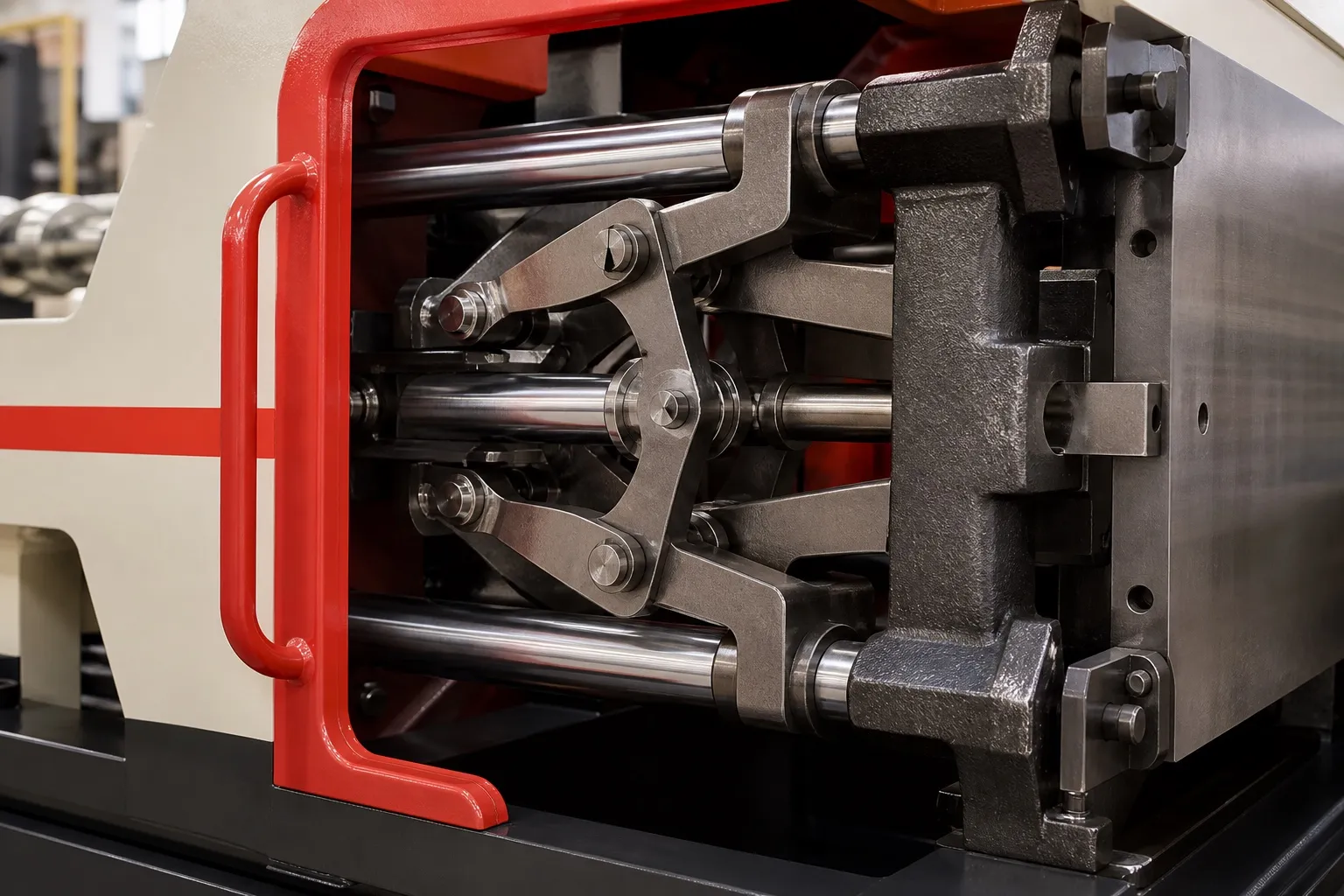
India's recycled content rules for PET bottles come from two places. The Plastic Waste Management (PWM) rules set the share: rigid plastic packaging must contain at least 30% recycled material in 2025-26, rising to 60% by 2028-29. FSSAI decides which recycled PET may touch food or drink: only resin from approved recycling processes that include a decontamination step. For the preform moulder, this means more rPET in the hopper, tighter drying, an IV check on every lot and records that support the share printed on the label.
Key Takeaways
- Rigid plastic packaging, which covers PET bottles, must carry at least 30% recycled material in 2025-26, rising to 60% by 2028-29.
- Food and beverage bottles can use only food-contact rPET from FSSAI-approved recycling processes with a decontamination step.
- rPET has extra heat history, so moisture, drying temperature and residence time decide whether preforms hold their IV.
- Labels must declare the rPET share, so blend ratios and resin lots need a record that links them to preform batches.
What do the recycled content rules for PET bottles require?
Under the PWM (Amendment) Rules notified on 31 March 2026, rigid plastic packaging (Category I) must contain at least 30% recycled material in 2025-26, rising to 60% by 2028-29. Shortfalls for 2025-26 can be carried forward for up to three years, and reuse targets now apply too.
Exemptions apply where FSSAI and similar rules restrict recycled content, and penalties range from ₹10,000 to ₹15,00,000. Flexible packaging (Category II) and multilayer packaging (Category III) carry lower targets, so pouches and multilayer packs sit under different numbers from the bottle itself.
The targets are written for the packaging, but the preform moulder is where the percentage becomes physical. It is set at the hopper, blend by blend, and it has to be the same on the night shift as on the day shift.
Rules a PET bottle moulder should know
| Rule | What it sets | What it means at the press |
|---|---|---|
| PWM (Amendment) Rules, notified 31 March 2026 | Category I rigid packaging: at least 30% recycled material in 2025-26, rising to 60% by 2028-29; 2025-26 shortfall can be carried forward up to three years | Blend ratio rises year by year; plan rPET supply, dosing and dryer capacity ahead |
| FSSAI Packaging Regulations amendment, 28 March 2025 | rPET may be used to pack, store, carry or dispense food | Allowed only with resin that meets the FSSAI rPET guidelines |
| FSSAI rPET guidelines | Approved recycling technologies only, each with a decontamination step; challenge, extraction and migration tests at NABL or ILAC-accredited labs | Buy certified food-contact rPET and keep the supplier certificates for each lot |
| Labelling | A distinct rPET logo and a declaration of the rPET percentage | Your blend record must support the share on the label |
| Traceability | Supply chain records and quality data at each level; annual plant audit for rPET resin makers | Record resin lot numbers per shift and link them to preform batches |
Which recycled PET can go into a food or beverage bottle?
Only food-contact recycled PET, called FCM-rPET, made by an FSSAI-approved process with at least one decontamination step. The guidelines name four routes: super-clean, melt-in, paste-in and chemical recycling. Flakes that are only washed, melted, extruded and pelletised are not to be used for food contact.
This matters to the moulder in two ways. First, you cannot meet a food bottle target with ordinary recycled pellets, however clean they look. Second, every approved process must pass challenge, extraction and migration tests at an accredited laboratory, so your resin supplier should be able to hand you the approval and a certificate for each lot.
The FSSAI Packaging Regulations of 2018 had allowed recycled plastics for food only once the Food Authority framed standards for them. The 2025 guidelines are those standards for PET. Non-food bottles, such as those for detergents or agrochemicals, fall outside the food-contact guidelines; check with the brand owner how their recycled share is counted.
What changes at the machine when you mould with rPET?
The press can stay the same, but its margins shrink. rPET has been melted at least once already, so it carries extra heat history and can differ from lot to lot. Moisture, drying temperature and residence time must be held tighter than they would be with virgin resin alone.
Moisture is the first risk. PET must reach the extruder throat with no more than 50 ppm of water, which keeps the IV drop to about 0.03 to 0.04. At 200 ppm, a resin of 0.82 IV can fall to 0.68. A drop of more than 0.04 dl/g between resin and preform is a fault, and you cannot see it; it needs a lab IV tester or melt viscometer.
Drying has limits of its own. A guide is about 4 to 6 h in the hopper, the longer time at the lower temperature, with dew point at -40 °C or lower. Above about 171 °C, drying oxidises PET and shows as yellowing, so do not push a wet rPET lot through faster with more heat.
Low IV is not only a lab number. A preform with lower IV inflates at lower pressure in the blow moulder, gains less orientation and gives a weaker bottle. Acetaldehyde also rises with heat and time; the lightweighting article in this series covers how residence time drives it.
How do you keep rPET lots under control?
Treat every new rPET lot as a new resin until it has been measured. Check IV, moisture and colour on arrival, record the blend ratio for each shift, and link every preform batch to its resin lots. That record also supports the rPET share declared on the bottle label.
Keep virgin resin and rPET in separate silos or bins and blend at a fixed ratio through a doser, so the share you declare is the share you moulded. Measure preform IV against the IV of the blend, not against the virgin datasheet value.
If haze, black specks or yellowing appear after a lot change, stop and check the lot before you touch the process. Retuning temperatures to chase a poor lot only hides the problem until the next one arrives. In our view, the incoming check is the cheapest quality tool an rPET line has.
What should you plan before raising the rPET share?
List your bottle types, their food-contact status and the rPET share each one needs every year up to 2028-29. Then check dryer capacity, the IV testing you can do in house and the certificates your suppliers can give. If output is rising at the same time, size the press and the dryer together; see the PET injection moulding machine range.
Frequently Asked Questions About rPET in PET Bottles
Does rPET need a different injection moulding machine?
Not as a rule. A press built for PET preforms can run rPET blends, provided drying, melt temperature and residence time are under control. What may need to change is the dryer size, the dosing equipment and the IV testing routine. Very high rPET shares can justify a closer look at the screw and barrel as well.
What tests prove that rPET is safe for food contact?
FSSAI's guidelines require the recycling process to pass challenge, extraction and migration tests at NABL or ILAC-accredited laboratories, and rPET resin makers face an annual plant audit. As a moulder, ask the resin supplier for the FSSAI approval and lot certificates, and file them with your batch records for traceability.
What happens if a brand misses the recycled content target?
Under the 2026 amendment, shortfalls for 2025-26 can be carried forward for up to three years, and penalties range from ₹10,000 to ₹15,00,000. Exemptions apply where FSSAI and similar rules restrict recycled content. Read the notified rules for your category, because targets and dates have been revised more than once.
Why do rPET preforms sometimes look yellow or hazy?
Yellowing points to oxidation, either from the recycling history or from drying above about 171 °C. Haze can come from moisture, unmelted pellets or contamination. Check the lot certificate and the dryer settings first, then melt temperature and residence time, before you change injection or hold settings on the press.
Can non-food recycled PET be used in water bottles?
No. Bottles in direct contact with drinking water need food-contact rPET from an FSSAI-approved process. PET that has only been washed, melted and pelletised, without a decontamination step, is not to be used for food contact, however clean it looks. Keep such material for non-food bottles or other uses.
Related Articles
- PET Preform Making Machine: How to Choose Tonnage, Cavities and Output
- Lightweighting PET Preforms: Wall Thickness, Cycle Time and Machine Settings
- PET Preform Neck Finishes Explained: PCO 1881, 26/22 and Wide Mouth
Sources & References
- Polymerupdate, D. K. Jha: India eases plastic recycling regulations (8 Apr 2026)
- Packaging South Asia, N. Khanna: FSSAI notifies guidelines for rPET as food contact material (12 Jan 2026)
- PETplanet Insider, O. Brandau: Bottles, Preforms and Closures extract, 2.3 Drying of PET (Vol. 18, 06/2017)
- PETplanet Insider, R. Unterlander and O. Brandau: The Rapid Guide to Perfect Preforms, 16. IV Loss (Nov 2010)
Technical Disclaimer
Disclaimer: The information provided in this document is for general informational and educational purposes only. It is based on technical references and industry information available at the time of preparation and may be subject to change. It does not constitute engineering, technical, commercial or professional advice, nor does it constitute a quotation, specification, warranty or contractual commitment by Pratishna Engineers.
Actual injection moulding machine and process requirements vary according to the component design, material, mould, production volume, machine configuration and operating conditions. The information, examples, calculations and recommendations provided should be independently evaluated and verified for the specific application before making any equipment, process or production decision. Information obtained from third-party sources remains subject to the accuracy and limitations of those sources.
Limitation of Liability: Pratishna Engineers makes no representation or warranty, express or implied, regarding the completeness, accuracy or suitability of the information for any particular application. To the extent permitted by applicable law, Pratishna Engineers shall not be liable for any loss, damage, cost or consequence arising from reliance on or use of the information contained in this document. Final machine selection, configuration and application suitability should be confirmed with Pratishna Engineers based on complete and accurate project requirements.