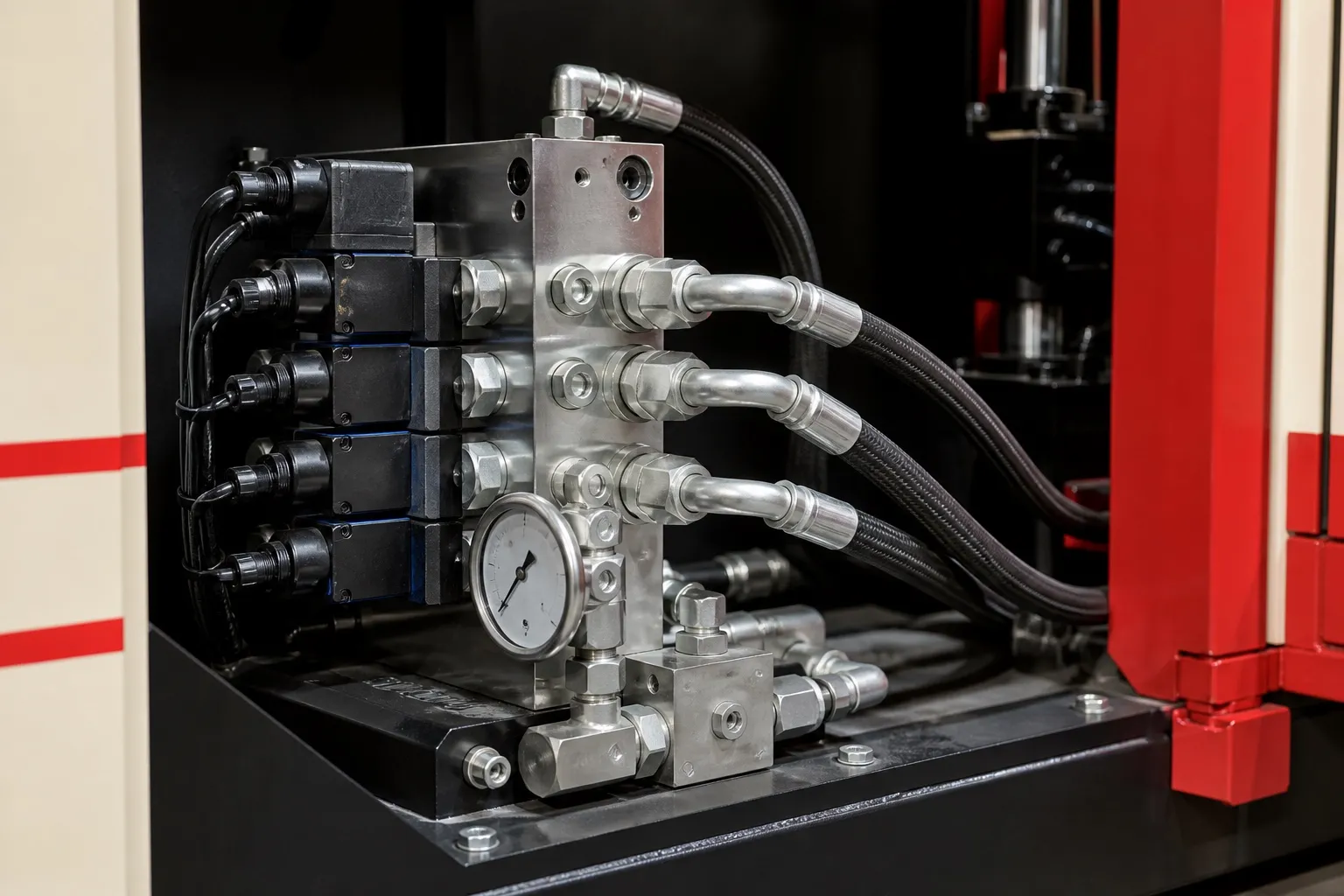
100 ton injection moulding machine applications: largest projected area by tonnage factor
| Tonnage factor (US t/in²) | Where cited materials sit | Largest projected area at 100 t, 10% margin (a starting margin, not a rule) | Roughly a square of |
|---|---|---|---|
| 2 | Low end for PP and PE | 323 cm² | 18 × 18 cm |
| 3 | Upper end for PP, middle for ABS | 215 cm² | 14.7 × 14.7 cm |
| 4 | Upper end for ABS | 162 cm² | 12.7 × 12.7 cm |
| 5 | Stiffer resins such as PC sit toward this end | 129 cm² | 11.4 × 11.4 cm |
| 8 | Top of the general 2 to 8 range | 81 cm² | 9 × 9 cm |
A 100 ton machine can make any part whose projected area, multiplied by the resin's tonnage factor, stays under about 90 t. That covers small and medium parts such as toy parts, lids, caps, small housings, irrigation fittings and switch plates. The resin decides how large the part can be, as the table shows.
Projected area is the shadow the part casts on the parting line, plus any cold runner, minus through-holes.
Key Takeaways
- Clamp needed is projected area times tonnage factor. At 100 t with a 10% margin, the largest part runs from about 323 cm² at a factor of 2 down to about 81 cm² at a factor of 8.
- PP sits at 2 to 3 US t/in² and an ABS grade can call for 2 to 4, so one mould can fit in one resin and not in another.
- Too much clamp is as harmful as too little. Excess force can crush vents, crack cavity blocks and damage the machine frame.
- Indian product rules shape the part first: toys need the ISI mark under the Toys QCO, and irrigation parts follow BIS standards such as IS 13487 and IS 17425.
Which 100 Ton Injection Moulding Machine Applications Fit Best?
The best fits are parts that need roughly 40 to 90 t of clamp. Below that, a smaller machine may run them at lower cost. Above it, flash becomes a risk. Toy parts, lids, caps, small housings, irrigation fittings and switch plates can fall inside this window, depending on cavities.
Cavity count moves the answer more than product type. A lid that needs 45 t in one cavity needs about 90 t in two, and a cold runner adds area on top. The same product can be a comfortable single-cavity job and a tight two-cavity one.
Our view is firm: if the calculation lands above 90 t, treat 100 t as too small, not as just enough. A new resin lot, a hotter melt or a partly blocked vent can push the real need up, and you want headroom from the first day of production.
Wide, flat parts such as trays and large lids reach the limit first, because projected area grows with length times width. Deep but narrow parts, such as small containers, can fit the clamp easily yet need a long opening stroke, so check stroke and mould height as well.
Electrical plates and accessories have their own material and certification needs, covered in the switch plate article in this series.
How Do You Work Out Whether Your Part Fits 100 t?
Measure the projected area of one cavity and subtract through-holes. Multiply by the number of cavities and add the cold runner. Multiply that total by the resin's tonnage factor, then add a margin. If the result stays under the machine's rated clamp, the clamp side fits.
This is the method a Plastics Technology column by RJG trainer Jeremy Williams sets out, with 3 US t/in² as a starting point when nothing better is known. The column lists what moves the factor up or down: melt flow, flow length, wall thickness, gate size, gate location and the number of gates.
Flow length matters most on thin walls. The column suggests that an aspect ratio, flow length divided by wall thickness, below 150:1 carries a low risk of sinks and short shots. A thinner, longer part may need a higher factor than the table assumes.
More clamp is not safer. The same column describes a mould that needed about 100 t being run at the machine maximum of 400 t, and its cavity block split in two places. Set clamp force from the calculation, not from the nameplate.
Watch the units. Published factors are in US tons per square inch, and 1 US t/in² is about 0.14 metric t/cm², so 3 US t/in² is about 0.42 t/cm².
Which Materials Change What a 100 Ton Machine Can Make?
Viscosity changes the answer. SPE's Plastics Engineering magazine puts tonnage factors between 2 and 8 US t/in², with polyethylene at the low end, polycarbonate toward the top and PP at 2 to 3. A part that fits easily in PP may not fit in a stiffer resin.
ABS sits in between. INEOS lists 2 to 4 US t/in² for its Lustran ABS 248, a grade it names for small appliance housings and toys. On a 100 t clamp, that range moves the largest ABS part from about 323 cm² down to about 162 cm².
Melt flow index does not settle the question across resin families. The Plastics Technology column points out that PC moulds as a high-viscosity resin whatever its MFI, so compare MFI only between grades of the same polymer.
Clamp is half the picture. The shot must also suit the barrel, which the screw diameter article in this series covers.
What Indian Rules Shape the Parts You Plan to Make?
Product rules can decide your material, wall thickness and testing before the machine is chosen. Toys sold in India must carry the ISI mark under the Toys (Quality Control) Order, and irrigation parts are covered by BIS standards. Check both before you size the machine for a new product.
BIS says the Toys QCO came into force on 1 January 2021 and refers to seven Indian Standards. IS 9873 Part 1 covers mechanical and physical safety, including choking hazards from small parts and sharp points or edges. For a moulder, that can mean thicker sections or stronger snap fits, which add shot weight and can add cycle time.
For agriculture, the BIS compendium on micro-irrigation lists IS 13487 for drip emitters, IS 17425 for quick-coupled PE pipes and fittings from 40 to 200 mm outside diameter, and IS 18286 for manually operated plastics valves from DN 8 to DN 110. Smaller sizes can suit a 100 t clamp, while the largest may need more clamp or a bigger mould, so check the drawing first.
What Should You Send to Check Whether Your Part Fits?
Send the part drawing or a sample, the resin grade, the number of cavities, the runner type, the mould's outside size and shut height, and your monthly quantity. With those, projected area, clamp force and shot volume can be checked before any machine is named. See the 100 ton horizontal injection moulding machine page.
Frequently Asked Questions About 100 Ton Injection Moulding Machine Applications
Are tonnage factors in metric or US tons?
Most published tonnage factors, including the ones in this article, are in US tons per square inch. One US ton is about 0.907 metric tonnes and one square inch is about 6.45 cm², so 1 US t/in² equals about 0.14 t/cm². Convert before you compare the result with a clamp rated in metric tonnes.
Can a 100 ton machine make toys?
It can make many toy parts, provided the projected area, material and shot fit the machine. The bigger question is compliance. Toys sold in India must meet the standards listed in the Toys (Quality Control) Order and carry the ISI mark, so the part design and resin must pass IS 9873 testing before production starts.
Why not buy a bigger machine to be safe?
A larger clamp costs more to buy and run, and setting high tonnage on a small mould can damage it. Plastics Technology describes a mould needing about 100 t that cracked when clamped at 400 t. Size the clamp from the part, keep a sensible reserve, and set the clamp force to what the mould needs.
Does a hot runner change the clamp calculation?
Yes. With a cold runner you add the runner's projected area to the cavities, because melt in the runner pushes the mould open too. A hot runner keeps the melt inside the mould plates, so only the cavities count. On multi-cavity moulds with long runners, the difference can decide whether a mould fits 100 t.
What is projected area?
Projected area is the area of the part as seen from the direction the mould opens, like its shadow on the parting line. Through-holes are subtracted and a cold runner is added. It is multiplied by a tonnage factor, or by cavity pressure, to estimate the force trying to push the mould open.
Related Articles
- 100 Ton Machine for Switch Plates and Electrical Accessories
- Choosing Between the 32 mm and 35 mm Screw on a 100 Ton Machine
- 100 Ton Injection Moulding Machine Running Costs: Power, Cycle and Output
Sources & References
- Bureau of Indian Standards: Compendium of Indian Standards: Micro-Irrigation Systems
- Bureau of Indian Standards (BIS Blog): Indian Standards on Toys: Ensuring your child's safety
- Plastics Engineering (SPE), A. Urbina: Mastering Clamping Force Calculation
- Plastics Technology, J. Williams (RJG): Clamp Tonnage: More Is Better...Right?
- INEOS ABS via UL IDES: Lustran ABS 248 technical data sheet
Technical Disclaimer
Disclaimer: The information provided in this document is for general informational and educational purposes only. It is based on technical references and industry information available at the time of preparation and may be subject to change. It does not constitute engineering, technical, commercial or professional advice, nor does it constitute a quotation, specification, warranty or contractual commitment by Pratishna Engineers.
Actual injection moulding machine and process requirements vary according to the component design, material, mould, production volume, machine configuration and operating conditions. The information, examples, calculations and recommendations provided should be independently evaluated and verified for the specific application before making any equipment, process or production decision. Information obtained from third-party sources remains subject to the accuracy and limitations of those sources.
Limitation of Liability: Pratishna Engineers makes no representation or warranty, express or implied, regarding the completeness, accuracy or suitability of the information for any particular application. To the extent permitted by applicable law, Pratishna Engineers shall not be liable for any loss, damage, cost or consequence arising from reliance on or use of the information contained in this document. Final machine selection, configuration and application suitability should be confirmed with Pratishna Engineers based on complete and accurate project requirements.