165 ton injection moulding machine applications: largest projected area by tonnage factor
| Tonnage factor (US t/in²) | Where cited materials sit | Largest projected area at 165 t, 10% margin (a starting margin, not a rule) | Roughly a square of |
|---|---|---|---|
| 2 | Low end, where PP and PE start | 533 cm² | 23.1 × 23.1 cm |
| 3 | Upper end for PP | 356 cm² | 18.9 × 18.9 cm |
| 4 | Middle of the general range | 267 cm² | 16.3 × 16.3 cm |
| 5 | Toward the end where PC sits | 213 cm² | 14.6 × 14.6 cm |
| 8 | Top of the general 2 to 8 range | 133 cm² | 11.5 × 11.5 cm |
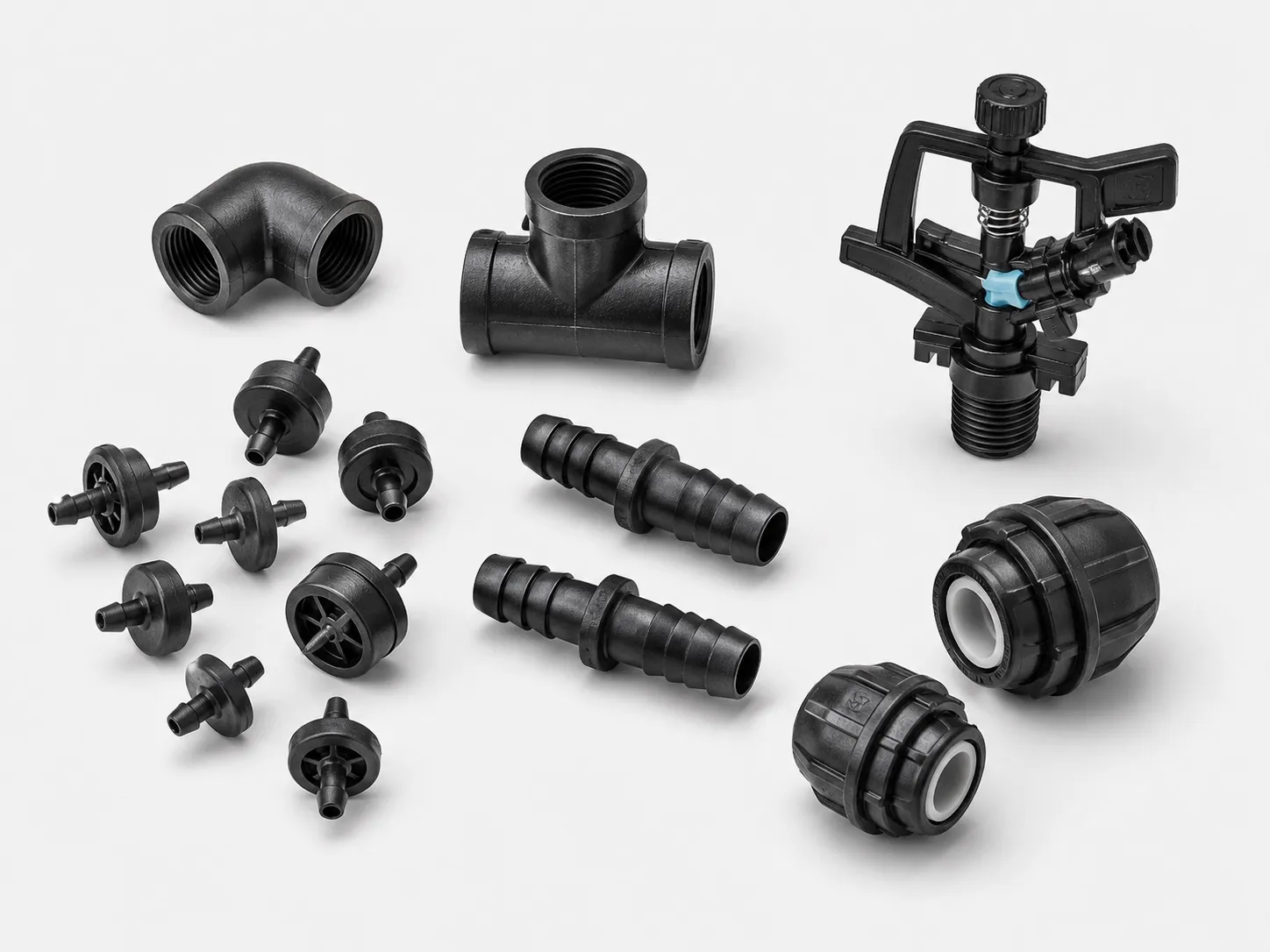
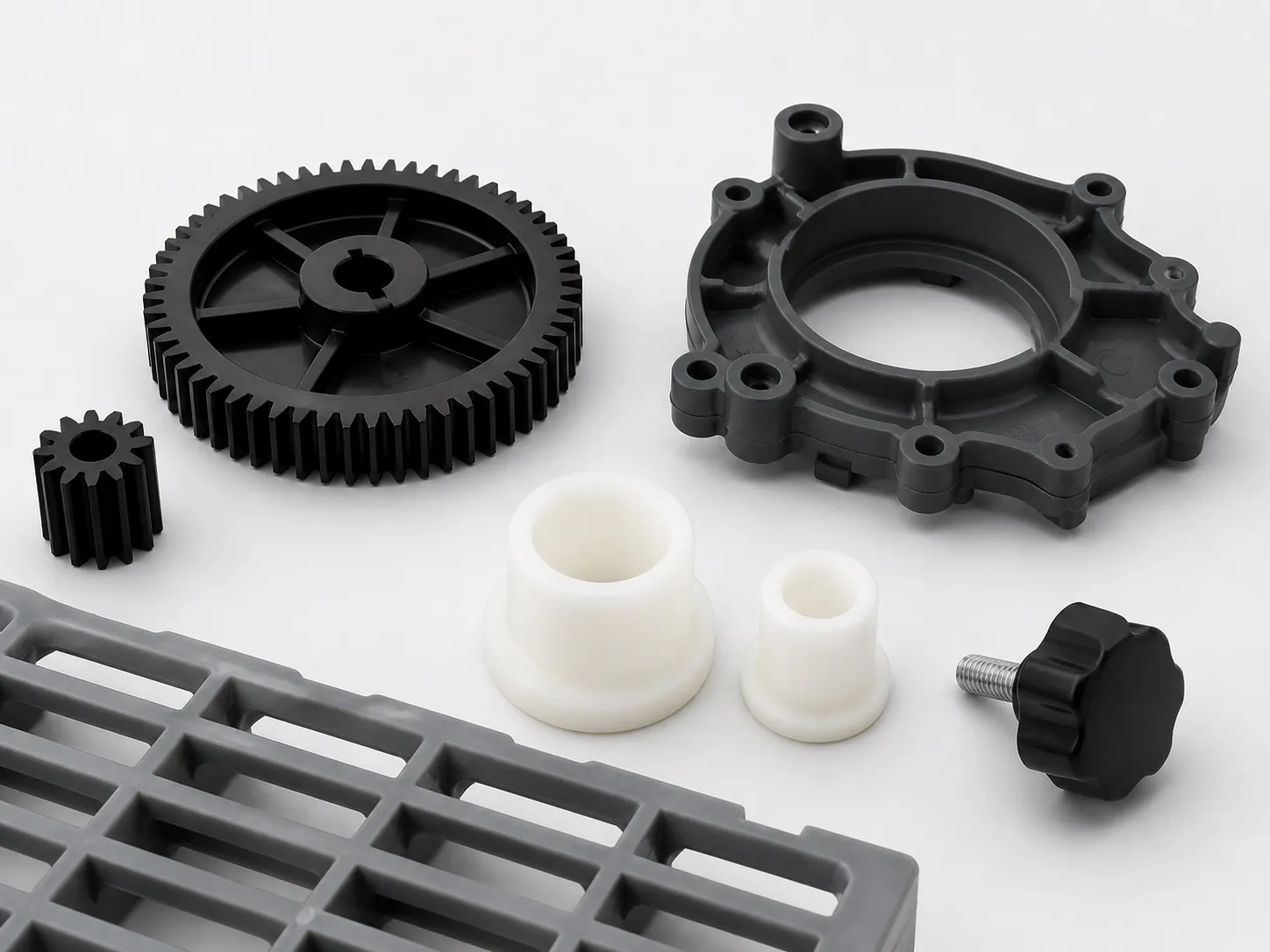
Typical 165 ton injection moulding machine applications are medium parts whose projected area, multiplied by the resin's tonnage factor, stays below about 150 t once a 10% reserve is kept. That covers items such as storage containers, small pails, crate accessories, pipe fittings, appliance housings and electrical enclosures. The resin decides how big the part can be, as the table shows.
Projected area is the shadow the part casts on the parting line, plus any cold runner, minus through-holes.
Key Takeaways
- Clamp needed equals projected area times tonnage factor. At 165 t with a 10% reserve, the largest part ranges from about 533 cm² at a factor of 2 down to about 133 cm² at a factor of 8.
- PP sits at 2 to 3 US t/in², so a lid that fits easily in PP can fail to fit in a stiffer resin such as PC.
- Extra clamp is not free insurance. Over-clamping can crack cavity blocks, and an oversized hydraulic machine wastes power on base load.
- Food-contact containers in India must use plastics that meet the FSSAI packaging rules, such as IS 10910 for PP, with migration tested to IS 9845.
Which 165 Ton Injection Moulding Machine Applications Fit Best?
Parts whose calculated clamp lands between roughly 80 and 150 t fit best (our working band, not a rule). Lighter jobs can often run on a smaller machine at lower cost. Heavier ones risk flash. Containers, lids, pail parts, fittings, appliance housings and enclosures can fall inside, depending on cavities.
Cavity count moves the answer more than product type. A container body that needs 95 t in one cavity needs about 190 t in two, before the runner is added. The same product can be a comfortable single-cavity job and an impossible two-cavity one.
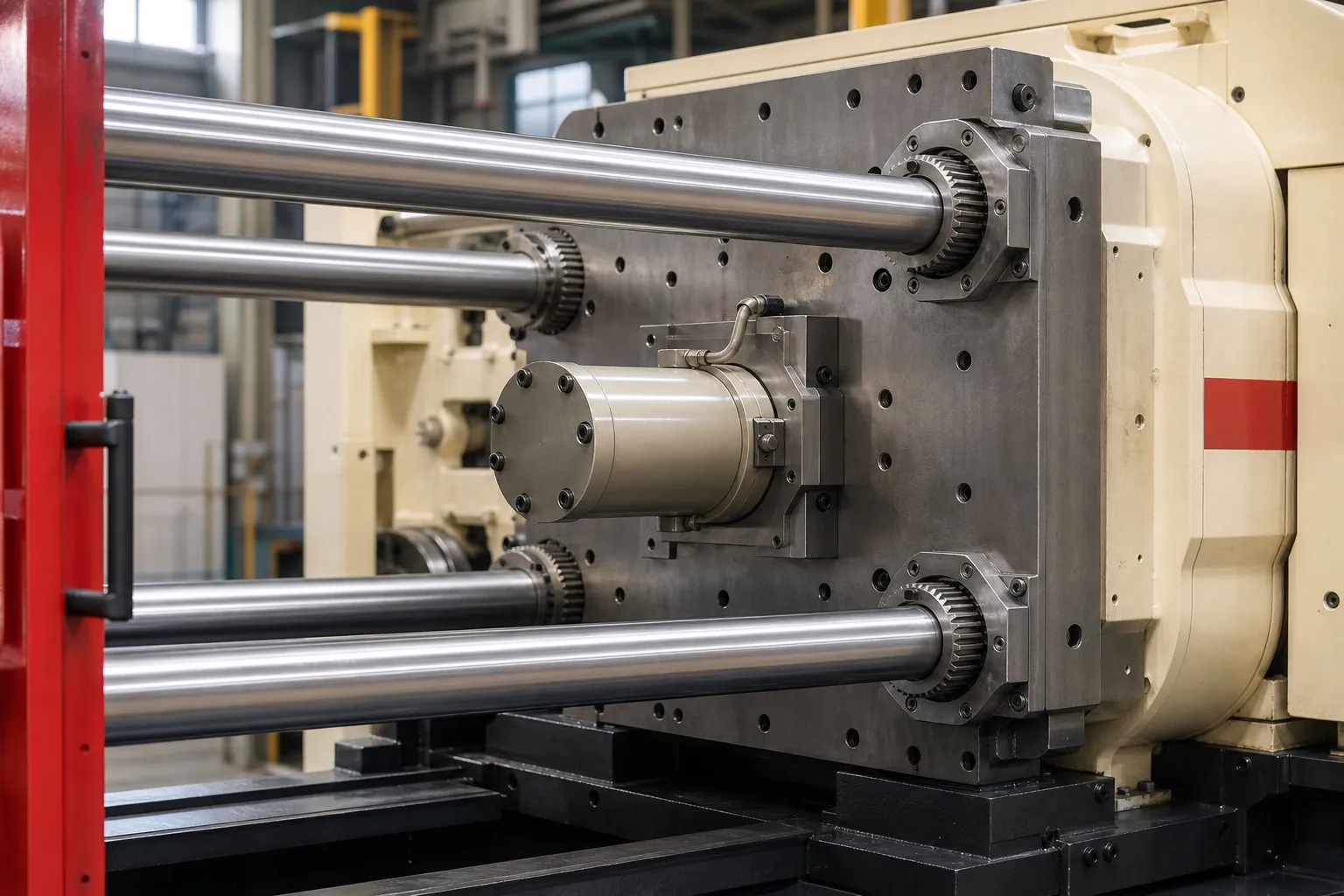
Wide, flat parts reach the limit first, because projected area grows with length times width. Deep parts such as tubs and pails behave differently: the clamp may cope, yet the mould needs a long opening stroke and enough daylight to drop the part. Those frame checks are covered in the tie-bar and platen article in this series.
Our view is firm: if your calculation comes out above 150 t, plan for a bigger machine or fewer cavities. A new resin lot, a colder mould or a partly blocked vent can raise the real need, and a job that starts at the limit rarely stays inside it.
How Do You Check Whether a Part Fits 165 t?
Measure the projected area of one cavity and subtract through-holes. Multiply by the number of cavities, then add the cold runner. Multiply the total by the resin's tonnage factor and add your reserve. If the result stays under the rated clamp, the clamp side of the job fits.
This is the method set out by RJG trainer Jeremy Williams in Plastics Technology, which suggests 3 US t/in² as a starting point when nothing better is known. The same column lists what pushes the factor up or down: melt flow, flow length, wall thickness, gate size, gate location, number of gates and resin volume.
Thin walls with long flow paths need care. The column gives a flow length to wall thickness ratio below 150:1 as low risk for sinks and short shots. A part with a higher ratio may need a factor well above the table's starting values.
Watch the units. Published factors are in US tons per square inch, and 1 US t/in² equals about 0.14 metric t/cm². A factor of 3 is therefore about 0.42 t/cm², which is the figure to multiply by an area in cm².
Material changes the factor sharply. SPE's Plastics Engineering magazine places factors between 2 and 8 US t/in², with polyethylene at the low end, PP at 2 to 3 and polycarbonate toward the top. Compare melt flow index only between grades of the same polymer, never across families.
Why Is Buying More Clamp Than You Need a Mistake?
More clamp does not make a mould safer. Excess force can crush vents, roll the parting line and crack cavity blocks, and an oversized hydraulic machine spends more of its power on base load. Size the clamp from the part and set the clamp force from the calculation.
The Plastics Technology column describes a mould that needed about 100 tons being clamped at its 400-ton machine maximum. The cavity block split in two places, a repair cost of upwards of $100,000. SPE adds that excess clamp can also deform plates and fracture a machine's frame.
Energy is the slower cost. A moulders' energy guide from ExxonMobil, AMI and Tangram notes that base load on a standard hydraulic machine can be 75% or more of its total energy, and that a high base load can mean the machine is too large for the job. It also finds that ten-year energy cost exceeds purchase price in almost every case.
Which Indian Rules Apply to Containers and Household Parts?
If a container will hold food, the FSSAI Packaging Regulations, 2018 decide your resin. Plastics in direct food contact must meet listed Indian Standards, such as IS 10910 for PP and IS 10146 for PE. Check this before you fix the material, because it can change the tonnage factor.
The regulations set an overall migration limit of 60 mg/kg, or 10 mg/dm², tested to IS 9845, plus specific limits for metals such as barium and zinc. Pigments must meet IS 9833. Food businesses need a certificate of conformity from an NABL lab for packaging in direct contact.
For a moulder, that means buying food-contact grades with documents, keeping colour masterbatch records and holding batches apart. None of this changes the machine, but it can decide whether a cheaper resin is allowed at all.
What Should You Send to Check a Part Against 165 t?
Send the part drawing or a sample, the resin grade, the number of cavities, the runner type, the mould's outside size and shut height, and your monthly quantity. With those, projected area, clamp and shot can be checked before any machine is named. See the 165 ton horizontal injection moulding machine page.
Frequently Asked Questions About 165 Ton Injection Moulding Machine Applications
Can a 165 ton machine mould plastic pails or buckets?
It can mould smaller pails if the projected area fits. A round pail 200 mm across has a projected area of about 314 cm², which needs roughly 88 to 133 t in PP before a reserve. Larger buckets quickly pass the limit, and their depth also needs a long opening stroke.
What if I do not know the tonnage factor for my resin?
Start at 3 US t/in², the value suggested in Plastics Technology, and refine it with the resin supplier's data sheet or a filling simulation. SPE also gives 400 bar of cavity pressure as a guide value, which works out to about 2.9 US t/in². Treat both as starting points only.
Does a deeper part need more clamp?
Not directly. Clamp depends on projected area, the footprint seen from the opening direction, so a deep tub and a flat tray of the same footprint need similar clamp. Depth affects other things: shot weight, cooling time, opening stroke, daylight and how easily the part ejects.
How many cavities can a 165 ton machine run?
Divide the usable clamp by the clamp one cavity needs. With a 10% reserve, about 150 t is usable. If each cavity plus its share of runner needs 35 t, four cavities fit and five do not. Shot size, mould size and cooling must also suit the higher cavity count.
Should the runner be counted in projected area?
Yes, when it is a cold runner. Melt in the runner pushes the mould open just as melt in the cavity does, so its area is added. With a hot runner the melt stays inside the manifold, and only the cavities count. On long multi-cavity runners this can decide the machine size.
Related Articles
- 165 Ton Machine for Pipe Fittings and Plumbing Parts
- Moulding Appliance Parts on a 165 Ton Machine
- 165 Ton vs 180 Ton: Tie-Bar Space and Platen Size Compared
Sources & References
- Plastics Technology, J. Williams (RJG): Clamp Tonnage: More Is Better...Right?
- Plastics Engineering (SPE), A. Urbina: Mastering Clamping Force Calculation
- ExxonMobil, AMI and Tangram Technology: An Energy Saving Guide for Injection Moulders
- Food Safety and Standards Authority of India (FSSAI): Food Safety and Standards (Packaging) Regulations, 2018, compendium
Technical Disclaimer
Disclaimer: The information provided in this document is for general informational and educational purposes only. It is based on technical references and industry information available at the time of preparation and may be subject to change. It does not constitute engineering, technical, commercial or professional advice, nor does it constitute a quotation, specification, warranty or contractual commitment by Pratishna Engineers.
Actual injection moulding machine and process requirements vary according to the component design, material, mould, production volume, machine configuration and operating conditions. The information, examples, calculations and recommendations provided should be independently evaluated and verified for the specific application before making any equipment, process or production decision. Information obtained from third-party sources remains subject to the accuracy and limitations of those sources.
Limitation of Liability: Pratishna Engineers makes no representation or warranty, express or implied, regarding the completeness, accuracy or suitability of the information for any particular application. To the extent permitted by applicable law, Pratishna Engineers shall not be liable for any loss, damage, cost or consequence arising from reliance on or use of the information contained in this document. Final machine selection, configuration and application suitability should be confirmed with Pratishna Engineers based on complete and accurate project requirements.