






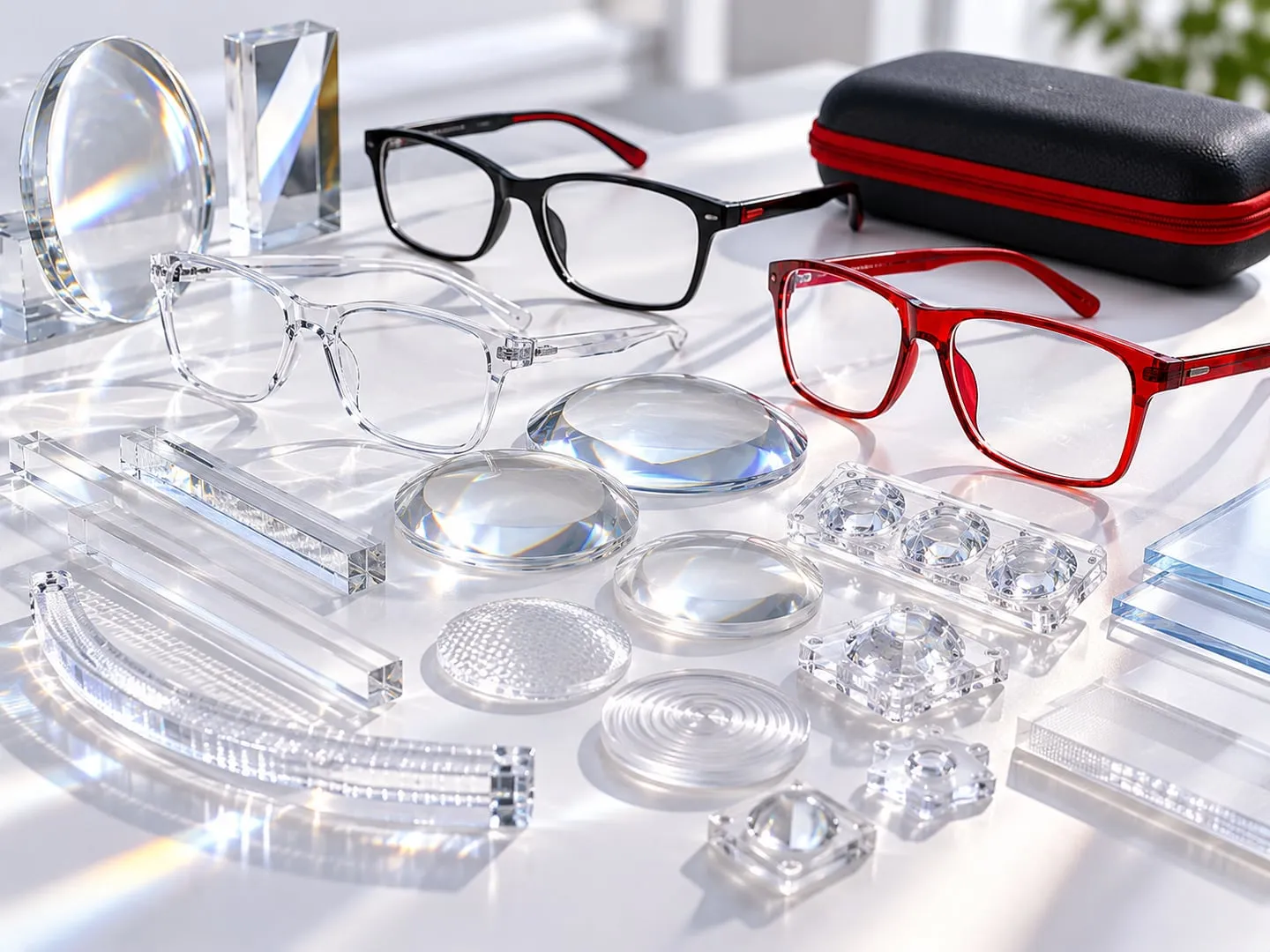
Injection Moulding Machines for Optical & Eyewear Products
Pratishna Engineers manufactures injection moulding machines extensively used in manufacturing plastic optical components and eyewear. Typical parts include precision lenses for sensors and LEDs, TR90 spectacle frames, light guides, sunglass and visor lenses, lens holders, instrument windows, Fresnel panels and eyewear cases, where the mould surface is replicated onto the optical face and any flow line, sink or moulded-in stress shows up as a visible defect.
Pratishna Engineers is one of the top and trusted injection moulding machine manufacturers for optical and eyewear products in India. Operating from Mumbai for 35+ years, the company has supplied 9,000+ machines to 1,000+ customers, offering hybrid and horizontal machines for lenses, light guides, frames and optical mounts, backed by in-house engineering and after-sales support.
The right machine depends on the component, plastic material, part weight, mould size, number of cavities and production volume. Optical parts are moulded in optical-grade PMMA, PC and COP from mirror-polished cavities, with slow, controlled injection, long packing and tight mould temperature control. Shrinkage decides base curve, centre thickness and focal accuracy, so shot-to-shot repeatability of injection speed, pressure and temperature matters more than clamping force.
Manufacturing an Optical Component?
Tell us your product and production target, and Pratishna Engineers will recommend the right injection moulding machine and quotation.
Optical Plastic Components
A range of lens, light guide, eyewear and optical mount components can be manufactured on Pratishna injection moulding machines:
Optical Lens (precision lens: camera, sensor, LED, collimator)
Spectacle Frame (front and temples)
Light Guide (light guide plate, light pipe)
Thick-Wall Lens (sections above about 5 mm)
Spectacle Cover / Case (protective case, lid and clip-on cover)
Sunglass, Safety and Visor Lens (plano moulded)
Lens Holder, Barrel and Optical Mount
Camera Module and Sensor Lens Barrel (micro-optics)
Fresnel Lens and Diffuser Panel
Eyewear Temple Tip, Nose Pad and Hinge Cover
Optical Fibre Connector Housing and Ferrule Holder (LC/SC type)
Instrument Window and Cover Lens
Recommended Machines for Optical Components
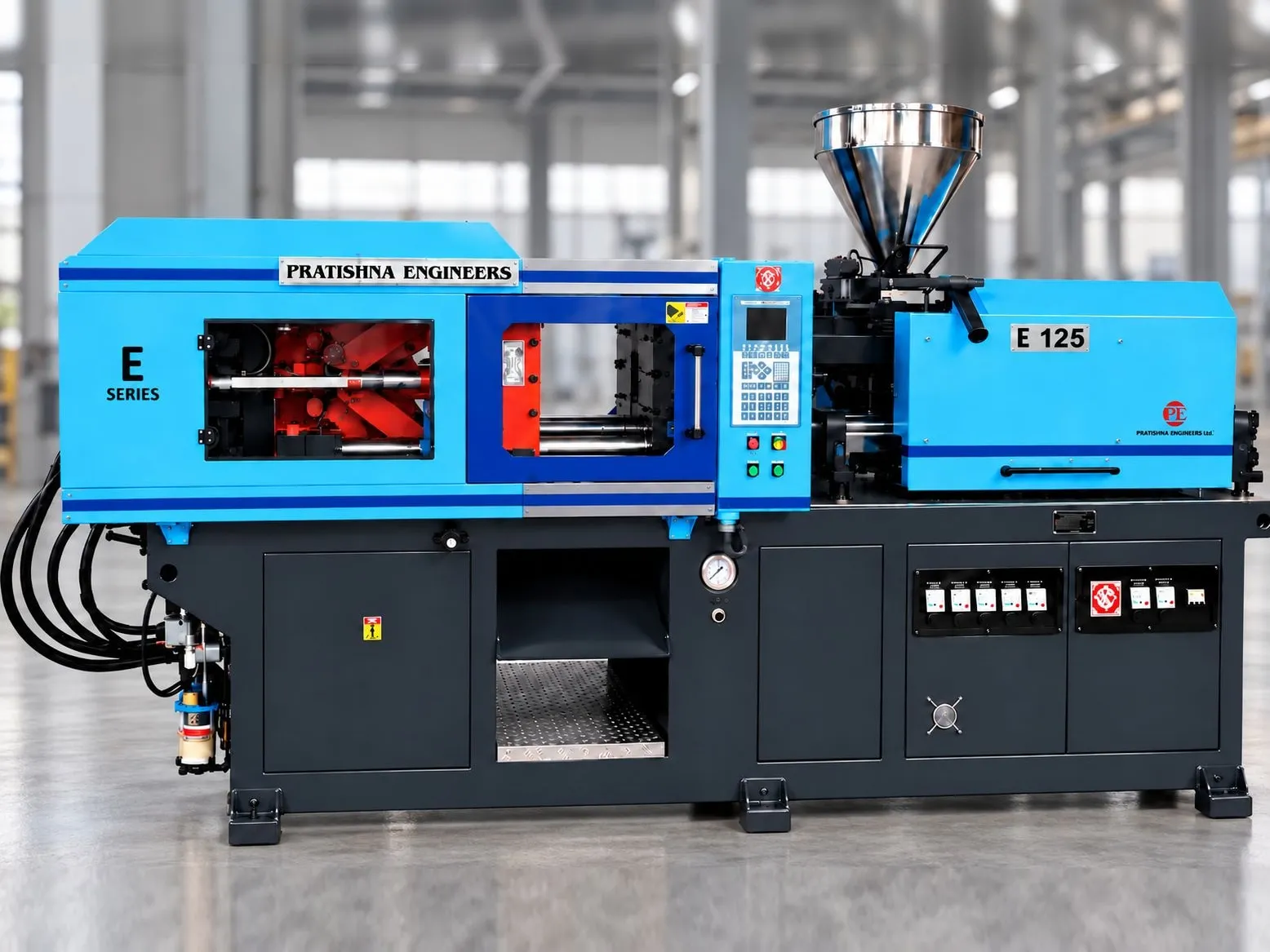
Precision lenses, spectacle frames, light guides, sunglass and visor lenses, lens holders and instrument windows need very repeatable injection and suit the Hybrid machines, whose servo-driven injection holds speed and pressure closely from shot to shot. Spectacle cases and soft temple tips, nose pads and hinge covers suit the E Series (75-180 T). Thick-wall lenses and Fresnel panels that use injection-compression moulding are evaluated for a Special Purpose machine.
Not Sure Which Machine You Need?
Share your optical component and production target for a suitable recommendation.
Why Choose Pratishna Engineers?
- Application-Based Machine Selection
- In-House Engineering & Manufacturing
- Multiple Machine Series
- Production-Focused Solutions
- End-to-End Technical Support
- Industry-Specific Solutions
- Machine Lifecycle Support
Injection Moulding Machine Buyer Resources
Download practical resources to help you select, size and specify the right machine.
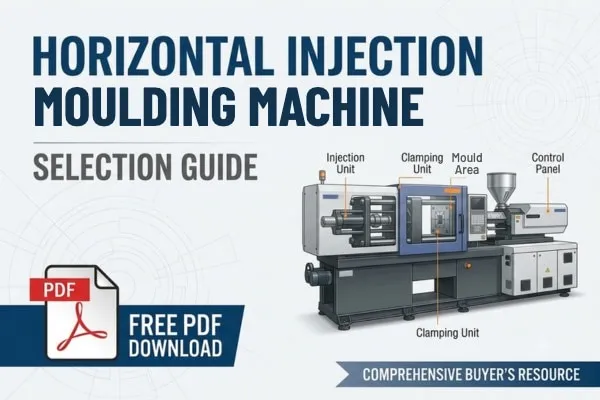
Injection Moulding Machine Selection Guide
A step-by-step guide covering the key inputs needed to select the right machine: product weight, projected area, number of cavities, plastic material, required clamping force, shot / injection capacity, mould dimensions, production quantity, cycle time and automation requirement.
Download PDFPDF · 265 KB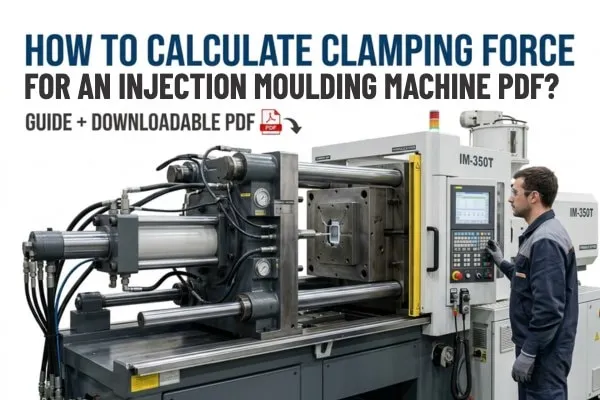
Clamping Force & Shot-Size Calculation Guide
A clear method for calculating the clamping force and shot size your part needs, covering projected area, injection pressure, safety factor, number of cavities, part and runner weight, and material.
Download PDFPDF · 363 KBPlastic Material Selection Guide
A reference for PP, PE, HDPE, ABS, PS, nylon, PC and POM, covering their properties, typical applications and screw, barrel and temperature notes for moulding.
Download PDFPDF · 163 KBOptical Components & Machine Guide
A guide to the 12 Optical components on this page, with typical materials, part weight and cavity notes, recommended Pratishna machines and tonnage guidance for each part.
Download PDFPDF · 208 KB
FAQs / Buyer Questions
The answers our engineers give most often about moulding optical and eyewear components.
Which Injection Moulding Machine Is Used for Plastic Optical Lenses?
Precision lenses for sensors, LEDs and collimators are moulded in optical PMMA, PC or COP from mirror-finish cavities, with slow injection and long, controlled packing. Hybrid machines suit these parts because repeatable injection and packing control shrinkage, which sets the lens geometry.Can Pratishna Machines Produce Spectacle Frames?
Yes. TR90, PA12 and nylon frame fronts and temples can be produced on Hybrid machines, with dried material and a polished mould for a clean surface. Acetate frames are cut from layered sheet and finished by hand, so they are not an injection moulding job.What Plastic Materials Are Used for Optical Parts?
Common materials include optical PMMA for the highest light transmission, optical PC for impact-rated lenses and visors, COP and COC for low-birefringence precision optics, TR90 and PA12 for frames, PC-GF, PA6-GF, PPS and PEI for lens holders and mounts, and TPE or TPU for temple tips and nose pads.How Are Thick-Wall Lenses and Fresnel Panels Moulded?
Thick-wall lenses are cooling and sink dominated, and large Fresnel and diffuser panels must replicate fine structures across a thin area. Both commonly use injection-compression moulding, which fills at lower pressure and compresses the part in the mould. These parts are evaluated for a Special Purpose machine.
Can These Machines Produce Light Guides and Instrument Windows?
Yes. Light guide plates, light pipes and instrument windows in optical PMMA or PC can be moulded on Hybrid machines. Uniform wall thickness, low moulded-in stress and faithful replication of micro-structures decide light distribution and readability.Can Pratishna Machines Mould Micro-Optics and Fibre Connector Parts?
Camera module lens barrels and fibre connector ferrule holders are micro-moulded parts with tolerances in microns and shot weights in milligrams, usually made on dedicated micro-moulding machines. Larger lens holders, barrels and optical mounts can run on Hybrid machines.Which Pratishna Series Suits Optical Applications?
Hybrid machines suit most lenses, frames, light guides and mounts, the E Series (75-180 T) suits cases and soft eyewear parts, and injection-compression parts are evaluated for a Special Purpose machine.How Do I Get a Machine Recommendation for My Optical Component?
Share your product, material, part weight, mould dimensions, cavities, production quantity and cycle time, and Pratishna Engineers will recommend a suitable machine and quotation.
Talk to Our Engineers
Planning a New Injection Moulding Project?
Share your component, material, mould and production target. Our engineering team will help you identify the right machine configuration.
- Machine Sales
- +91 99690 38542
- Service Support
- +91 97689 28259
- Sales Email
- enquiry@pratishnaengineers.com