Take a two-platen machine with a 1,000 mm opening stroke and an assumed minimum mould height of 250 mm. Its maximum daylight is 1,250 mm. Load a 650 mm deep-part mould and only 600 mm of opening remains, enough for a part about 240 mm tall at 2.5 times part height. Mould height planning decides how deep a part the machine can really take.
The 1,000 mm figure is the opening with the thinnest mould. Every millimetre of mould height above the minimum comes off it. Plan the mould height and the part height together, before the mould maker fixes the steel sizes.
Key Takeaways
- On a two-platen machine, usable opening is maximum daylight minus mould height, not the rated stroke.
- Divide usable opening by 2.5 to find the tallest part the mould and machine can handle together.
- A deep-part mould is roughly part height plus plates and ejector space, so taller parts cost opening twice.
- Nucleated PP and some pigments change how a part strips from a deep core, so agree draft with the actual grade.
How Much Opening Is Left at Each Mould Height?
Subtract the mould height from the machine's maximum daylight. With 1,000 mm of stroke and an assumed 250 mm minimum mould height, daylight is 1,250 mm, so a 450 mm mould leaves 800 mm of opening and a 650 mm mould leaves 600 mm.
Usable opening and tallest part by mould height, 1,000 mm stroke with an assumed 250 mm minimum mould height (1,250 mm daylight); tallest part at opening ÷ 2.5
| Mould height | Usable opening | Tallest part at 2.5 × height |
|---|---|---|
| 250 mm (minimum) | 1,000 mm | 400 mm |
| 350 mm | 900 mm | 360 mm |
| 450 mm | 800 mm | 320 mm |
| 550 mm | 700 mm | 280 mm |
| 650 mm | 600 mm | 240 mm |
Bruce Catoen's MoldMaking Technology guide sets the opening stroke at a minimum of 2.5 times part height, so the part can clear the core and be removed. It also says the mould must be thick enough for the machine's minimum shut height and thin enough for its maximum. Both limits apply.
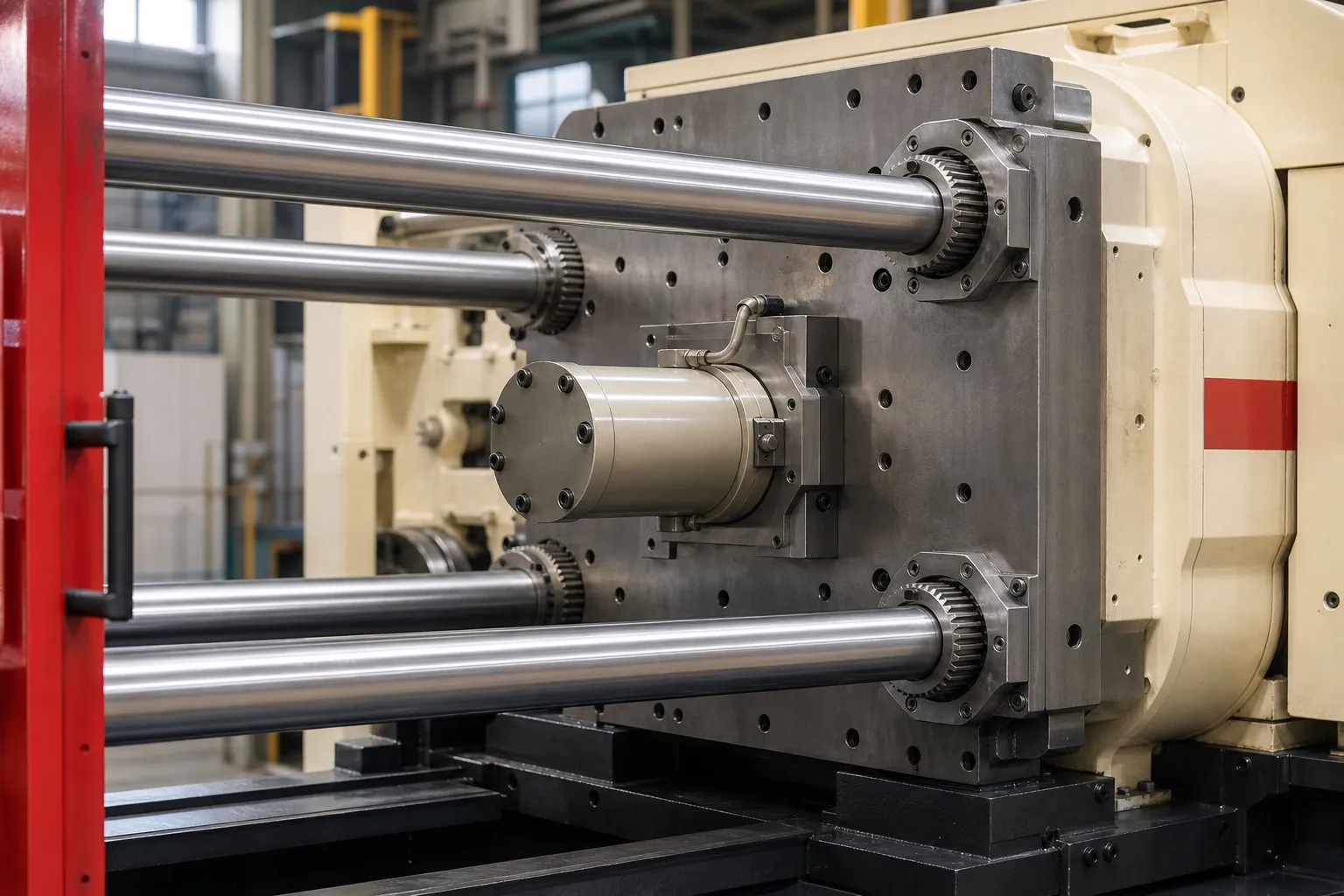
The same guide explains why the opening shrinks: on a piston-type clamp, which its figure shows as a two-platen machine, maximum daylight equals minimum shut height plus maximum stroke. How this compares with a toggle is covered in the opening stroke article in this series.
What Decides the Height of a Deep-Part Mould?
Mostly the part. The cavity must be at least as deep as the part plus its base, and the core sits inside it when closed. Add the clamping plates, core backing plate and the ejector housing, and a deep-part mould grows with every millimetre of part height.
Ejection adds height too. The ejector plates need room to travel far enough to push the part off the core, and a mismatch between the mould's ejector pattern and the machine's can call for an ejector box, which adds more. Catoen's guide also points to SPI and EUROMAP mounting patterns as a check.
P. Thal's MoldMaking Technology article advises locating ejection at the deepest areas of the part and using as much ejection surface as reasonable. Stripper systems push on the part perimeter and are the costliest option, but they suit deep buckets and tubs because they spread the load around the rim.
So a taller part costs opening twice: the mould grows, which takes daylight, and the part needs more opening to clear the core. That is why the tallest part on a given machine is smaller than the stroke alone suggests.
Mould Height Planning: What Should You Fix Before Cutting Steel?
Fix the closed mould height range with the mould maker and check it against the machine's minimum and maximum mould height and daylight. Then confirm mould weight, platen fit within the tie bars, the locating ring size and the ejector pattern on the actual data sheet.
Catoen's guide asks you to check the maximum mould weight for both platens and notes that platen level and parallelism of 0.025 to 0.05 mm are generally acceptable on machines under 500 t. A tall, deep mould is heavy, and weight can become a limit before clamp does.
The guide notes that most moulds use a 101.6 mm (4 in) or 120 mm locating ring. Ideally the whole mould fits within the tie bars; at minimum the parts' projected area must, because the platens can pull in near the tie bars and wear the parting line.
How Do Draft and Resin Choice Affect Deep Moulds?
Deep PP parts shrink onto the core, so draft and resin decide how cleanly they strip. Nucleated PP does most of its shrinking in the mould, which helps prevent warpage but can make parts harder to strip from cores and may need more draft.
That guidance comes from EnviroTech Molded Products' design notes, which add that some pigments, such as green, blue and orange, are strong nucleators, so different colours can give different part dimensions. A deep bucket that strips well in natural can stick in blue.
This matters for Indian houseware grades. Reliance's Repol H110MAS is a nucleated PP homopolymer for rigid packaging, furniture and houseware, with a melt range of 200 to 250 °C and a mould range of 20 to 50 °C. Check draft against the grade and colours you will actually run.
Our view: on a deep-part mould, decide draft and ejection before you decide mould height. A core that needs a stripper plate and extra draft changes the mould stack, and the stack decides how much opening is left.
What Should You Send for a Mould Height Check?
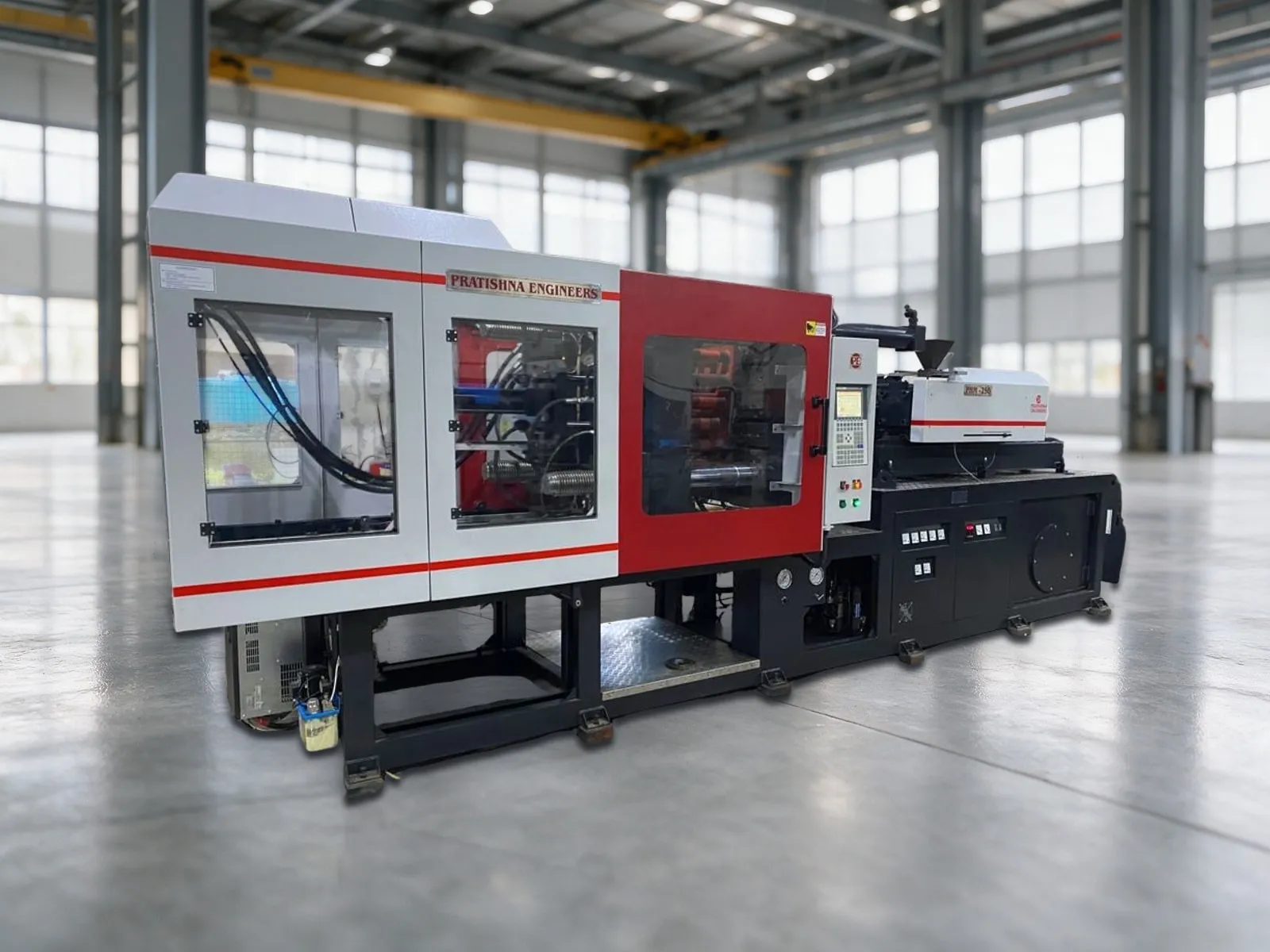
Send the part height, rim size, wall, resin grade and colours, the planned ejection method and the mould maker's estimate of closed height. Usable opening, mould height range, weight and tie-bar fit can then be checked together. See the 160 ton two platen injection moulding machine page.
Frequently Asked Questions About Mould Height for Deep Parts
What is the difference between mould height and daylight?
Mould height, or shut height, is the closed thickness of the mould. Daylight is the largest gap between the platens when the clamp is fully open. On a two-platen machine, the opening you can use is the maximum daylight minus the mould height, so both figures matter.
Can a mould maker reduce mould height?
Sometimes. Thinner clamping plates, a shallower ejector housing or a different ejection method can save height, but each must still carry the clamp force and injection pressure without deflecting. Ask the mould maker which plates can shrink without hurting stiffness, cooling or ejector travel before you trade them for opening.
Is 2.5 times part height always needed?
It is a guide from a mould sizing article, not a law. Some parts drop free with less, while robot take-out may need more clearance than the rule gives. Use it as a starting check, then confirm with the mould maker and robot supplier for the actual part and take-out method.
What happens if the mould is heavier than the platen rating?
The moving platen and its guides can wear, sag or lose parallelism, which can wear the parting line and cause flash. Check the maximum mould weight for both platens on the data sheet. If the mould exceeds it, lighten the design or choose a machine rated for the weight.
Does a deeper part need a longer ejector stroke?
Usually it needs enough travel to push the part clear of the core or far enough for a robot to grip it. A stripper ring on a deep bucket may not need to push the full depth if air assists release. Confirm ejector travel with the mould maker against the machine's ejector stroke.
Related Articles
- What Can You Make on a 160 Ton Two Platen Machine?
- Buckets and Storage Boxes on a 160 Ton Two Platen Machine
- 160 Ton Two Platen vs Toggle Machine: Opening Stroke Compared
Sources & References
- MoldMaking Technology, B. Catoen: Machine Sizing and Specification for Optimal Mold Performance, Part 1
- MoldMaking Technology, P. Thal (Thal Precision): Three Key Decisions for an Optimal Ejection System
- EnviroTech Molded Products: Molded Parts Design
- Reliance Industries: Repol H110MAS technical data sheet (July 2024)
Technical Disclaimer
Disclaimer: The information provided in this document is for general informational and educational purposes only. It is based on technical references and industry information available at the time of preparation and may be subject to change. It does not constitute engineering, technical, commercial or professional advice, nor does it constitute a quotation, specification, warranty or contractual commitment by Pratishna Engineers.
Actual injection moulding machine and process requirements vary according to the component design, material, mould, production volume, machine configuration and operating conditions. The information, examples, calculations and recommendations provided should be independently evaluated and verified for the specific application before making any equipment, process or production decision. Information obtained from third-party sources remains subject to the accuracy and limitations of those sources.
Limitation of Liability: Pratishna Engineers makes no representation or warranty, express or implied, regarding the completeness, accuracy or suitability of the information for any particular application. To the extent permitted by applicable law, Pratishna Engineers shall not be liable for any loss, damage, cost or consequence arising from reliance on or use of the information contained in this document. Final machine selection, configuration and application suitability should be confirmed with Pratishna Engineers based on complete and accurate project requirements.