






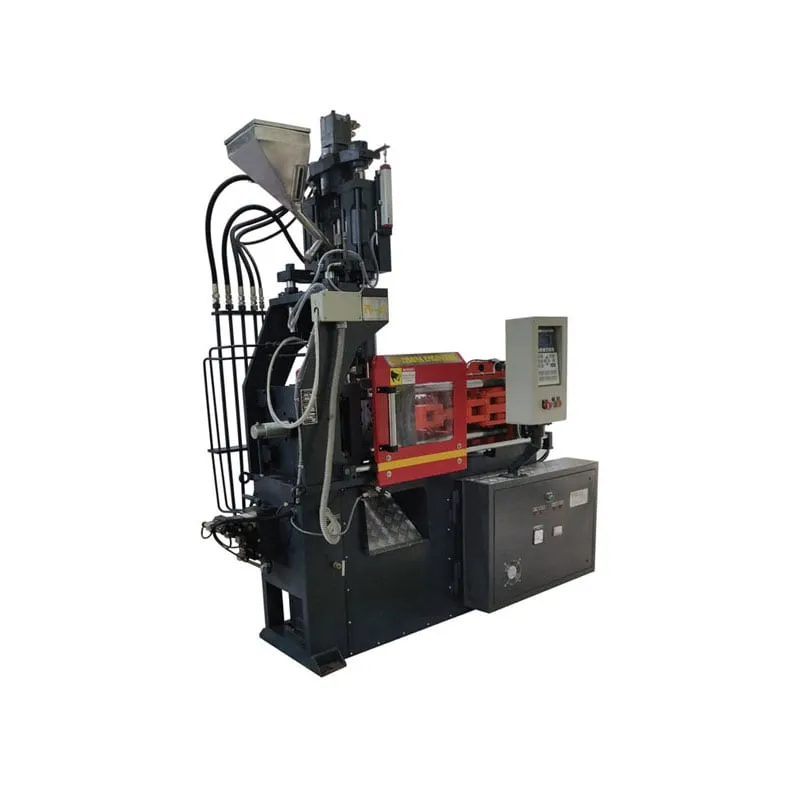

Start with one number. At a power factor of 0.85, every 100 kWh of useful energy is billed as about 118 kVAh (100 ÷ 0.85). At 0.95, the same 100 kWh bills as about 105 kVAh. Under MSEDCL kVAh billing, that gap lands on every bill, for every machine you add.
That is why the first questions for injection moulding machine suppliers Maharashtra buyers shortlist should be about power demand and service distance, before cycle time or features. Pratishna Engineers builds machines in Andheri (E), Mumbai, and has done so since 1991, and these are the questions we work through with buyers before an order.
Key Takeaways
- MSEDCL bills energy on kVAh and demand on kVA, so a poor power factor raises both lines of the bill.
- Add the new machine's kVA to your existing demand before ordering, and check it against your contract demand.
- Ask each supplier for the total connected load and measure real draw after installation with a data logger.
- Within Maharashtra, the distance to the service engineer and the spares stock matter more than the distance to the factory.
How does MSEDCL kVAh billing change the way you compare machines?
Under kVAh billing, MSEDCL charges energy in kVAh and demand in kVA, so power you draw but do not use is billed. A machine and plant with a low power factor pay more for the same output. Compare machines on their load and on how your plant corrects power factor.
MSEDCL explains it plainly: at a power factor of 0.85, 15% of the power drawn does no useful work. MERC intended kVAh billing for all HT consumers and for LT consumers above 20 kW from 1 April 2020. Under the older kWh billing, a penalty applied below 0.90 and an incentive above 0.95.
How power factor changes billed kVAh for the same useful energy
| Power factor | kVAh billed per 100 kWh | Extra over a PF of 1.0 |
|---|---|---|
| 0.85 | 117.6 | 17.6% |
| 0.90 | 111.1 | 11.1% |
| 0.95 | 105.3 | 5.3% |
| 0.99 | 101.0 | 1.0% |
Industry guidance puts the power factor of most processors at around 0.95. If your bill shows a lower figure, capacitor banks or an APFC panel are the usual fix, and MSEDCL recommends them. Check the correction equipment can handle the new load before the machine arrives.
Tariffs themselves are moving. MERC issued an order on 25 March 2026 on MSEDCL's tariff petition after court proceedings, affecting tariffs from 1 July 2025 for HT and LT industrial consumers. Use your latest bill for rates rather than any figure in a brochure.
How much contract demand does a new machine need?
Start from the supplier's total connected load in kW, convert it to kVA at your power factor, and add it to your plant's measured peak demand. If the total comes close to your contract demand, apply to raise it before the machine arrives, not after the first bill.
Connected load is a ceiling, not the running draw. Heaters run hard at start-up and then cycle. A servo-driven pump draws peaks during injection and little during cooling. The real demand depends on your mould, cycle and how many machines start together after a power cut.
Measure, do not guess. A clamp-meter data logger can measure a machine in as little as 30 minutes, and heater load should be averaged over 10 to 15 minutes. Log your existing machines before you order. It tells you how much headroom you really have.
Remember the rest of the plant. Chillers, compressors, water pumps, dryers and lighting all share the same connection. One energy guide puts polymer processing at about 66% of a typical plant's energy, with chillers at 11% and compressed air at 10%, so a new machine often means a bigger chiller load too.
Stagger start-ups too. Bringing every barrel up to temperature at once after a shutdown is the moment most likely to set your monthly peak.
Injection moulding machine suppliers Maharashtra: why does service distance matter?
Because breakdown time is counted in lost shifts. A supplier whose service engineer and spares are a few hours away can restart your machine the same day. One whose nearest engineer is a day's travel away costs you a full shift or more, however close their factory is.
Maharashtra is large. A plant in Nagpur, Aurangabad or Kolhapur is a long drive from Mumbai, so ask where the engineer who will attend you is based, what spares are held near you and how remote diagnosis works. Ask for a customer in your district you can call.
Look at the supplier's spares stock as well as its people. An engineer who arrives without the failed part has only diagnosed the fault. Ask which parts are held in Maharashtra, which come from outside the state, and how long the second group takes to reach you.
Our flat view: for plants more than a few hours from the supplier's nearest engineer, keep a small kit on site of heater bands, thermocouples, fuses, proximity switches and seals. It turns many breakdowns into a one-hour job for your own technician.
Which drive type keeps a Maharashtra power bill down?
The drive that matches your job's load profile. On a standard hydraulic machine, base load can be 75% or more of total energy, while all-electric and hybrid machines run at about 10% to 20%, mostly barrel heating. A servo-driven or variable pump narrows that gap on hydraulic machines.
Motors on hydraulic machines are the largest energy users in the system, and older fixed-speed, fixed-volume pumps draw heavily even when no oil is needed. Retrofit options include variable-speed motors, variable-volume pumps and servo motors with fixed pumps. Check what your existing machines have before you compare them with new ones.
Size matters as much as drive. A high base load can mean the machine is too large for the job, and large machines making small products are energy-inefficient. Over ten years, energy cost exceeds purchase cost in almost every case, according to one industry energy guide.
What should you collect before a supplier visits your plant?
Collect your last three electricity bills, your contract demand, your measured peak demand, the power factor shown on the bill and the free capacity of your APFC panel. Add cooling water capacity, floor space and crane access. These answer most site questions in one visit.
Bring the part and mould details as well: drawing, material, mould height, cavities and output target. A supplier who sees the power data and the mould together can size the machine and its electrical supply in one go, instead of finding a mismatch at commissioning.
Note your incoming supply too: HT or LT connection, transformer capacity if you own one, and the size of the main incomer. A machine that fits the contract demand can still trip an undersized incomer at start-up.
Ask the supplier to put the machine's total connected load, heater load and pump or servo motor rating in the proposal. You need those three figures for your electrical contractor, whoever wins the order.
How Pratishna Engineers supports buyers in Maharashtra
Pratishna Engineers was founded in Mumbai in 1991 and is based at A1-4, Vaibhav Ind. Premises, Saki Vihar Road, Andheri (E), Mumbai 400 072. Design, manufacturing, assembly, testing and service are done in-house, in manufacturing facilities of about 25,000 sq ft with CNC turning and machining centres.
Catalogue data lists total connected load for every model, which is the figure your electrical contractor needs. A few examples, quoted as given:
Total connected load from Pratishna catalogue data (selected models)
| Model | Mould clamping force (Tons) | Total connected load (KW) |
|---|---|---|
| E - 75 | 75 | 17.5 |
| C - 180 | 180 | 34.5 |
| VT-220 (H series) | 225 | 45.4 |
| PHM - 350 | 350 | 81 |
- Machine selection follows the order Component, Material, Mould, Production Requirement, Machine Configuration.
- Buyers can see the factory, its machine shop and its assembly and testing areas in Andheri (E) before ordering.
What should you do next?
Log your existing machines, check your contract demand and power factor on the latest bill, and send those figures with your part and mould details. Then compare models and their connected loads on the products page.
Frequently Asked Questions About Buying in Maharashtra
Does kVAh billing apply to a small moulding unit?
MERC intended kVAh billing for all HT consumers and for LT consumers with load above 20 kW from 1 April 2020. Many moulding units with even two or three machines cross 20 kW. Check the billing basis printed on your MSEDCL bill, and ask your electrical contractor if you are unsure.
Will an APFC panel help a moulding shop?
If your bill shows a power factor well below 0.95, usually yes. An APFC panel switches capacitor steps automatically as the load changes, which suits machines whose draw varies through the cycle. MSEDCL recommends capacitors or APFC panels. Size the panel for your new machines as well as existing ones.
How do I find a machine's real power draw?
Use a clamp-meter data logger on the machine while it runs your mould. A useful reading can take as little as 30 minutes, and heater load is best averaged over 10 to 15 minutes. Repeat the test on the same job later, because rising energy on the same job can signal screw or barrel wear.
Should I raise contract demand before the machine arrives?
If the new machine pushes your measured peak demand close to the contract figure, yes. Applications take time, so check your tariff terms for exceeding contract demand. Add the new machine's kVA at your power factor to your logged peak, and leave headroom for start-ups after power cuts.
Is a Mumbai supplier a good choice for a plant in Nagpur or Kolhapur?
It can be, if service and spares reach you quickly. Ask where the engineer who will attend you is based, what spares are held near you, and how remote diagnosis works. A factory visit in Mumbai before ordering is useful, but the service arrangement decides your downtime.
Where is Pratishna's factory, and can I visit before ordering?
Pratishna Engineers is at A1-4, Vaibhav Ind. Premises, Opp. Oxford Chambers, Saki Vihar Road, Andheri (E), Mumbai 400 072. Design, manufacturing, assembly, testing and service are done in-house. Contact the sales team to arrange a visit and bring your part and mould details along.
Related Articles
- Injection Moulding Machine Suppliers in India
- Plastic Injection Moulding Machine Exporter in India
- Injection Moulding Machinery Suppliers Mumbai Maharashtra
- Plastic Injection Moulding Machine Price in Mumbai
Sources & References
- MSEDCL: kVAh Billing: Frequently Asked Questions
- Deccan Chamber of Commerce, Industries and Agriculture, Pune: Circular No. 085: MERC Order dated 25th March 2026
- ExxonMobil, AMI and Tangram Technology: An Energy Saving Guide for Injection Moulders
- PlasticsToday, R. Kent: Getting to know your real energy use and cost (Jan 2010)
Technical Disclaimer
Disclaimer: The information provided in this document is for general informational and educational purposes only. It is based on technical references and industry information available at the time of preparation and may be subject to change. It does not constitute engineering, technical, commercial or professional advice, nor does it constitute a quotation, specification, warranty or contractual commitment by Pratishna Engineers.
Actual injection moulding machine and process requirements vary according to the component design, material, mould, production volume, machine configuration and operating conditions. The information, examples, calculations and recommendations provided should be independently evaluated and verified for the specific application before making any equipment, process or production decision. Information obtained from third-party sources remains subject to the accuracy and limitations of those sources.
Limitation of Liability: Pratishna Engineers makes no representation or warranty, express or implied, regarding the completeness, accuracy or suitability of the information for any particular application. To the extent permitted by applicable law, Pratishna Engineers shall not be liable for any loss, damage, cost or consequence arising from reliance on or use of the information contained in this document. Final machine selection, configuration and application suitability should be confirmed with Pratishna Engineers based on complete and accurate project requirements.

