






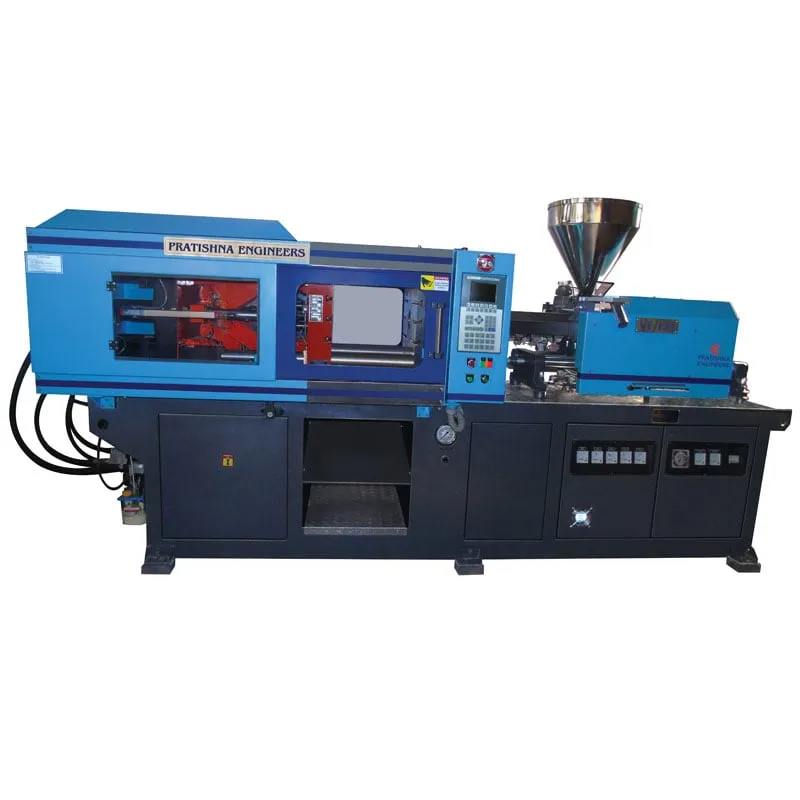

There is no single injection moulding machine price in Mumbai that you can compare across quotes. The figure on a quotation follows five choices: clamp tonnage, screw and barrel, drive type, controls and automation, and the scope of supply around the machine. Fix those five, send the same list to every supplier, and the quotes become comparable. Pratishna Engineers builds machines in Mumbai and quotes against your component, material, mould and output rather than a catalogue line. This guide covers what moves the figure, why running cost outweighs purchase cost over a machine's life, and how MSEDCL billing feeds into that running cost.
Key Takeaways
- A quote is only comparable when tonnage, screw size, drive, automation and scope are written down and identical across suppliers.
- Over ten years, the energy a machine draws usually costs more than the machine itself, so the drive choice matters as much as the purchase figure.
- Industrial users in Maharashtra on kVAh billing pay for poor power factor directly, so a machine with high reactive load raises every bill.
- Size the machine for the mould you have today. Spare tonnage for moulds you may buy later adds base load you pay for every hour.
What decides an injection moulding machine price in Mumbai?
Five things set the figure: clamp tonnage, screw and barrel size and metallurgy, the hydraulic or electric drive, the controls and automation package, and what the supplier includes around the machine. Two quotes for the same tonnage can differ widely because one includes items the other leaves out.
Tonnage drives the frame, platens, tie bars and hydraulics, so it is the biggest single lever. It should come from your part's projected area and material, not from a round number. A screw sized for a glass-filled or PVC compound needs different metallurgy from one for general PP, and a larger diameter changes both shot volume and the injection pressure the unit can deliver.
Do not ask for the biggest screw on offer as a safety margin. Plastics Technology's Bozzelli notes that a bigger screw usually means lower plastic pressure, and a shot that uses only a small share of a large barrel sits in the heat for longer. A screw matched to your shot weight costs less on the quote and runs better on the floor.
The drive is the next lever. A fixed-displacement pump, a servo-driven pump, a hybrid unit with electric injection and an all-electric machine all sit at different points between purchase cost and energy use. Automation then adds robots, conveyors, hot runner controllers and mould temperature controllers, each with its own scope of supply.
What moves a quoted figure, and what you should specify
| Item | What changes inside the machine | What you should send |
|---|---|---|
| Clamp tonnage | Frame, platens, tie bars, clamp cylinders or toggle | Part drawing, projected area, cavities, material |
| Screw and barrel | Diameter, L/D, wear-resistant metallurgy | Shot weight, resin grade, filler content |
| Drive | Fixed pump, servo pump, hybrid or electric | Running hours per year, current tariff |
| Controls and automation | Robot, conveyor, hot runner zones, MTC | Labour plan, cycle target, part handling |
| Scope of supply | Installation, trial, training, spares, freight | Site readiness, mould availability for trial |
Why does the lowest purchase figure rarely give the lowest total cost?
Energy, not purchase, is the larger number over a machine's working life. An energy saving guide from ExxonMobil, AMI and Tangram Technology reports that ten-year energy cost exceeds purchase cost in almost every case, so a cheaper machine with a high base load can cost more within years.
Base load is the power a machine draws whether or not it is making parts. The same guide puts the base load of a standard hydraulic machine at 75% or more of its total energy, against about 10 to 20% for all-electric and hybrid machines, where barrel heating accounts for most of it. It also notes that a high base load can mean the machine is too large for the job.
That last point is where oversizing hurts. A machine bought one size up for moulds you might add later draws a larger base load on the moulds you run today, every hour, for years. Our view is plain: size for the mould you have now, and buy the next machine when the next mould is real.
When you compare quotes, ask each supplier for the installed motor and heater ratings and, where available, measured energy on a similar job. Two machines with the same tonnage can have very different running profiles, and the purchase figure alone will not show it. A supplier who cannot give you those ratings is asking you to judge the machine on its purchase line only.
How does MSEDCL kVAh billing change your running cost?
Under kVAh billing, you pay for apparent energy, so reactive load from motors and drives shows up on the bill. MSEDCL explains that at a power factor of 0.85, 15% of the power drawn does no useful work, and it recommends capacitors or APFC panels to correct it.
MSEDCL's own FAQ states that demand charges are levied on kVA and energy charges on kVAh, and that MERC intended kVAh billing for all HT consumers and for LT consumers above 20 kW from 1 April 2020. If your connected load is above that threshold, power factor is a cost you see on every monthly bill.
Tariffs themselves have moved. A Deccan Chamber of Commerce circular reports that MERC issued an order on 25 March 2026 on MSEDCL's tariff petition, after a review order was set aside and the matter remanded, affecting HT and LT industrial consumers. Rates in any old article may therefore be out of date. Use the figures on your latest bill when you compare drives.
Power factor correction is a plant decision rather than a machine line, but it belongs in the same budget. An APFC panel sized for the new connected load protects the saving you expect from a more efficient drive. Without it, part of that saving goes back to the utility as a higher kVAh count every month.
- Ask each supplier for the power factor of the machine at typical load, or plan correction at the panel.
- Check whether a servo or variable-speed drive is offered, since speed control cuts both energy and reactive demand at idle.
- Take your contract demand from the bill, then add the new machine before you sign, so the connected load is ready on delivery day.
How Pratishna Engineers prepares a machine quotation
Pratishna Engineers was founded in Mumbai in 1991 by Nandkumar R. Kushe, a first-generation engineer. Design, manufacturing, assembly, testing and service are done in-house, which means a quotation is built from our own drawings and bill of materials rather than a resale margin on someone else's machine.
We select machines by application in a fixed order: component, material, mould, production requirement and then machine configuration. A quote that follows this order tells you why a tonnage, screw diameter or drive was chosen, so you can challenge it line by line.
The range covers horizontal machines (E, C and H series), vertical machines (PV and PVDL series), PET preform machines, two-platen PHM machines, hybrid machines with hydraulic locking and electric injection, and special purpose machines. That breadth lets us propose a drive and clamp type that suits the job instead of fitting the job to one product line.
We do not publish list prices, because two moulds for the same tonnage can need different screws, controls and automation. Send the inputs in the next section and you will get a quotation with each of those items stated.
What should you send before asking for a figure?
Send a part drawing or sample, the resin grade, mould details (cavities, size, shut height, hot or cold runner), the yearly quantity and the hours you plan to run. Add your latest electricity bill so the drive can be compared on your actual tariff. With those, any supplier can quote the same scope, and you can compare like with like. If an existing machine already runs a similar part, add its measured cycle time and a short energy reading, because that gives every new quote a baseline to beat. See the injection moulding machine range to match your part to a machine type before you ask.
Frequently Asked Questions About Injection Moulding Machine Prices in Mumbai
Why do two quotes for the same tonnage differ so much?
Tonnage is only one line. Screw diameter and metallurgy, the drive type, controls, automation and the scope of supply can all differ between two quotes for the same clamp. Ask each supplier to list those items, then compare like with like. A gap that remains after that comparison is worth asking about directly.
Does a servo-driven pump change the quoted figure?
Usually yes, because a servo motor and drive replace a fixed-speed motor. The trade is lower energy use, especially when the machine waits for cooling or idles between shots. Compare the extra purchase line against your running hours and current tariff rather than judging the drive by the quote alone.
Should I buy a larger machine to cover future moulds?
Only if the larger mould is confirmed. A machine that is too large for the job carries a higher base load, which you pay for on every hour it runs. Sizing for today's mould and adding a machine when a new mould is ordered usually keeps running cost and floor space under control.
Are installation, trial and training part of every quote?
Not always. Scope varies by supplier, so ask in writing whether installation, a trial with your mould, operator training, a starter spares kit and freight to your site are included. Missing items can make a lower quote look attractive until the extra invoices arrive after delivery and commissioning.
How does kVAh billing affect which machine I choose?
Under kVAh billing, reactive load raises the bill, so drives and motors with poor power factor cost more to run. Ask suppliers for power factor at typical load, plan APFC correction at the panel, and use the energy and demand figures on your latest MSEDCL bill when you compare drive options.
Can Pratishna quote from a part drawing alone?
A drawing is a good start. Pratishna selects machines in the order component, material, mould, production requirement and machine configuration, so a drawing with the resin grade, cavity count and yearly quantity gives a firm basis. Missing mould details can be added later, but the quote will carry assumptions until then.
Related Articles
- Injection Moulding Machinery Suppliers Mumbai Maharashtra
- Injection Moulding Machine Manufacturers in Mumbai
- Injection Moulding Machine Exporters from Mumbai
- Injection Moulding Machine Cost Breakdown in India
Sources & References
- ExxonMobil, AMI and Tangram Technology: An Energy Saving Guide for Injection Moulders
- Plastics Technology, J. Bozzelli: A Simpler Way to Calculate Shot Size vs. Barrel Capacity
- MSEDCL: kVAh Billing: Frequently Asked Questions
- Deccan Chamber of Commerce, Industries and Agriculture, Pune: Circular No. 085: MERC Order dated 25 March 2026 on MSEDCL tariff review petition
Technical Disclaimer
Disclaimer: The information provided in this document is for general informational and educational purposes only. It is based on technical references and industry information available at the time of preparation and may be subject to change. It does not constitute engineering, technical, commercial or professional advice, nor does it constitute a quotation, specification, warranty or contractual commitment by Pratishna Engineers.
Actual injection moulding machine and process requirements vary according to the component design, material, mould, production volume, machine configuration and operating conditions. The information, examples, calculations and recommendations provided should be independently evaluated and verified for the specific application before making any equipment, process or production decision. Information obtained from third-party sources remains subject to the accuracy and limitations of those sources.
Limitation of Liability: Pratishna Engineers makes no representation or warranty, express or implied, regarding the completeness, accuracy or suitability of the information for any particular application. To the extent permitted by applicable law, Pratishna Engineers shall not be liable for any loss, damage, cost or consequence arising from reliance on or use of the information contained in this document. Final machine selection, configuration and application suitability should be confirmed with Pratishna Engineers based on complete and accurate project requirements.

