






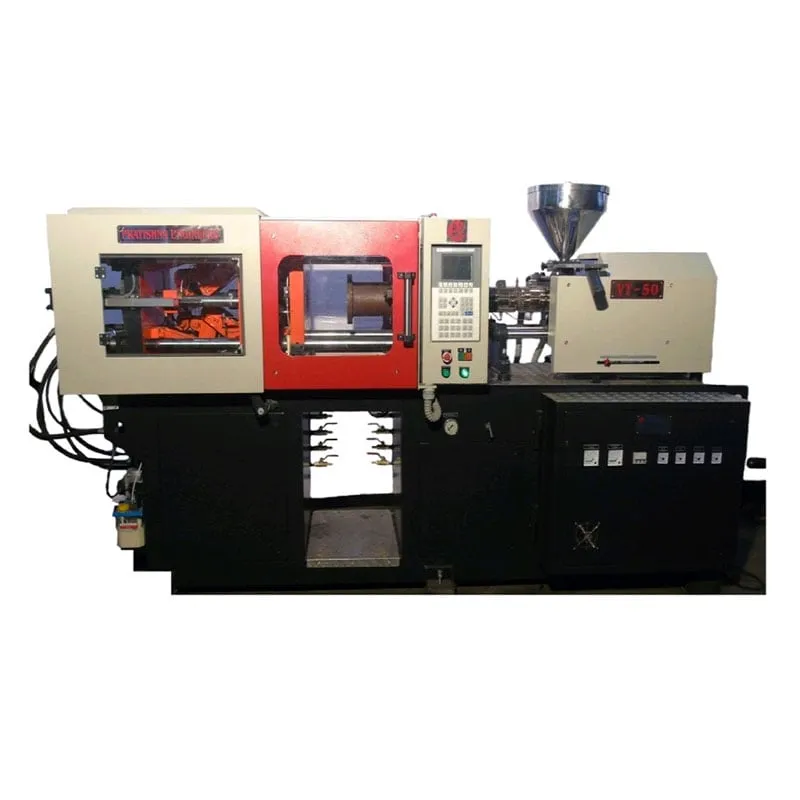

Before you sign with injection moulding machine exporters from Mumbai, check these four things:
- Documents: who prepares the shipping set, and which extra papers your country needs for import and installation.
- Packing: crate design, rust protection and treated, marked wood for every crate and pallet.
- Site match: supply voltage, frequency, water and air at your plant, written into the machine specification.
- Support: who installs, who trains, and how faults are handled once the engineer has flown home.
Get each answer in writing as part of the order. Pratishna Engineers builds and services machines in Mumbai for customers in India and international markets, and this guide sets out what a buyer abroad should expect from any exporter.
Key Takeaways
- Indian export rules set three mandatory shipping documents; your own country may add more, so list them before dispatch.
- Wooden crates and pallets must meet ISPM 15 treatment and marking, or the shipment can be held on arrival.
- A machine built for 50 Hz behaves differently on a 60 Hz supply, so state your supply at the enquiry stage.
- Remote support works best when the machine logs alarms and settings and your team can share readings quickly.
Which documents travel with an exported machine?
Three documents are mandatory for exports from India: the bill of lading or airway bill, the commercial invoice cum packing list, and the shipping bill or bill of export. Regulators can ask for more for specific goods, and your own customs authority sets its import list.
That list comes from DGFT Notification No. 114, dated 12 March 2015, reproduced by Pharmexcil, which inserted the requirement into the Foreign Trade Policy. The same notification allows separate invoice and packing list documents and lets the authority seek additional papers where legal compliance needs them.
Technical documents matter as much as customs papers. Ask for the operating and maintenance manual, electrical and hydraulic circuit drawings, a spares list with part numbers, the factory test report for your serial number, and the foundation and utility layout. Without the circuits, a local electrician or hydraulic fitter cannot help when the exporter's engineer is not on site.
Check also whether your country requires a conformity mark, a safety assessment or a translated manual for imported machinery. These vary by destination, so ask your importer or customs broker for the full list early, ideally before the order is placed, and share it with the exporter before the machine is built. Keep digital copies of every document in the order file, because a mismatched packing list can hold a shipment at either end.
How should a moulding machine be packed for sea freight?
Secure every moving part, protect machined surfaces from salt air and moisture, and use treated, marked wood for crates and pallets. The platen, injection unit and any robot should be locked for transit, with desiccant and a vapour barrier around the machine inside a closed crate.
Wood packaging is regulated. The IPPC standard ISPM 15 requires heat treatment of solid wood packaging to a core temperature of at least 56 °C for at least 30 minutes, or another approved treatment, and a mark showing the IPPC symbol, country code, producer number and treatment code. Unmarked wood can lead to the shipment being held.
Ask for photographs of the machine at each packing stage and a packing list that matches crate numbers to contents. Coat bare steel such as tie bars, platen faces and screw tips with a rust preventive, and seal open hydraulic and water ports. On arrival, open and inspect crates before you sign the delivery receipt, and photograph any damage.
Plan the container as well. The exporter should confirm crate dimensions and gross weights early, so you can book the right container, check road access to your plant and arrange a crane or forklift of suitable capacity for unloading.
What should overseas installation include?
Installation should cover levelling on a prepared foundation, connection to power, cooling water and air, filling and flushing hydraulics, dry cycling, a trial on your mould and operator training. Agree in writing which of these the exporter does and which your team prepares before arrival.
Site readiness decides how fast commissioning goes. Send the exporter your supply voltage and frequency, the available current at the panel, cooling water temperature and flow, and compressed air pressure before the machine is built, not when it lands. The worked example below shows why frequency in particular cannot be left to commissioning day.
Plan the trial. Have the mould, resin, dryer and mould temperature controller ready, and agree the acceptance criteria in advance: cycle time, part weight, critical dimensions and a run length. A signed acceptance sheet closes the installation and starts the warranty period cleanly.
Who does what in a typical export installation (agree your own split in the contract)
| Task | Usually the exporter | Usually the buyer |
|---|---|---|
| Foundation and floor level | Supplies layout and loads | Prepares the floor |
| Power, water and air | States ratings and connections | Brings supply to the machine |
| Levelling and hydraulics | Levels, fills and flushes | Supplies oil if agreed |
| Trial and training | Runs trial, trains operators | Provides mould, resin and operators |
Training is worth a full day of its own. Ask for operator training on start-up, shutdown and purging, and separate maintenance training on filters, oil checks, heaters and alarm handling, with the manuals in hand.
What should you ask injection moulding machine exporters from Mumbai about remote support?
Ask how a fault is reported, who responds, in which time zone, and what data they need from you. Ask whether the controller logs alarms and settings, and whether your team can send photos, videos and readings that let an engineer diagnose the fault without travelling.
Good remote support depends on measurements as much as on the exporter. A clamp-meter data logger can measure a machine's energy in as little as 30 minutes, according to Kent in PlasticsToday, and average heater load can be read over 10 to 15 minutes. Readings like these, sent with alarm history, let an engineer separate a heater fault from a hydraulic one. Agree a time window when both teams are available, and name one person at your plant who collects readings and speaks for the machine.
Ask also which spares are shipped with the machine and which are held in Mumbai for dispatch, how they are sent, and who handles import clearance for a spare. A heater band that waits in customs stops the machine just as surely as one that was never ordered.
How Pratishna Engineers handles export enquiries
Pratishna Engineers has 35+ years of experience, with more than 9,000 machines supplied to over 1,000 customers in India and international markets. Design, manufacturing, assembly, testing and service are done in-house in Mumbai, so the team that answers an overseas fault call works from the machine's own drawings and test records.
Our range covers horizontal machines in the E, C and H series, vertical PV and PVDL machines, PET preform machines, PHM two-platen machines, hybrid machines with hydraulic locking and electric injection, and special purpose machines. An export enquiry is handled in the same order as any other: component, material, mould, production requirement, then machine configuration.
Send your plant's supply voltage and frequency with the enquiry, and the machine will be specified for it from the start rather than adapted later. The group companies are Pratishna Engineers Limited, Pratishna Greentech Private Limited and Pratishna Technologies Private Limited, and the group's other products include hydraulic systems and automation.
What should you send with an export enquiry?
Send the part drawing, resin grade, mould details, yearly volume, your supply voltage and frequency, cooling water and air data, and your country's import document list. With those, an exporter can specify, quote and plan shipment in one pass. If you already run other moulding machines, include their utility ratings too, so the new machine fits your existing supply, water circuit and spares practice. Compare machine types on the injection moulding machine range page first.
Frequently Asked Questions About Buying from Machine Exporters in Mumbai
Which export documents does India require for a machine shipment?
Under the Foreign Trade Policy, three documents are mandatory for exports: the bill of lading or airway bill, the commercial invoice cum packing list, and the shipping bill or bill of export. Regulators may ask for more for specific goods, and your own customs authority sets its import requirements separately.
Do wooden crates need treatment for export?
Yes. ISPM 15 requires solid wood packaging used in international trade to be treated, for example heat treated to a core temperature of at least 56 °C for 30 minutes, and marked with the IPPC symbol, country code, producer number and treatment code. Ask the exporter to confirm this for every crate.
Can a machine built for 50 Hz run on a 60 Hz supply?
Not without checking. Induction motors run about 20% faster on 60 Hz, so a fixed pump delivers more flow and needs more power. Motors, pumps, valves, oil coolers and some control components must be specified for your frequency. State voltage and frequency in the enquiry so the machine is built for them.
Who installs an exported machine at my plant?
It depends on the contract. Some contracts send the exporter's engineer for installation and trial; others use a local team guided remotely. Agree in writing who levels the machine, connects utilities, runs the trial and trains operators, and what the acceptance criteria are before the machine is shipped.
How is a breakdown handled after an exported machine is installed?
Agree a reporting route, response time and the data you will send: alarm history, settings, photos, videos and electrical readings. Keep a starter kit of wear and electrical spares on site, and ask which spares the exporter holds for dispatch and who clears them through customs at your end.
Does Pratishna supply machines outside India?
Yes. Pratishna Engineers has supplied more than 9,000 machines to over 1,000 customers in India and international markets. Design, manufacturing, assembly, testing and service are done in-house in Mumbai. Send your supply voltage, frequency and import document list with the enquiry so the machine is specified for your plant.
Related Articles
- Injection Moulding Machine Manufacturers in Mumbai
- Injection Moulding Machinery Suppliers Mumbai Maharashtra
- Plastic Injection Moulding Machine Price in Mumbai
- Plastic Injection Moulding Machine Exporter India
Sources & References
- Pharmexcil (reproducing DGFT Notification No. 114 (RE-2013)/2009-2014, 12 March 2015): Specifying documents required for Export and Import
- International Plant Protection Convention (IPPC): ISPM 15: Wood Packaging Material
- PlasticsToday, R. Kent: Getting to know your real energy use and cost
Technical Disclaimer
Disclaimer: The information provided in this document is for general informational and educational purposes only. It is based on technical references and industry information available at the time of preparation and may be subject to change. It does not constitute engineering, technical, commercial or professional advice, nor does it constitute a quotation, specification, warranty or contractual commitment by Pratishna Engineers.
Actual injection moulding machine and process requirements vary according to the component design, material, mould, production volume, machine configuration and operating conditions. The information, examples, calculations and recommendations provided should be independently evaluated and verified for the specific application before making any equipment, process or production decision. Information obtained from third-party sources remains subject to the accuracy and limitations of those sources.
Limitation of Liability: Pratishna Engineers makes no representation or warranty, express or implied, regarding the completeness, accuracy or suitability of the information for any particular application. To the extent permitted by applicable law, Pratishna Engineers shall not be liable for any loss, damage, cost or consequence arising from reliance on or use of the information contained in this document. Final machine selection, configuration and application suitability should be confirmed with Pratishna Engineers based on complete and accurate project requirements.

