






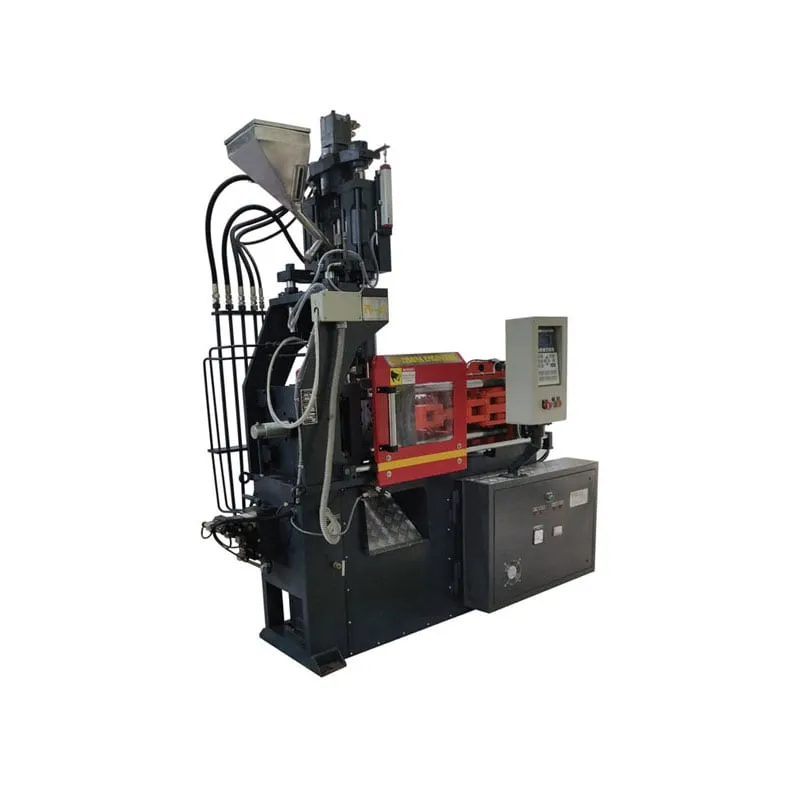

To buy injection moulding machine in Mumbai direct from the manufacturer, plan for six stages: enquiry, trial, order, factory acceptance, delivery and commissioning. The table shows what you send and what you get back at each stage, so the project does not stall on a missing drawing, a late sample or an unready power connection.
Six stages of a direct machine purchase
| Stage | You send | You receive |
|---|---|---|
| Enquiry | Part drawing or sample, resin grade, mould details, monthly volume | Machine configuration proposal and technical data sheet |
| Trial | Your mould or sample parts, resin, written pass criteria | Trial report with settings, cycle and part results |
| Order | Purchase order with agreed specification and dates | Order acknowledgement and build schedule |
| Factory acceptance | Inspection team and checklist | Machine run at the maker's plant, signed acceptance record |
| Delivery | Site readiness: floor, power, water, access | Dispatch, documents and unloading plan |
| Commissioning | Mould, resin and operators for training | Installation, first good parts, handover record |
Buying direct from Pratishna Engineers, or any maker that designs and builds in house, means one team answers for the machine from proposal to handover. No stage has a fixed number of weeks. The schedule moves as fast as both sides close open points, so write your commitments and the maker's into the purchase order.
Trial and factory acceptance carry the most risk, so the sections below explain what each should prove. Delivery and commissioning depend on your own site, so the last buyer section covers floor, power and water.
Key Takeaways
- Send a part drawing, resin grade, mould details and monthly volume with your enquiry, so the proposal matches your job and not a catalogue model.
- Run a trial on your own mould or a close match before ordering, and agree written pass criteria for parts and cycle time.
- Witness factory acceptance at the maker's plant: safety interlocks, clamp and injection functions, a dry cycle and a moulding run where possible.
- Prepare floor, power, cooling water and access before dispatch; under MSEDCL kVAh billing, a poor power factor raises your energy bill every month.
What are the steps to buy injection moulding machine in Mumbai?
Start with an enquiry that defines the part, then confirm the machine on a trial, place an order with written specifications and dates, witness factory acceptance, prepare your site for delivery, and close with commissioning on your own mould. Each step has an owner and a closing document.
The enquiry decides the quality of everything after it. A useful one gives the part drawing or a sample, the resin grade, the mould size and weight if the mould exists, the number of cavities and the monthly volume. Without these, any proposal is a guess sized from a brochure.
The proposal should state clamp force, screw diameter, shot capacity, tie-bar distance, mould height range and opening stroke, and explain why each fits your part. Ask the maker to show the clamp and shot calculation. If a figure has no reasoning behind it, ask again before you move to a trial.
At order stage, attach the agreed specification to the purchase order as an annexure. Add the pass criteria, the factory acceptance date, the site readiness date and the payment milestones linked to each. A one-page schedule signed by both sides leaves less room for disputes at handover.
What should a machine trial prove before you place the order?
A trial should prove that the machine fills, packs and ejects your part at the cycle you planned, with the clamp, shot and stroke margins the proposal promised. Run it on your mould, or the nearest match, with your resin, and record the settings for repeat runs.
If your mould is still being made, a trial on a similar mould from the maker's floor still tells you something. Watch the injection speed profile, the hold pressure response and how the clamp opens and closes at a comparable mould weight. Note what was tested and what was not.
Agree the pass criteria in writing before the trial starts: part weight within your tolerance, no flash, no short shots, dimensions checked on a set number of parts and a cycle time range rather than a single number. Cycle time depends on mould cooling, so judge it on your own mould.
Ask for the trial report as a document: barrel temperatures, injection and hold settings, cushion, cycle breakdown, part weights and photos. This report becomes the reference for commissioning. If the same mould behaves differently on site, you compare against it instead of arguing from memory.
What should factory acceptance check before the machine leaves?
Factory acceptance should confirm that the machine built matches the order, that every safety function works, and that clamp, injection and ejection run within the agreed limits. Witness it at the maker's plant, with your checklist, and sign a record listing any open points to close before dispatch.
Safety comes first on the checklist. ISO 20430:2020 sets the safety requirements for the design and construction of injection moulding machines with hydraulic or electrical platen drives, and it refers to ISO 12100 for risk assessment. Use it as the reference when you check guards, gate interlocks and emergency stops.
Then check function. Run the clamp through its full stroke, set the mould height range end to end, test ejector strokes and core pulls if ordered, and confirm every heater zone reaches setpoint. A moulding run with a test mould tells you more than a dry cycle alone, if the maker can arrange one.
Factory acceptance checklist (starting point, edit it for your order)
| Area | What to check | Record |
|---|---|---|
| Safety | Front and rear gate interlocks, emergency stops, guards around moving parts | Pass or fail per device |
| Clamp | Full opening stroke, mould height range, tie-bar distance, locking repeatability | Measured values against the order |
| Injection | Speed and pressure profiles, screw recovery, heater zones at setpoint | Settings and readings |
| Hydraulics and cooling | Oil temperature after a run, leaks, cooling water circuits | Readings and photos |
| Documents | Electrical and hydraulic drawings, manuals, spares list | Copies received |
Flat opinion: do not sign acceptance on a machine you have not seen run. Photos and a video are useful records, but they do not replace standing at the gate when the interlock trips. If travel is hard, send someone you trust with the printed checklist and the authority to record open points.
How should you prepare your Mumbai site for delivery and commissioning?
Prepare the floor, power, cooling water, compressed air and access before the machine leaves the factory. Check the foundation and levelling needs, confirm your sanctioned load can carry the new demand, plan crane or forklift capacity for unloading, and keep the mould, resin and operators ready for commissioning day.
Power often needs the longest lead time. MSEDCL charges demand on kVA and energy on kVAh where kVAh billing applies, which MERC intended for all HT consumers and LT consumers above 20 kW from 1 April 2020. At a power factor of 0.85, 15% of the power drawn does no useful work.
That is why capacitors or an APFC panel belong in the site plan, not in a later fix. Rates have also moved: MERC issued an order on MSEDCL's tariff petition on 25 March 2026 after court proceedings, so read current rates from your latest bill, not from an old circular.
On the floor, keep a clear path from the gate to the machine bay, check the slab under the machine footprint, and run cooling water lines with valves and a return before the machine arrives. Commissioning goes faster when the chiller, dryer and mould are waiting, not still being ordered.
How Pratishna Engineers handles a direct purchase
Pratishna Engineers was founded in Mumbai in 1991 by Nandkumar R. Kushe, a first-generation engineer. Design, manufacturing, assembly, testing and service are done in house, at facilities in Mumbai covering about 25,000 sq ft with CNC turning centres, machining centres, jig boring machines, and assembly and testing facilities.
With 35+ years of experience, the company has supplied 9,000+ machines to 1,000+ customers in India and international markets. Every enquiry follows the same selection order: component, material, mould, production requirement, then machine configuration. An independent QA department works to written SOPs, and accredited external labs are used when required.
- The range covers horizontal, vertical, vertical-horizontal combination, hydro-mechanical, two-platen, PET and hybrid machines, so the proposal starts from your part rather than one machine type.
- The works is at A1-4, Vaibhav Ind. Premises, Opp. Oxford Chambers, Saki Vihar Road, Andheri (E), Mumbai 400 072, within reach for acceptance visits.
What should you send to start your purchase?
Send the part drawing or a sample, the resin grade, mould details if the mould exists, the number of cavities and your monthly volume. Add your sanctioned load and the floor space available. With these, a maker can propose a machine and a trial plan. See the injection moulding machine range.
Frequently Asked Questions About Buying an Injection Moulding Machine in Mumbai
How long does it take to buy an injection moulding machine?
There is no fixed duration. The schedule depends on how quickly the part data reaches the maker, whether a trial is needed, the build queue and how ready your site is. Ask the maker for a dated schedule against each stage and write it into the purchase order.
Can I run a trial before ordering if my mould is not ready?
Yes, on a similar mould. It will show how the machine handles injection speed, hold pressure and clamp movement at a comparable mould weight. It cannot confirm your exact cycle or part quality, so plan a second check on your own mould at commissioning and record both results.
Who should attend factory acceptance from the buyer's side?
Send someone who will run or maintain the machine, ideally your process engineer or maintenance head. They should carry the order specification and the acceptance checklist, have authority to list open points, and sign the record. A visitor who only checks paperwork misses how the machine behaves in a cycle.
What documents should come with a new injection moulding machine?
Expect the operation and maintenance manual, electrical and hydraulic circuit drawings, the factory acceptance record, a spares list with part numbers, and the trial report if a trial was run. Keep copies near the machine and in the maintenance office, because troubleshooting starts with the drawings.
Does buying direct from a manufacturer in Mumbai help with commissioning?
It can, because the people who built and tested the machine are close to your plant. Shorter travel means quicker visits for commissioning, training and early faults. Confirm in writing who attends commissioning, what training is included and how breakdown calls are handled after handover.
How does Pratishna Engineers start a machine enquiry?
Pratishna Engineers follows a fixed selection order: component, material, mould, production requirement, then machine configuration. Send the part drawing or sample, resin grade, mould details and monthly volume, and the team works through each step before proposing a machine. Design, manufacturing, testing and service are handled in house.
Related Articles
- Plastic Injection Moulding Machine Supplier in Mumbai
- Best Plastic Injection Moulding Machine in Mumbai
- Automatic Injection Moulding Machines in Mumbai
- Servo-Driven Injection Moulding Machine in Mumbai
Sources & References
- ISO: ISO 20430:2020, Plastics and rubber machines: Injection moulding machines: Safety requirements
- MSEDCL: kVAh Billing: Frequently Asked Questions
- Deccan Chamber of Commerce, Industries and Agriculture, Pune: Circular No. 085: MERC Order dated 25 March 2026 on MSEDCL tariff review petition
Technical Disclaimer
Disclaimer: The information provided in this document is for general informational and educational purposes only. It is based on technical references and industry information available at the time of preparation and may be subject to change. It does not constitute engineering, technical, commercial or professional advice, nor does it constitute a quotation, specification, warranty or contractual commitment by Pratishna Engineers.
Actual injection moulding machine and process requirements vary according to the component design, material, mould, production volume, machine configuration and operating conditions. The information, examples, calculations and recommendations provided should be independently evaluated and verified for the specific application before making any equipment, process or production decision. Information obtained from third-party sources remains subject to the accuracy and limitations of those sources.
Limitation of Liability: Pratishna Engineers makes no representation or warranty, express or implied, regarding the completeness, accuracy or suitability of the information for any particular application. To the extent permitted by applicable law, Pratishna Engineers shall not be liable for any loss, damage, cost or consequence arising from reliance on or use of the information contained in this document. Final machine selection, configuration and application suitability should be confirmed with Pratishna Engineers based on complete and accurate project requirements.

