






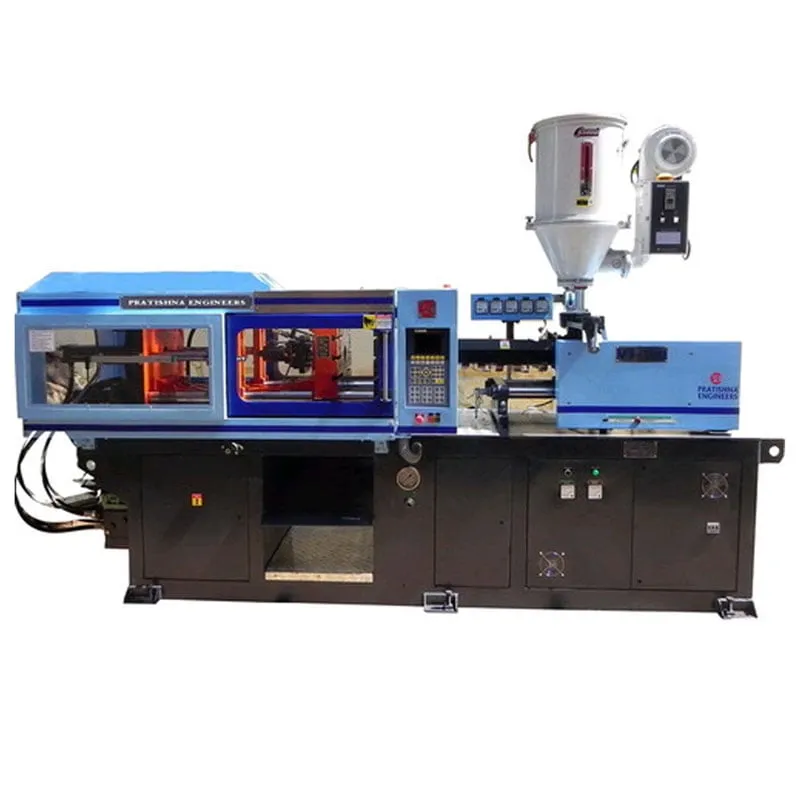

A mould change that takes 90 minutes on a 30 s cycle with a two-cavity mould costs 180 cycles and 360 parts, every time. Four such changes a week lose 1,440 parts before any breakdown. That is why horizontal moulding machine downtime reduction usually starts with mould change time, then idling energy, maintenance and spares on the shelf.
None of these needs a new machine. Each needs a measured baseline, a standard method and a person who owns it on every shift. Start with what your own logbook already shows for last month.
Key Takeaways
- Time every mould change from last good part to first good part, then split it into work done while running and work done while stopped.
- Idling machines can draw 52% to 97.5% of full moulding energy; an idle spell longer than about 1.5 hours may be cheaper to switch off.
- Rising energy use on the same job can signal screw or barrel wear, so log kWh per job before the wear shows up as scrap.
- Keep critical spares on the shelf; a spare barrel ordered with a new machine can be swapped by a skilled operator in under 30 minutes.
Where does horizontal moulding machine downtime reduction start?
It starts with mould change, because it is planned downtime you control. Measure the time from the last good part of one job to the first good part of the next, then move every task that can be done while the old job runs outside the stoppage.
Common downtime sources and the first fix
| Source | Typical cause | First fix |
|---|---|---|
| Mould change | Searching for clamps, hoses, the crane or the next mould | Stage mould, clamps and water hoses before the stop |
| Mould mismatch | Locating ring, ejector pattern or shut height does not suit the machine | Check mould data against machine data before the job is scheduled |
| Idle running | Machine left heating and pumping between jobs or shifts | Set a switch-off rule for idle spells longer than about 1.5 hours |
| Breakdown | Worn screw, leaking seals, failed heater band | Planned checks and critical spares on the shelf |
Staging is the biggest lever. Bring the next mould to the machine, lay out clamps, bolts and water hoses, and keep the setup sheet with it. Quick-connect water fittings and standard clamp heights save minutes that add up across a month.
Check fit before the mould reaches the machine. Locating ring size, mounting holes and ejector patterns vary from mould to mould. A mismatch found at the press may need an adapter plate or an ejector box, and the stoppage stretches while someone makes one.
Our flat view: a mould change that waits for a crane, a hose or a missing bolt is a planning failure, not a machine failure.
Write the method down as a numbered sheet for each mould family, and time it again after every change. Teams improve what they can see on a board beside the machine.
Should an idle moulding machine be switched off?
Often, yes. Measurements show idling machines drawing 52% to 97.5% of the energy they use while moulding, with one at 64%. Idle spells longer than about 1.5 hours may be cheaper to switch off and restart, but test the restart time and scrap on your own job first.
On a standard hydraulic machine, base load can be 75% or more of total energy, because the pump runs whether the screw is moving or not. All-electric and hybrid machines sit nearer 10 to 20%, mostly barrel heating. That gap is why an idle hydraulic machine is expensive.
Measure before you set a rule. A clamp-meter data logger can measure a machine in as little as 30 minutes; average the heater load over 10 to 15 minutes. One hydraulic machine used 22% less energy with its variable frequency drive switched on, so check that such settings are active.
In Maharashtra, MSEDCL's kVAh billing, intended for HT consumers and LT consumers above 20 kW, charges energy on kVAh. At a power factor of 0.85, every 100 kWh is billed as about 117.6 kVAh, so lightly loaded motors at poor power factor cost more than the kWh reading suggests.
Which maintenance checks and spares prevent long stoppages?
Checks that catch wear early prevent the longest stoppages: screw and barrel wear, hydraulic oil condition and temperature, heater bands and thermocouples, and clamp lubrication. Spares that stop a machine for days, such as heater bands, thermocouples, seals and filters, belong on your own shelf, not the supplier's.
Energy is a free wear gauge. Rising energy on the same job, with the same settings, can indicate screw or barrel wear. If you log kWh per job each month, a creeping figure gives you weeks of warning before short shots and colour streaks appear.
Consider a second barrel. Ordered with a new machine, a second barrel can be low cost, and a skilled operator can swap one in under 30 minutes, even hot. That turns a worn or contaminated barrel from a long stoppage into a short one.
Keep a simple spares list per machine: item, part number, quantity on the shelf, reorder level and supplier lead time. Review it after every breakdown and add whatever the machine waited for.
Plan maintenance into mould changes where you can. If the machine is already stopped for a new job, a filter change or a heater band check costs no extra output.
What should you measure first on your own floor?
Pick one machine and log a week of stoppages: start, end, cause, who fixed it and the part or tool that was waiting. Add a clamp-meter reading for moulding and for idle. That baseline shows where your hours go. Then compare layouts and options on the horizontal injection moulding machine page.
Frequently Asked Questions About Moulding Machine Downtime
How do you measure mould change time properly?
Measure from the last good part of the outgoing job to the first good part of the new one, not from clamp open to clamp close. That window includes purging, heating, first-off inspection and adjustment, which often take longer than swapping the mould itself.
Does a servo pump reduce idle energy?
It usually does, because a servo-driven pump slows down when the machine is not asking for oil instead of running at full speed. Older fixed-speed, fixed-volume pumps keep drawing high power during idle spells. Retrofits with servo motors or variable-speed drives are an option on many hydraulic machines.
What spares should a moulding shop keep for each machine?
Keep the parts whose failure stops the machine and whose lead time is longer than a day: heater bands, thermocouples, seals, hydraulic filters, solenoid coils and a nozzle tip. Size the stock from your breakdown log, and add any part the machine waited for in the last year.
How often should hydraulic oil be checked?
Check oil level and temperature every shift, and oil condition at the interval set by the oil supplier and the machine manual. Hot or dirty oil wears pumps and valves and can make the process drift, so treat a rising oil temperature as a warning, not a nuisance.
Can energy logging show machine wear?
Yes. Rising energy use on the same job with the same settings can indicate screw or barrel wear. Log kWh per job or per kilogram each month. A steady rise is an early warning to inspect the screw and check valve before scrap and short shots start to climb.
Related Articles
- Insert Moulding on Vertical Machines
- PET Preform Defects and Their Process Fixes
- Layout Efficiency on Horizontal Moulding Machines
- Improving Injection Moulding Machine Productivity
Sources & References
- PlasticsToday, R. Kent: Getting to know your real energy use and cost (Jan 2010)
- ExxonMobil, AMI and Tangram Technology: An Energy Saving Guide for Injection Moulders
- Plastics Technology, J. Bozzelli: A Simpler Way to Calculate Shot Size vs. Barrel Capacity (2017, updated 2022)
- MSEDCL: kVAh Billing: Frequently Asked Questions
Technical Disclaimer
Disclaimer: The information provided in this document is for general informational and educational purposes only. It is based on technical references and industry information available at the time of preparation and may be subject to change. It does not constitute engineering, technical, commercial or professional advice, nor does it constitute a quotation, specification, warranty or contractual commitment by Pratishna Engineers.
Actual injection moulding machine and process requirements vary according to the component design, material, mould, production volume, machine configuration and operating conditions. The information, examples, calculations and recommendations provided should be independently evaluated and verified for the specific application before making any equipment, process or production decision. Information obtained from third-party sources remains subject to the accuracy and limitations of those sources.
Limitation of Liability: Pratishna Engineers makes no representation or warranty, express or implied, regarding the completeness, accuracy or suitability of the information for any particular application. To the extent permitted by applicable law, Pratishna Engineers shall not be liable for any loss, damage, cost or consequence arising from reliance on or use of the information contained in this document. Final machine selection, configuration and application suitability should be confirmed with Pratishna Engineers based on complete and accurate project requirements.

