






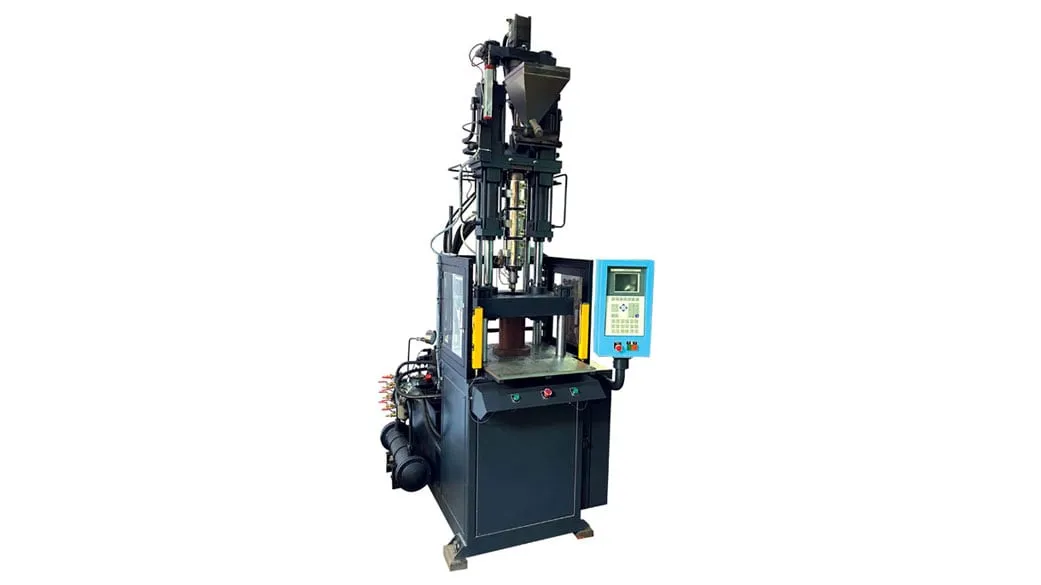

The new vs used injection moulding machine cost question is rarely settled by the purchase figure. A used machine can cost less to buy and more to run: older fixed-pump hydraulics can draw far more power on the same job, worn screws and check rings waste resin, spares for obsolete controls can be hard to find, and guarding may fall short of current safety standards. Compare both on total cost over the years you plan to run the job, after an inspection and a powered energy test on the used machine. The lower purchase figure does not always win.
Key Takeaways
- Compare new and used machines on total cost over the planned run, including energy, scrap, spares, downtime and safety upgrades, not on purchase figure alone.
- Older hydraulic machines with fixed pumps can carry a base load of 75% or more of their energy, even when the job is light.
- Measure the used machine on a real job with a clamp meter before buying, and inspect screw, barrel, check ring, tie bars and platens.
- A machine built before ISO 20430:2020 was not designed to it, so check guarding, interlocks and emergency stops against your own safety needs.
What hidden costs come with a used injection moulding machine?
The main hidden costs are higher energy use, worn plasticising parts that waste resin and lengthen cycles, spares that are slow or impossible to source, control systems no one supports, and safety upgrades. Most of these repeat every month, while the purchase saving is counted only once.
Where a used machine's costs hide
| Cost area | What to check | Why it keeps costing |
|---|---|---|
| Energy | Pump type, motor, heater bands, barrel insulation | Excess draw is billed every month |
| Screw, barrel, check ring | Flight wear, bore wear, ring leakage, cushion drift | Scrap, longer recovery, slower colour changes |
| Hydraulics | Oil condition, leaks, seals, oil cooler | Downtime and oil top-ups |
| Controls | Controller age, spare boards, software access | Long stoppages if a board fails |
| Clamp | Tie-bar wear, platen parallelism, toggle bushes | Flash, mould damage, parting-line wear |
| Safety | Guards, interlocks, emergency stops | One-time upgrade, needed before use |
Energy is often the largest of these. An energy guide for moulders, built on more than 200 site surveys, found that ten-year energy cost exceeds purchase cost in almost every case, so a few kilowatts of extra draw can outweigh a modest saving at purchase.
Screw and barrel wear hides in the process. A worn check ring lets melt slip back, so the cushion drifts and part weight varies, and a worn screw lengthens recovery. Rising energy on the same job can also signal wear. Ask for screw and barrel measurements, or budget for refurbishment.
Controls are an easily missed risk. If the controller is obsolete and spare boards are not available, one failure can stop the machine until a retrofit is engineered and fitted. Ask which parts of the control and hydraulic system the original builder or a service firm still supports.
How does new vs used injection moulding machine cost compare on energy?
On energy, the gap can be large. A standard hydraulic machine can have a base load of 75% or more of its total energy, while all-electric and hybrid machines sit near 10% to 20%, mostly barrel heating. Many older used machines run fixed-speed pumps with very high demand.
Base load is the energy drawn regardless of output, so a high base load means you pay for power even on a light job. The same guide reports that modern hydraulic machines are at least 25% more efficient than 1997 machines, and that a high base load can mean the machine is too large for the job.
A used machine is not stuck with its pump. Retrofit options include variable-speed motors, variable-volume pumps and servo motors driving fixed pumps, and an electric screw drive can cut peak power. Add the retrofit to the comparison, and check that the frame, valves and controls justify the work.
Frequency matters for imported used machines. A 4-pole motor built for 60 Hz turns at 1,500 rpm instead of 1,800 on India's 50 Hz supply (120 × f ÷ poles), so fixed-pump flow drops by about one sixth unless the motor or pump is changed.
How do you inspect a used machine before you buy?
Run it on a real mould with your resin, log energy with a clamp meter, and check cushion stability, part weight and cycle against your target. Then inspect screw, barrel, check ring, hydraulic oil and seals, tie bars, platen parallelism, controls and every guard and interlock.
Take the energy reading during steady production, and average heater load over 10 to 15 minutes rather than trusting a single reading. Compare the result with a newer machine measured on a similar job, not with brochure figures, so both sides of the comparison are real.
Platen parallelism and tie-bar condition decide whether your moulds survive. Mould-sizing guidance treats level and parallelism of 0.025 to 0.05 mm as generally acceptable on machines under 500 t. Worn toggle bushes or uneven tie-bar wear show up as flash on one side and parting-line damage.
Safety deserves a written check. ISO 20430:2020 sets safety requirements for injection moulding machines with hydraulic or electric platen drives, but it does not apply to machines manufactured before its publication. An older machine may need new guards, interlocks or safety circuits before your team runs it.
The flat view: a used machine bought without a powered test on a real mould is a gamble, however low the figure on the invoice.
What should you do before choosing new or used?
Write down the job, resin, shot, cycle and output target, then get a new-machine sizing and a powered test of the used option on the same basis. If you are on MSEDCL kVAh billing, correct power factor first so the test compares machines, not capacitors. See the injection moulding machine range.
Frequently Asked Questions About New and Used Injection Moulding Machines
Is a used injection moulding machine a good idea for a start-up?
It can be, if the machine passes a powered test on your mould, the controls are still supported and the energy draw is acceptable. Without those checks, the purchase saving can disappear in scrap, power bills and stoppages during the first year of production.
Can an old hydraulic machine be made more efficient?
It can. Retrofit options include variable-speed motors, variable-volume pumps and servo motors with fixed pumps. Check the condition of the frame, valves and controls first, because a retrofit on a worn machine still leaves you with wear-related scrap and downtime on every job you run.
What should I check on the screw and barrel?
Ask for measured screw flight diameters and barrel bore, and look at the check ring for wear. On a powered test, watch whether the cushion stays steady and part weight holds shot to shot. An unstable cushion or long recovery points to wear that will need repair.
Does an imported used machine work on Indian power?
Check voltage, frequency and control supply first. A machine built for 60 Hz runs its motors about one sixth slower on a 50 Hz supply, which cuts fixed-pump flow and can lengthen the cycle. Confirm with the seller whether the motor, pump or drive needs changing.
Are used machines safe to run as they are?
Not automatically. Guards, interlocks and emergency stops may be worn, bypassed or below current practice, and machines made before ISO 20430:2020 were not designed to it. Have a competent person inspect the safety system and close the gaps before operators use the machine.
Related Articles
- Injection Moulding Machine Payback Period
- Plastic Injection Moulding Machine Manufacturers
- Injection Moulding Machine Cost Breakdown India
- Where to Buy Plastic Moulding Machines in Mumbai
Sources & References
- ExxonMobil, AMI and Tangram Technology: An Energy Saving Guide for Injection Moulders
- SPE Plastics Engineering, R. Kent (Tangram Technology): Energy-Saving Tip 67: Injection Molding: get the right motor
- ISO: ISO 20430:2020 Plastics and rubber machines: Injection moulding machines: Safety requirements
- MoldMaking Technology, B. Catoen: Machine Sizing and Specification for Optimal Mold Performance, Part 1
Technical Disclaimer
Disclaimer: The information provided in this document is for general informational and educational purposes only. It is based on technical references and industry information available at the time of preparation and may be subject to change. It does not constitute engineering, technical, commercial or professional advice, nor does it constitute a quotation, specification, warranty or contractual commitment by Pratishna Engineers.
Actual injection moulding machine and process requirements vary according to the component design, material, mould, production volume, machine configuration and operating conditions. The information, examples, calculations and recommendations provided should be independently evaluated and verified for the specific application before making any equipment, process or production decision. Information obtained from third-party sources remains subject to the accuracy and limitations of those sources.
Limitation of Liability: Pratishna Engineers makes no representation or warranty, express or implied, regarding the completeness, accuracy or suitability of the information for any particular application. To the extent permitted by applicable law, Pratishna Engineers shall not be liable for any loss, damage, cost or consequence arising from reliance on or use of the information contained in this document. Final machine selection, configuration and application suitability should be confirmed with Pratishna Engineers based on complete and accurate project requirements.

