






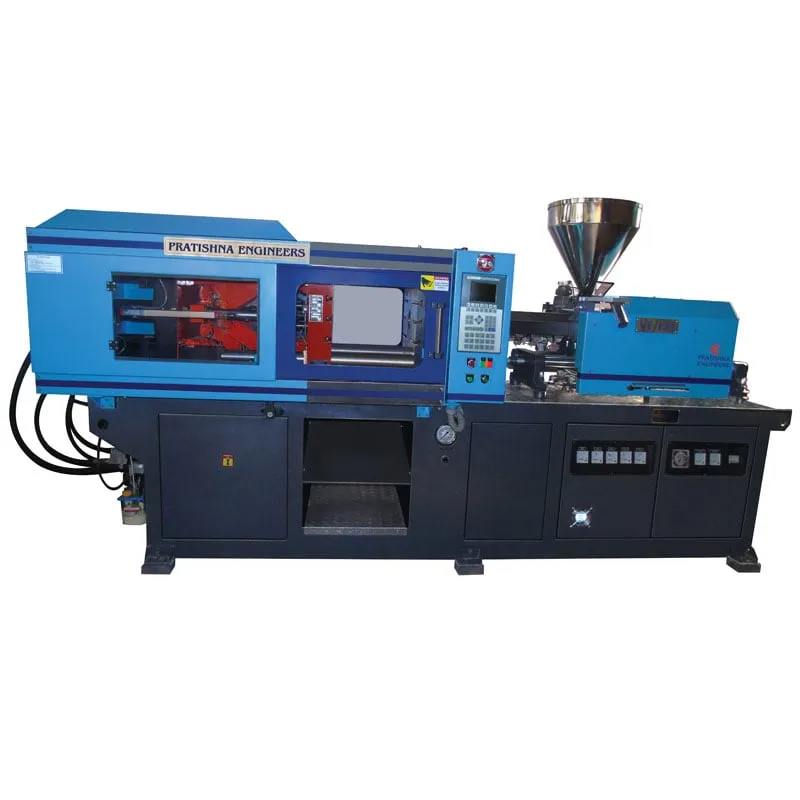

The injection moulding machine payback period is the installed cost divided by the net cash the machine adds each month. Before you work it out, collect five numbers:
1. Good parts per month, from cycle time, cavities, good-shot share and real running hours.
2. Margin per good part after resin, colour and packing.
3. Energy per month, measured in kWh and billed in kVAh.
4. Maintenance, spares and operator cost per month.
5. Installed cost: machine, mould share, auxiliaries, installation and power upgrades.
Payback in months is the fifth number divided by one net monthly figure built from the first four.
Key Takeaways
- Work payback on good parts sold, not on nameplate cycles; a few points of scrap or idle time can move payback by months.
- Energy is a large running cost you control directly, and idle machines can still draw more than half of their full moulding energy.
- On MSEDCL kVAh billing, a poor power factor raises the units you pay for, so correct it before you judge a machine's energy use.
- Test the result with a sensitivity table, because cycle time, good-shot share and energy can move payback more than small differences in installed cost.
How do you calculate injection moulding machine payback period?
Divide the total installed cost by the net monthly contribution. Net contribution is good parts per month times margin per part, minus energy, maintenance, spares and operator cost for that machine. Use measured cycle times and running hours from a similar job wherever you can, not catalogue figures.
Output drives the whole calculation. Good parts per hour equal 3,600 divided by the cycle in seconds, times cavities, times the share of shots that pass inspection. Multiply by the hours the machine actually runs, after mould changes, breakdowns and planned stops, not the hours the plant is open.
Margin per part should be the sale value less resin, masterbatch, packing and freight for that part. Overheads that exist whether or not the machine runs, such as rent, stay out of the payback figure; add them only if the new machine forces a new shed or extra staff.
Keep the time frame honest. If the job runs only for the life of one customer contract, payback must fall inside that contract, or the machine needs a second job lined up. Write the planned job list next to the payback sheet so the running hours you assume have a source.
Installed cost is more than the machine. Include the mould or your share of it, chiller and dryer capacity, hopper loader, robot or picker, foundation, cabling and any increase in contract demand. Leaving these out shortens the calculated payback and gives a false answer.
Which running costs stretch the payback period most?
Energy, scrap and idle time tend to do the most damage, because they repeat every hour. A machine sized well for the job, with a steady process and low scrap, can return its cost far sooner than one that is oversized, idles often or wastes parts.
Plant energy surveys put polymer processing at about 66% of a moulding plant's energy, with chillers at 11% and compressed air at 10%. Variable load typically falls between 0.9 and 1.6 kWh per kg of polymer. Use your own meter readings where possible, because job mix moves these numbers.
Idle running is a quiet leak. One study measured idling machines drawing 52% to 97.5% of their full moulding energy, and found that idle periods longer than about 1.5 hours may be cheaper to switch off and restart. A clamp-meter logger can measure a machine in as little as 30 minutes.
How each lever moves net monthly contribution (assumptions from the worked example below)
| Lever | Change | Net per month | Change vs base |
|---|---|---|---|
| Base case | 30 s cycle, 97% good, 15 kW | ₹61,992 | Base |
| Faster cycle | 30 s to 27 s | ₹78,547 | +27% |
| Lower good-shot share | 97% to 92% | ₹54,312 | -12% |
| Lower energy draw | 15 kW to 12 kW average | ₹72,792 | +17% |
| Idle hours added | 40 h per month at 60% of full draw | ₹58,752 | -5% |
Scrap costs twice: the resin and energy in a rejected part are lost, and the good-part count that drives payback falls. In the table, a drop from 97% to 92% good shots cuts net contribution by about 12%, which lengthens payback by about 14%.
How does MSEDCL kVAh billing change the payback figure?
Under kVAh billing you pay for apparent energy, so a low power factor raises the units on your bill without adding output. At a power factor of 0.85, each 100 kWh of real energy is billed as about 117.6 kVAh; at 0.95 it is about 105.3.
MSEDCL's guidance explains that demand charges are levied on kVA and energy charges on kVAh, and recommends capacitors or APFC panels. MERC intended kVAh billing for HT consumers and LT consumers above 20 kW from 1 April 2020. Check your own connection category on the latest bill.
Tariffs also move. MERC issued a fresh order on MSEDCL's tariff petition on 25 March 2026 after court proceedings, so rates used in a payback sheet should come from your most recent bill, not last year's file.
Power factor correction is a separate investment with its own payback, so treat it apart from the machine. Once it is in place, recheck the ratio of kVAh to kWh on the next two bills before you rely on the energy line in your payback sheet.
Here is the flat view: a payback figure built on catalogue cycle times, full running hours and kWh instead of kVAh is wishful thinking. Rebuild it from a week of meter readings and production records before you sign an order.
What should you measure before you work out payback?
Log a week of production on a similar job: cycle time, good parts, stoppages and kWh from a clamp meter, with the power factor from your bill. Put those numbers into the method below, then use the injection moulding machine range to match a machine to the output you need.
Frequently Asked Questions About Injection Moulding Machine Payback
What is a reasonable payback period for a moulding machine?
There is no single right figure; it depends on your margin per part, running hours and how fully the machine is loaded. Work it from your own numbers, using installed cost divided by net monthly contribution, and compare it with the payback your business expects from other investments.
Should I include the mould in the payback calculation?
Include it if the mould is bought for this machine and job. If the mould already exists or the customer pays for it, leave it out but record the assumption. Being consistent matters more than the choice itself, especially when you compare two machines for the same work.
How do I measure a machine's real energy use?
Clip a clamp-meter data logger on the machine's supply and record a full production run. A reading can be taken in as little as 30 minutes, but heater load should be averaged over 10 to 15 minutes. Repeat on the same job after any change so the comparison stays fair.
Does running three shifts shorten payback?
It can, because the installed cost and fixed monthly costs are spread over more good parts. The gain holds only if demand absorbs the extra output and maintenance keeps pace. Add the extra operator and energy for the third shift before assuming payback falls in proportion to the added hours.
Why does payback change after the first year?
Screw and barrel wear, rising scrap, tariff revisions and changes in the job mix all move the monthly figure. Rising energy on the same job can be a sign of screw or barrel wear. Recheck payback once a year with fresh meter readings and production data from the floor.
Related Articles
- New vs Used Injection Moulding Machine Cost
- Plastic Injection Moulding Machine Manufacturers
- Injection Moulding Machine Cost Breakdown India
- Multi Cavity Moulding for Mass Production
Sources & References
- ExxonMobil, AMI and Tangram Technology: An Energy Saving Guide for Injection Moulders
- PlasticsToday, R. Kent: Getting to know your real energy use and cost
- MSEDCL: kVAh Billing: Frequently Asked Questions
- Deccan Chamber of Commerce, Industries and Agriculture, Pune: Circular No. 085: MERC Order dated 25 March 2026
Technical Disclaimer
Disclaimer: The information provided in this document is for general informational and educational purposes only. It is based on technical references and industry information available at the time of preparation and may be subject to change. It does not constitute engineering, technical, commercial or professional advice, nor does it constitute a quotation, specification, warranty or contractual commitment by Pratishna Engineers.
Actual injection moulding machine and process requirements vary according to the component design, material, mould, production volume, machine configuration and operating conditions. The information, examples, calculations and recommendations provided should be independently evaluated and verified for the specific application before making any equipment, process or production decision. Information obtained from third-party sources remains subject to the accuracy and limitations of those sources.
Limitation of Liability: Pratishna Engineers makes no representation or warranty, express or implied, regarding the completeness, accuracy or suitability of the information for any particular application. To the extent permitted by applicable law, Pratishna Engineers shall not be liable for any loss, damage, cost or consequence arising from reliance on or use of the information contained in this document. Final machine selection, configuration and application suitability should be confirmed with Pratishna Engineers based on complete and accurate project requirements.

