






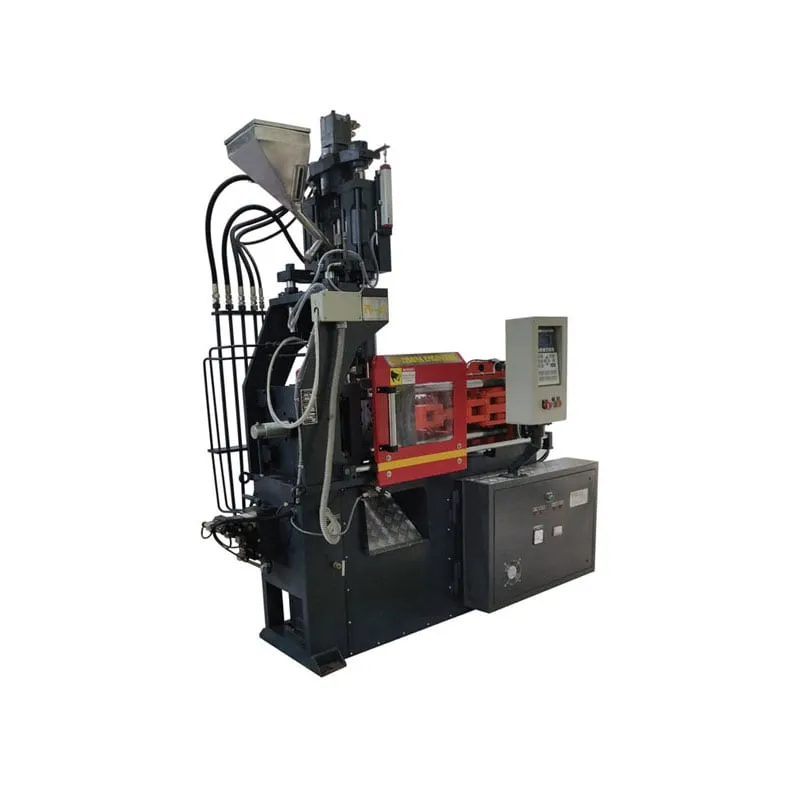

Where to buy plastic moulding machines in Mumbai: three routes compared
| Route | What you get | What you risk |
|---|---|---|
| Direct from the maker | Engineers who designed the machine, build changes before dispatch, spares from the source | Waiting time if the machine is built to order |
| Dealer or agent | One contact for machine and auxiliaries, sometimes local stock | Service and spares that depend on a party between you and the maker |
| Used machine | A lower entry outlay and possibly quick delivery | Unknown wear, older hydraulics, missing documents, no maker support |
That table is the short answer. Each route can work, and the right one depends on your part, how soon you need to run, and how much maintenance your own team can handle. Pratishna Engineers is a Mumbai manufacturer, founded in 1991, so this guide also explains how a direct purchase works. The checks below apply to any seller, including us.
Key Takeaways
- Buy direct when you want the design team answerable for the machine and a say in how it is built.
- Use a dealer when one contact for machine, auxiliaries and paperwork matters more than direct access to the maker.
- Buy used only after you have watched the machine run your mould and checked screw, barrel, hydraulics and platens.
- Whatever the route, get the service and spares arrangement in writing before you sign.
Where to buy plastic moulding machines in Mumbai: which route fits your plant?
Choose by three questions: how specific is your part, how soon must it run, and how strong is your maintenance team. Special or high-precision work favours buying from the maker. Standard work with a tight start date can suit a dealer. Used machines suit plants that maintain their own equipment.
Run the choice past your mould too. A mould that already exists fixes the shut height, the tie-bar gap and the opening stroke you need, and that can rule out a stock or used machine before any commercial discussion starts. As a check, the mould should ideally sit within the tie bars, and the opening stroke should be at least 2.5 times the part height.
Then think about the next five years, not the first month. A plant that plans to add a second shift, a robot or a hot runner needs a machine and a seller that can support those changes. Write your growth plan down before you visit anyone, and ask each seller how the machine would handle it.
What does buying direct from a maker give you?
Buying direct puts the people who designed and built the machine on the other side of the table. You can discuss screw design, clamp and controls with engineers, ask for a trial on your mould, and buy spares from the source rather than through a chain.
The maker can also change the build before dispatch: a different screw diameter for higher injection pressure, a longer opening stroke for a deep part, or extra hydraulic cores. These changes are far easier on the assembly floor than after installation. A second barrel ordered with a new machine can be low cost, and a skilled operator can swap a barrel in under 30 minutes, which helps if you run very different shot weights.
The trade-off is time. A machine built to your specification takes longer than one taken from stock, so plan the purchase around your mould delivery and ask for the build and trial schedule in writing.
Ask the maker how the trial will be run: on which machine, with which resin batch, and who records the settings. A trial sheet that lists barrel temperatures, injection pressure, hold time, cooling time and cycle time gives you a starting process for your own floor.
When does a dealer make sense?
A dealer makes sense when the dealer holds stock you need quickly, supplies auxiliaries such as dryers, chillers and robots alongside the machine, or represents a maker with no office near you. Check who services the machine, who stocks spares and whose warranty applies.
A good dealer adds value through local stock and one invoice for a full cell. The weak point is distance from design: a question about a hydraulic valve or a controller parameter may travel from you to the dealer to the maker and back. Ask the dealer to name the service engineer who will attend your plant, where spares are held, and the escalation path when the dealer cannot solve a fault.
Read the warranty wording closely. Find out whether it is issued by the maker or by the dealer, what happens to it if the dealership changes hands, and whether parts such as pumps, motors and controllers carry separate terms from their own suppliers.
If the dealer sells imported machines, check the supply voltage and frequency on the nameplate against your plant supply, the language of the HMI and manuals, and where the nearest stock of spares for that maker sits. These points decide how fast you recover from a fault.
What must you check before buying a used machine?
Run the machine on your own mould before you agree terms. Then check screw and barrel wear, check-valve leakage, hydraulic leaks and pump type, platen parallelism, the electrical panel and the safety guards. Ask for the manual, the hydraulic and electrical drawings, and the maintenance history.
Our flat view: never buy a used machine you have not seen run your own mould. A machine that moulds someone else's part well can still be wrong for yours, and wear often shows only at your shot weight and pressure.
Plan the inspection as a working session, not a walk-round. Heat the barrel fully, run your mould for at least an hour, and log cycle time, cushion and part weight every few minutes. Check oil temperature at the end of the hour, listen to the pump, and look for oil weeping at cylinder seals. Then open the electrical panel with the power isolated and look for burnt contacts, loose terminals or bypassed safety circuits.
Pump type matters for running cost. Many older hydraulic machines with fixed-speed, fixed-volume pumps remain in service with very high energy demand, although variable-speed motors, variable-volume pumps or servo motors with fixed pumps can be retrofitted. Ask which one the machine has, and price any retrofit into your decision. Measure platen parallelism with the machine clamped; 0.025 to 0.05 mm is generally acceptable on machines under 500 t.
Check the paperwork as well. Plastics machinery falls under India's Omnibus Technical Regulation for machinery safety, whose enforcement date was postponed in November 2025 with no new date announced at the time of writing. Re-check its status before you import or buy a used machine, and keep the original manuals and test records with the purchase file.
Buying direct from Pratishna Engineers in Mumbai
Pratishna Engineers was founded in Mumbai in 1991. The company started with machine rebuilding, indigenisation and technology adaptation, then moved to complete machine design, manufacturing and automation. Design, manufacturing, assembly, testing and service are done in-house.
The injection moulding range covers horizontal, vertical, vertical-horizontal combination, hydro-mechanical and hybrid machines, the last with hydraulic locking and electric injection. Product pages cover the horizontal E, C and H series, the vertical PV and PVDL series, PET machines, the PHM two-platen series, hybrid machines and special purpose machines.
Machine selection follows a fixed order: Component, Material, Mould, Production Requirement, Machine Configuration. The office is at A1-4, Vaibhav Ind. Premises, Opp. Oxford Chambers, Saki Vihar Road, Andheri (E), Mumbai 400 072.
What should you prepare before you contact any seller?
Prepare the part drawing or a sample, the resin grade, the mould dimensions and weight if the mould exists, and your target output per shift. With those four, any seller can show you whether a machine fits, and you can compare answers across routes. Start with the injection moulding machine range.
If you are comparing routes, send the same pack to each seller and ask for the same answers back: machine size, screw diameter, opening stroke, tie-bar gap, delivery date and the service arrangement. Differences in those answers tell you more than differences in sales language.
Frequently Asked Questions About Buying Moulding Machines in Mumbai
Is it better to buy an injection moulding machine from a maker or a dealer?
Neither route is better in every case. Buying from the maker gives you direct access to design engineers and build changes. A dealer can offer local stock and one contact for auxiliaries. Decide by your part, your start date and who will service the machine, and get that service promise in writing.
Can I see a machine run before I buy it?
Ask for it with every seller. A trial on your own mould is the strongest check, because it shows clamp, injection and cycle on your actual job. If a trial on your mould is not possible, ask to see the same model running a similar part, and record cycle time and cushion.
What documents should come with a used injection moulding machine?
Ask for the operation and maintenance manual, the hydraulic and electrical drawings, the maker's test certificate if it survives, and the plant's maintenance log. Without drawings, every hydraulic or electrical fault takes longer to trace. Missing documents are not always a reason to walk away, but they should change your offer.
How do I check screw and barrel wear on a used machine?
Run your mould and watch the cushion: if it drifts or the screw creeps forward during hold, the check valve or screw may be worn. Note recovery time against the cycle. Ask when the screw was last pulled and measured, and whether flight and barrel clearances were recorded at that time.
Should I buy auxiliaries from the same seller as the machine?
It can simplify commissioning, because one party is responsible for the dryer, chiller, loader or robot working with the machine. Check that each auxiliary is sized for your resin and output, not for a standard package, and that its service and spares are covered in the same agreement as the machine.
Does Pratishna Engineers sell machines direct in Mumbai?
Pratishna Engineers is a Mumbai manufacturer founded in 1991, with design, manufacturing, assembly, testing and service done in-house. Its office is at Saki Vihar Road, Andheri (E). Send your component, material, mould and production details, and the team will work through machine configuration in that order.
Related Articles
- Reviews of Plastic Injection Moulding Machines in Mumbai: What Buyers Are Saying
- Who Manufactures Injection Moulding Machines in Mumbai: OEM Guide
- Cost of Injection Moulding Machines in Mumbai
- Injection Moulding Machinery Suppliers in Mumbai and Maharashtra
Sources & References
- MoldMaking Technology, B. Catoen: Machine Sizing and Specification for Optimal Mold Performance, Part 1 (Aug 2025)
- Plastics Technology, J. Bozzelli: A Simpler Way to Calculate Shot Size vs. Barrel Capacity
- SPE Plastics Engineering, R. Kent (Tangram Technology): Energy-Saving Tip 67: Injection Molding: get the right motor (Sept 2016)
- Manufacturing Technologies Association (UK): Postponement of India's Omnibus Technical Regulation
Technical Disclaimer
Disclaimer: The information provided in this document is for general informational and educational purposes only. It is based on technical references and industry information available at the time of preparation and may be subject to change. It does not constitute engineering, technical, commercial or professional advice, nor does it constitute a quotation, specification, warranty or contractual commitment by Pratishna Engineers.
Actual injection moulding machine and process requirements vary according to the component design, material, mould, production volume, machine configuration and operating conditions. The information, examples, calculations and recommendations provided should be independently evaluated and verified for the specific application before making any equipment, process or production decision. Information obtained from third-party sources remains subject to the accuracy and limitations of those sources.
Limitation of Liability: Pratishna Engineers makes no representation or warranty, express or implied, regarding the completeness, accuracy or suitability of the information for any particular application. To the extent permitted by applicable law, Pratishna Engineers shall not be liable for any loss, damage, cost or consequence arising from reliance on or use of the information contained in this document. Final machine selection, configuration and application suitability should be confirmed with Pratishna Engineers based on complete and accurate project requirements.

