






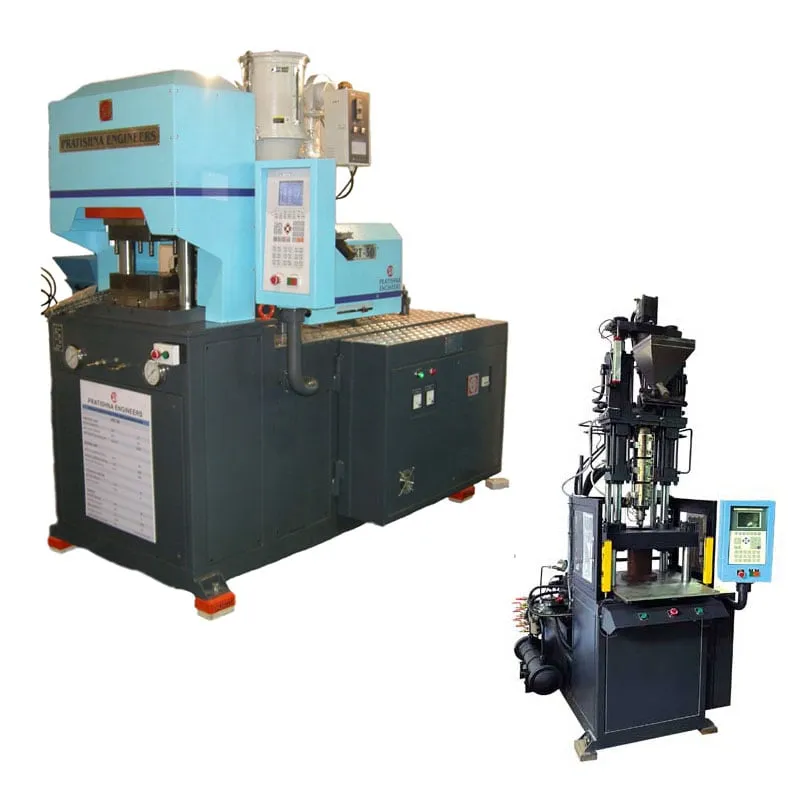

A PP storage box with a 260 × 170 mm top needs about 137 to 205 t of clamp, depending on the tonnage factor you assume. Send that part to three manufacturers and you may get offers at three different sizes, each with its own shot rating and options. That is why a list of top moulding machine manufacturers in India is less useful than a way to test them. This guide gives ten checks you can run on any maker, without brand names or rankings, so your shortlist rests on evidence. Run them before any commercial talk begins. Pratishna Engineers, a Mumbai manufacturer since 1991, is one of the makers you can test this way.
Key Takeaways
- Fix your clamp, shot and mould size requirement first, so every manufacturer offers against the same numbers rather than its own preferred model.
- Ten checks cover factory, spec sheet, trial, energy, safety, controls, spares, service, documentation and training, and each one asks for evidence you can see.
- A trial on your own mould shows more than any brochure can: shot use, cycle stability and measured energy logged on a clamp meter.
- Check that the design follows ISO 20430 safety requirements, and ask for measured energy figures you can set against your MSEDCL kVAh bill.
What ten checks should top moulding machine manufacturers in India pass?
Check the factory, the spec sheet, a trial on your mould, measured energy, safety design, control resolution, spares on the shelf, service response, documentation and operator training. Each check needs evidence you can see or measure, not a claim in a brochure or a sales presentation.
The first check tells you the most. A manufacturer machines and assembles its own frames and platens, and should be glad to show you the machine shop, the assembly bay and the test bay. A trader may sell good machines too, but the service and spares chain then runs through someone else.
Ten shortlisting checks and the evidence to ask for
| Check | What to ask | Evidence that counts |
|---|---|---|
| 1. Factory | Where are frames, platens and screws machined and assembled? | A walk through the machine shop, assembly bay and test bay |
| 2. Spec sheet | Is shot given in PS grams and swept volume, with tie-bar gap and daylight? | A full sheet for the model offered, not a range brochure |
| 3. Trial | Can you run my mould before dispatch? | Trial report with shot weights, cushion and cycle |
| 4. Energy | What does this machine draw on my job? | Clamp-meter log taken during the trial |
| 5. Safety | Which safety standard does the design follow? | Reference to ISO 20430 and guarding on the actual machine |
| 6. Controls | What resolution do speed, pressure and position settings have? | Controller screens, not a feature list |
| 7. Spares | Which wear and electrical parts are stocked? | A spares list with stock locations |
| 8. Service | Who answers a breakdown call, and from where? | Named service team and a written response process |
| 9. Documentation | Which manuals, drawings and circuit diagrams come with the machine? | Sample manual and hydraulic and electrical drawings |
| 10. Training | Who trains operators and maintenance staff? | A training plan with hours and topics |
Write the results down as you go. The order matters less than consistency: ask every company the same questions, in the same words, and record what you saw rather than what you were told.
Run all ten on every maker you consider. A company that passes eight with evidence is a stronger candidate than one that claims all ten without showing anything.
Some checks overlap with company-level questions such as years in business or references. Keep those for a separate review; these ten are about the machine and the plant that builds it.
How should you compare spec sheets from different manufacturers?
Compare like with like. Convert shot ratings to swept volume, check that the tie-bar gap and daylight fit your mould, and compare injection pressure on the screw you will actually use. Clamp tonnage alone tells you little, because two machines with equal tonnage can differ widely elsewhere.
Shot ratings are usually quoted in grams of polystyrene. A PP shot weighs about 22% less than PS for the same volume, so a rating that looks generous in grams may be tight in practice. Ask for swept volume and screw diameter, then work out your own shot share.
Injection pressure depends on the screw. On the same injection unit, a larger screw gives more volume and less pressure, roughly in proportion to the square of the diameter. Plastics Technology describes a mould that needed 1,585 bar and would not fill on a machine giving 1,380 bar, yet filled at 2,014 bar.
Mould fit is the third comparison. MoldMaking Technology's sizing guide says the mould should ideally fit within the tie bars, and opening stroke should be at least 2.5 times the part height. Check minimum and maximum mould height, mounting patterns and the locating ring before you sign anything.
What should a machine trial on your own mould prove?
It should prove the machine fills, packs and ejects your part on a stable cycle, with the shot inside a sensible share of the barrel. It should also give you measured energy, shot weights and cushion readings that you keep, not a verbal assurance.
Bozzelli's guidance in Plastics Technology is to use about 25% to 65% of barrel capacity for the shot. A trial shows where your shot actually falls. If it sits near the bottom of that range, ask about a smaller screw; near the top, ask about a larger one.
Measure energy during the same run. PlasticsToday reports that a clamp-meter data logger can measure a machine in as little as 30 minutes, with heater load averaged over 10 to 15 minutes. Ask the manufacturer to log it on your cycle, so you compare machines on your job rather than a test part.
Record a long run of consecutive shots if you can. Weigh a sample, note cushion variation, and watch the first parts after a short stop. A machine that recovers quickly after an interruption will give you fewer start-up rejects in daily production.
Keep the trial report with the offer. It becomes the reference when the machine is commissioned in your plant.
How do energy and safety checks change the shortlist?
They remove machines that look equal on paper but cost more to run or need guarding work later. Ask for base load on your job, check the drive type, and confirm the design follows the current injection moulding machine safety standard before any machine reaches your floor.
The energy guide from ExxonMobil, AMI and Tangram Technology puts base load on a standard hydraulic machine at 75% or more of total energy, against about 10% to 20% for all-electric and hybrid machines. It also says ten-year energy cost exceeds purchase cost in almost every case.
In Maharashtra the power bill adds another reason to measure. MSEDCL charges energy on kVAh and demand on kVA, and its FAQ notes that at a power factor of 0.85, 15% of power does no useful work. A manufacturer should give you figures you can set against that bill.
On safety, ISO 20430:2020 sets essential safety requirements for the design and construction of injection moulding machines with hydraulic or electrical platen drives. Ask which clauses the design follows, then look at the guards, interlocks and emergency stops on the machine you saw on trial.
Drop a maker from the shortlist if it cannot answer either question with documents. Energy and guarding problems are expensive to fix after installation.
How Pratishna Engineers answers these ten checks
Pratishna Engineers was founded in Mumbai in 1991 and keeps design, manufacturing, assembly, testing and service in-house. Its Mumbai facilities cover about 25,000 sq ft, with CNC turning centres, vertical and horizontal machining centres, jig boring machines, and assembly and testing facilities, so the factory check can be done on site.
The range covers horizontal machines (E, C and H series), vertical machines (PV and PVDL series), PET, two-platen (PHM series), hybrid and special-purpose machines. Selection follows the order this guide recommends: component, material, mould, production requirement, then machine configuration.
- Clamping force across the horizontal series runs from 75 t on the E - 75 to 320 t on the C - 320 and VT-350, as listed in the series data.
- Two-platen PHM machines are listed from 160 t to 350 t, with total connected load from 38.6 kW to 81 kW.
What should you send to shortlisted manufacturers next?
Send each shortlisted manufacturer the same pack: part drawing, resin grade, cavities, yearly volume, mould size if known, and your calculated clamp and shot range. Ask for a full spec sheet and a trial date in reply. Browse the machine range on the injection moulding machines page.
Frequently Asked Questions About Shortlisting Manufacturers
Why are there no brand names in this list of manufacturers?
Rankings change with the part, the plant and the year, and a name tells you little about how a machine will run your mould. The ten checks work on any maker you are considering, so you can build your own shortlist from evidence you collected yourself.
How many manufacturers should I shortlist?
Three is a workable number for most single-machine purchases, as a starting margin rather than a rule. Fewer gives you little to compare; more makes trials on your own mould hard to arrange. Drop any maker that cannot show its factory or run a trial on your part.
Should I ask for a trial even for a standard machine?
Yes, if the mould exists. A trial shows shot use, cycle stability and measured energy on your job, which no spec sheet can. If the mould is not ready, ask to watch a similar part run and to see the shot weights logged during that run.
What does ISO 20430 cover for injection moulding machines?
ISO 20430:2020 sets essential safety requirements for the design and construction of injection moulding machines for plastics and rubber with hydraulic or electrical platen drives. It does not apply to machines built before it was published, so ask about the specific machine being offered to you.
Is a larger machine a safer choice when I am unsure?
Not usually. The energy guide cited below links a high base load to machines too large for the job, and excess clamp can crack mounting plates and deform platens. Size to a calculated clamp and shot range with a modest reserve, and plan growth with a second machine.
Where does Pratishna Engineers build its machines?
Pratishna Engineers has its manufacturing facilities in Mumbai, and design, manufacturing, assembly, testing and service are done in-house. The office is at Saki Vihar Road, Andheri (E), Mumbai 400 072, so a single visit can cover the factory check in this guide.
Related Articles
- Best Injection Moulding Machine Companies in Mumbai: Who Can You Trust?
- Industrial Injection Moulding Machines in Mumbai
- Who Manufactures Injection Moulding Machines in Mumbai
- Injection Moulding Machine Suppliers Comparison Mumbai
Sources & References
- ExxonMobil, AMI and Tangram Technology: An Energy Saving Guide for Injection Moulders
- ISO: ISO 20430:2020 Plastics and rubber machines: Injection moulding machines: Safety requirements
- Plastics Technology, J. Bozzelli: Revisiting Shot Size vs. Barrel Capacity
- MSEDCL: kVAh Billing: Frequently Asked Questions
Technical Disclaimer
Disclaimer: The information provided in this document is for general informational and educational purposes only. It is based on technical references and industry information available at the time of preparation and may be subject to change. It does not constitute engineering, technical, commercial or professional advice, nor does it constitute a quotation, specification, warranty or contractual commitment by Pratishna Engineers.
Actual injection moulding machine and process requirements vary according to the component design, material, mould, production volume, machine configuration and operating conditions. The information, examples, calculations and recommendations provided should be independently evaluated and verified for the specific application before making any equipment, process or production decision. Information obtained from third-party sources remains subject to the accuracy and limitations of those sources.
Limitation of Liability: Pratishna Engineers makes no representation or warranty, express or implied, regarding the completeness, accuracy or suitability of the information for any particular application. To the extent permitted by applicable law, Pratishna Engineers shall not be liable for any loss, damage, cost or consequence arising from reliance on or use of the information contained in this document. Final machine selection, configuration and application suitability should be confirmed with Pratishna Engineers based on complete and accurate project requirements.

