






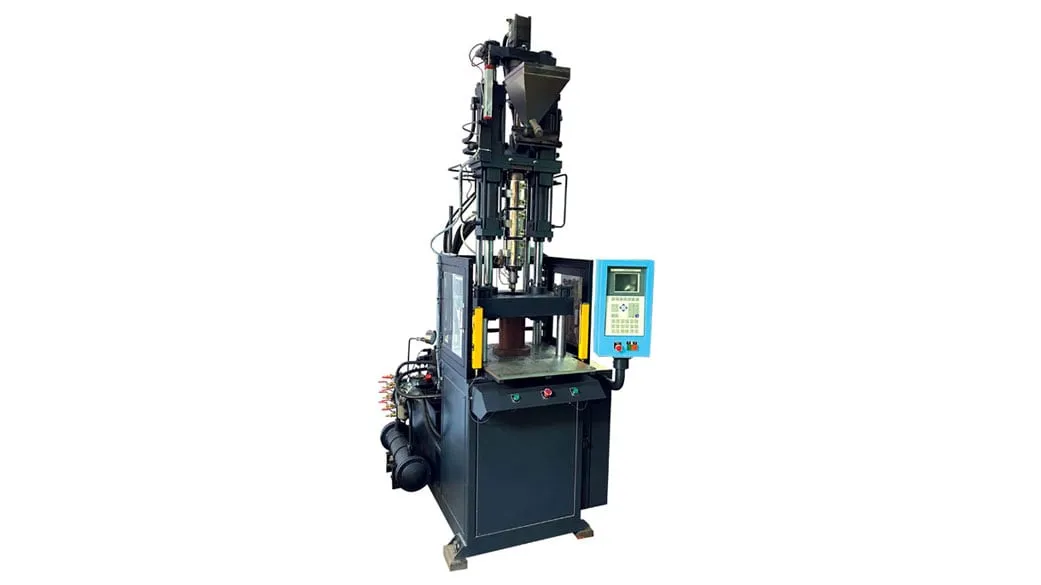

Scorecard to compare injection moulding machine suppliers (weights are a starting margin, not a rule)
| Criterion | Weight | Evidence to ask for |
|---|---|---|
| Machine fit to your part and mould | 25% | Trial on your mould; tie-bar gap, shut height and shot window |
| Service and spares | 20% | Call log, time from call to arrival, spares list for your model |
| Build and quality | 15% | Factory visit, test record of a finished machine, QA procedures |
| Energy and running cost | 15% | Measured power on your mould, drive type, power factor |
| Safety and documentation | 10% | Guarding and interlock standard, manuals, hydraulic and wiring drawings |
| References | 10% | Two or three users moulding similar parts |
| Commercial terms | 5% | Payment, delivery and warranty scope in writing |
To compare injection moulding machine suppliers fairly, score every supplier on the same criteria, give each criterion a weight that reflects your plant, and ask for evidence rather than promises. The scorecard above is a starting point. A plant running thin-wall packaging round the clock might raise energy and service, while a jobbing shop with many moulds might raise machine fit. Score each line from 1 to 5, multiply by its weight and add the results to get a total out of 5. Pratishna Engineers is one of the suppliers you may put on this sheet, and the method below works the same way for every name on your shortlist.
Key Takeaways
- Fix the criteria and weights before you meet any supplier, so a strong sales visit cannot quietly change what matters most to your plant.
- Score from evidence: a trial on your mould, a call log, test records and a measured power reading count for more than claims.
- Machine fit and service carry the highest weights in this scorecard, because a wrong-sized machine or a slow repair costs output every day.
- Treat a low score on a heavily weighted criterion as a warning, even when the totals of two suppliers look close.
Which criteria should you use to compare injection moulding machine suppliers?
Use criteria you can check with evidence: machine fit to your part, service and spares, build quality, energy use, safety and documentation, references and commercial terms. Leave out anything you cannot verify, such as general quality claims, because a score you cannot defend will not hold up in your team.
Machine fit comes first because everything else depends on it. The mould must sit within the tie bars, the shut height must fall inside the machine's range, and your shot must use a sensible share of the barrel. A shot that is too small for the barrel sits in it too long and degrades.
Service and spares come next. Ask each supplier for its call log for the last few months, the time from call to arrival and the spares it holds for the model you are buying. For build quality, visit the factory, see machines under assembly and ask for the test record of a finished machine.
Safety deserves its own line. ISO 20430:2020 sets safety requirements for the design and construction of injection moulding machines with hydraulic or electrical drives for platen movement. Ask each supplier which standard its guarding and interlocks are built to, and what manuals and drawings come with the machine.
How do you set the weights for each criterion?
Start from what stops your plant or costs it most. If one breakdown loses a full day of output, service carries a heavy weight. If power is your largest running cost, energy does. Agree the weights with production, maintenance and accounts before any supplier visit, then freeze them.
Do not underweight energy. A guide for injection moulders published by ExxonMobil, AMI and Tangram Technology states that ten-year energy cost exceeds purchase cost in almost every case. That makes a measured power figure on your mould one of the most useful numbers you can collect while you compare suppliers.
Your power bill shapes how you score it. MSEDCL bills energy on kVAh and demand on kVA, so apparent power that does no useful work still costs you. At a power factor of 0.85, 15% of power does no useful work. Ask each supplier for the machine's power factor under load, or whether correction is fitted.
Keep the number of criteria small. Seven criteria with weights in steps of 5% are easy to defend in a review meeting; twenty criteria with fine weights blur into noise and let one persuasive presentation pull the result its way.
What evidence should each supplier provide?
Ask every supplier for the same pack: a trial report on your mould, a power log from that trial, the specification sheet, a test record, a spares list, a service call log and two references. Score a missing item as the lowest mark rather than leaving it blank.
A trial report should record the clamp force set, shot size, cushion, injection pressure, cycle time and number of good parts. Ask for part weights shot by shot. A steady weight with a steady cushion tells you more about the machine than a single fast cycle shown on the day.
Specification sheets need care. Shot capacity is usually stated in grams of polystyrene, so convert it to your own material by volume before comparing two suppliers. Check the injection pressure available with the screw size offered, because a larger screw on the same unit gives more volume but less pressure.
Where your shot sizes vary widely, ask about a second barrel. A second barrel ordered with a new machine can be low cost, and a skilled operator can swap one in under 30 minutes, even hot. That flexibility deserves a point in the machine fit score.
How do you read the final scores?
Read the total first, then look for any criterion where a supplier scored 1 or 2 on a heavy weight. A close total hides a real risk if one supplier is weak on service or machine fit. Treat a gap of a few points as a tie.
Set a floor for the criteria that matter most. In this scorecard no supplier can win with a score below 3 on machine fit or service, whatever its total; that floor is a starting margin, not a rule. It stops attractive terms from carrying a machine that does not suit your mould.
When two suppliers tie, go back to evidence you can still collect. Phone the references and ask how many hours their last breakdown cost them and whether the supplier kept its promised response time. Run a second trial if the first left questions about cycle time or part weight.
Watch for a pattern rather than a single number. A supplier that scores 4 on every line is often a safer choice than one that scores 5 on fit and terms but 2 on service, because the weak line is the one you will meet at three in the morning when a machine stops and nobody answers.
Keep the completed scorecard in the order file. It explains the decision to your team later and gives you a baseline for checking the supplier's performance during the first year of running, line by line against what was promised.
Where Pratishna Engineers sits on your scorecard
Pratishna Engineers can be scored on the same sheet as every other supplier on your list. The company was founded in Mumbai in 1991 and has 35+ years of experience, 9,000+ machines and 1,000+ customers in India and international markets. Design, manufacturing, assembly, testing and service are done in-house, so the build and service lines can be checked on one site visit.
For the build and quality line, the design team uses SolidWorks, Creo and AutoCAD, and an independent QA department works to written SOPs, with accredited external labs used when required. For the machine fit line, the range covers horizontal, vertical, PET, two-platen and hybrid machines, and the team follows a set order before it suggests a configuration.
- Selection order: Component, Material, Mould, Production Requirement, Machine Configuration.
- Factory: Andheri (E), Mumbai, with machining, assembly and testing facilities.
What should you send suppliers to start the comparison?
Send every supplier the same brief: part drawing, material, mould size and shut height, target output and your scorecard criteria. Ask each one to reply line by line against the scorecard. Then book trials with the two or three who answer in full. Start with the machine range.
Frequently Asked Questions About Comparing Injection Moulding Machine Suppliers
How many suppliers should I compare at once?
Three to four is a practical shortlist. Fewer gives you little to compare, and more makes trials and factory visits hard to complete with the same care. Screen a longer list on documents first, then take the strongest three or four through trials, visits and reference calls.
Should the lowest offer get the highest commercial score?
Only on the commercial line, and that line should carry a small weight. A lower offer that comes with a weaker service score or a poorer fit to your mould can cost more over the machine's life through downtime, scrap and energy. Keep commercial terms in the scorecard but do not let them dominate.
Can I use the same scorecard for a used machine?
Yes, with two changes. Add a criterion for machine condition, scored from a screw and barrel inspection, a hydraulic oil analysis and a check of platen parallelism. Lower the weight on references and raise it on spares, because parts for older machines can be harder to find quickly.
Who in my plant should score the suppliers?
Ask production, maintenance and accounts to score separately, then compare. Production knows the mould and cycle, maintenance knows service and spares, and accounts knows payment and running cost. Where their scores differ by two points or more on a criterion, discuss the evidence before agreeing a final mark.
Can I score Pratishna Engineers on build quality during a visit?
Yes. Design, manufacturing, assembly, testing and service are done in-house at Pratishna Engineers' Mumbai facilities, which include CNC turning centres, machining centres, jig boring machines and assembly and testing facilities. A working-day visit lets you see these areas and score build and quality from what you observe.
What is a fair weight for energy use?
It depends on your shifts and tariff. A plant running hydraulic machines round the clock may give energy 15% to 20%, while a single-shift shop may give it less. Base the weight on your power bill: the larger its share of your running cost, the higher the weight.
Related Articles
- Injection Moulding Machine Manufacturers Near Me (Mumbai)
- Injection Moulding Machine Price in Mumbai
- Why Electric Injection Moulding Machines Are Becoming Industry Favorites
- Top 10 Injection Moulding Machine Manufacturers in India
Sources & References
- ISO: ISO 20430:2020 Plastics and rubber machines: Injection moulding machines: Safety requirements
- Plastics Technology, J. Bozzelli: A Simpler Way to Calculate Shot Size vs. Barrel Capacity (2017, updated 2022)
- ExxonMobil, AMI and Tangram Technology: An Energy Saving Guide for Injection Moulders
- MSEDCL: kVAh Billing: Frequently Asked Questions
Technical Disclaimer
Disclaimer: The information provided in this document is for general informational and educational purposes only. It is based on technical references and industry information available at the time of preparation and may be subject to change. It does not constitute engineering, technical, commercial or professional advice, nor does it constitute a quotation, specification, warranty or contractual commitment by Pratishna Engineers.
Actual injection moulding machine and process requirements vary according to the component design, material, mould, production volume, machine configuration and operating conditions. The information, examples, calculations and recommendations provided should be independently evaluated and verified for the specific application before making any equipment, process or production decision. Information obtained from third-party sources remains subject to the accuracy and limitations of those sources.
Limitation of Liability: Pratishna Engineers makes no representation or warranty, express or implied, regarding the completeness, accuracy or suitability of the information for any particular application. To the extent permitted by applicable law, Pratishna Engineers shall not be liable for any loss, damage, cost or consequence arising from reliance on or use of the information contained in this document. Final machine selection, configuration and application suitability should be confirmed with Pratishna Engineers based on complete and accurate project requirements.

