






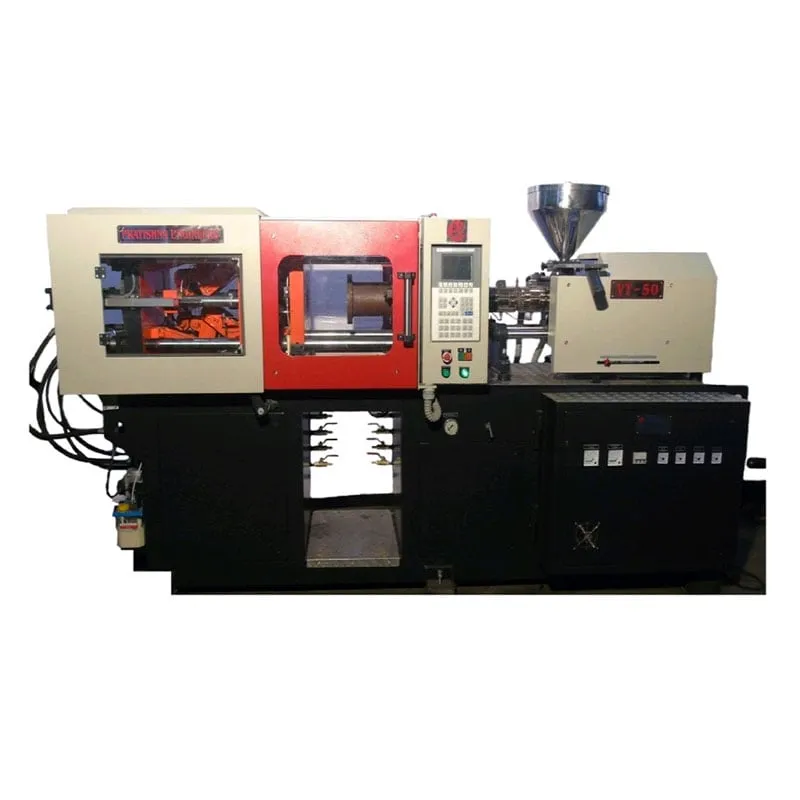

Checklist: the best injection moulding machine brand in Mumbai for your part
| Check | What to look for | How to verify |
|---|---|---|
| Build | Platen stiffness, tie bars, clamp mechanism, platen parallelism | Ask for parallelism records; see a machine on the assembly floor |
| Hydraulics or drives | Pump type, oil cooling, filtration | Read the hydraulic circuit and the maintenance schedule |
| Controls | Fine resolution on position, speed and pressure; cycle records; alarm history | Run a sample job on the controller |
| Safety | Guards, interlocks, emergency stops, IS/ISO 20430 conformity | Ask for the conformity documents |
| Service | Engineers near you, escalation path, remote support | Get names and contacts in writing |
| Spares | Wear and major parts held in Mumbai | Ask for the stock list against your machine |
| References | Users running parts like yours | Visit at least two and ask set questions |
There is no single best injection moulding machine brand in Mumbai for every buyer. The best brand for you is the one whose machines pass the checklist above for your part, your material and your shifts. Work through it in order: build first, because it cannot be changed after delivery, then controls, safety, service, spares and references. This guide also shows how Pratishna Engineers, a Mumbai manufacturer since 1991, answers each check, so you can hold every brand on your list to the same standard.
Key Takeaways
- Judge a brand on evidence you can see: the clamp, the controller, the safety documents, the service path and the spares list.
- Platen parallelism within about 0.025 to 0.05 mm is generally acceptable below 500 t, so ask for the measured figures.
- India's machinery safety order names IS/ISO 20430 for injection moulding machines; ask each brand how it conforms.
- Reference visits to users running parts like yours tell you more than any ranking or review score.
How should you judge the build of a machine brand?
Judge the parts you cannot change after delivery: the frame, platens, tie bars and clamp mechanism. These decide whether the mould closes evenly shot after shot for years. Ask for measured figures and see a machine with its covers off, on the assembly floor or at a user's plant.
MoldMaking Technology gives a working figure: platen level and parallelism of 0.025 to 0.05 mm is generally acceptable for machines under 500 t. The same source notes that platens can pull in near the tie bars, which is why the mould should ideally sit inside them. Ask how the brand measures parallelism, at what tonnage, and whether the record ships with the machine.
Look at the clamp type with open eyes. Plastics Technology reports the main criticisms made of toggles: a parallelism risk if linkages wear unevenly, and potentially higher platen deflection because most toggles apply force at the corners. Toggle defenders point to reliability, simplicity and rigidity. Neither design wins by default, so match it to your mould and ask the brand to show its answer to each criticism.
Our flat view: judge the clamp, not the paint. A brochure can show a clean machine; only a measured clamp tells you how it will hold your mould in its fifth year.
What should the controls and safety system show you?
The controller should show position, speed and pressure at fine resolution, record each cycle and keep an alarm history you can export. The safety system should have interlocked guards, emergency stops and documents showing conformity with the injection moulding machine safety standard named in Indian regulation.
That regulation is the Machinery and Electrical Equipment Safety (Omnibus Technical Regulation) Order, 2024, S.O. 3649(E), notified by the Ministry of Heavy Industries on 28 August 2024. It covers machinery for working rubber and plastics under HS 8477 and names IS/ISO 20430:2020, Plastics and rubber machines, Injection moulding machines, Safety requirements, as the machine-specific Type C standard. The general Type A standard is IS 16819:2018/ISO 12100:2010, and the Type B list includes IS 10481:2020/ISO 4413 for hydraulic systems, IS 16504 (Part 1):2019/IEC 60204-1 for electrical equipment, IS 16812:2018/ISO 14119 for guard interlocks and IS 16818:2018/ISO 13850 for emergency stops.
On the controller itself, run a short test during your visit. Set up a sample job, change one setting, and see whether the screen shows the effect on the next cycle. Check that cycle data can be exported, that limits can flag a bad shot, and that mould settings can be saved and recalled. A controller that hides its data makes every later fault harder to trace.
Under the order, the manufacturer registers with BIS and machines carry the Standard Mark under a BIS licence or come with a certificate of conformity. Goods made in India for export are excluded. Enforcement had been moved to 1 September 2026, and an order dated 13 November 2025 deferred it again with no new date announced, so check the current status and ask each brand where it stands.
How do you check a brand's service and spares?
Ask for proof rather than promises: the names of the service engineers who cover your area, the number of machines of your type they already look after, and the spares stock list held in Mumbai against your machine's parts list. Compare those answers across brands on the same machine size.
Read a sample service report if the brand will share one. It shows how faults are recorded, whether root causes are found and whether the engineer left notes your team can use. Ask whether the controller supports remote diagnosis, and who at the brand can read the alarm history when your own team cannot clear a fault.
Then test the spares answer against your own risk. Pick three parts whose failure would stop production, such as a heater band, a proportional valve and a controller card, and ask each brand where the nearest one is today and how it would reach you. The answers separate a stocked brand from a catalogue.
How do you use references to find the best injection moulding machine brand in Mumbai?
Visit at least two users who run parts like yours on that brand, ideally a recent buyer and one who has run the machines for years. Ask set questions about breakdowns, spares, service response and process stability, and compare the answers between brands rather than trusting one visit.
Useful questions: Which parts and materials do you run, and on how many shifts? What stopped the machine in the last year, and how long did each stop last? Which spares came from Mumbai and which had to travel? Has the process held without frequent resetting? Would you buy the same brand again for the same job?
Treat online reviews and rankings as leads, not evidence. A review that names a machine, a part and a service event is worth following up; a star score with no detail is not. No ranking can tell you how a brand fits your mould, and nothing replaces watching a machine run a job like yours.
How Pratishna Engineers answers the brand checklist
Pratishna Engineers was founded in Mumbai in 1991 by Nandkumar R. Kushe, a first-generation engineer, and has 35+ years of experience, 9,000+ machines and 1,000+ customers in India and international markets. Design, manufacturing, assembly, testing and service are done in-house.
On build, its manufacturing facilities in Mumbai cover about 25,000 sq ft, with CNC turning centres, vertical and horizontal machining centres, jig boring machines, precision conventional machine tools, and assembly and testing facilities. The design team uses SolidWorks, Creo and AutoCAD. An independent QA department works to written SOPs, and accredited external labs are used when required.
On range, the company makes horizontal (E, C and H series), vertical (PV and PVDL series), PET, two-platen (PHM series), hybrid and special purpose machines. Machines are selected in a fixed order: component, material, mould, production requirement, then machine configuration. The address is A1-4, Vaibhav Ind. Premises, Saki Vihar Road, Andheri (E), Mumbai 400 072, so you can ask to see the assembly and testing areas as part of your checks.
The company began with machine rebuilding, indigenisation and technology adaptation before moving to complete machine design, manufacturing and automation, and import substitution remains a stated focus.
How do you turn the checklist into a decision?
Shortlist the brands that pass build and safety, because those cannot be fixed later. Then compare controls, service, spares and references on the same machine size and configuration, and check each spec sheet against your process needs, as in the example below. Browse the injection moulding machine range to match machine types to your parts.
Frequently Asked Questions About Choosing an Injection Moulding Machine Brand
How many brands should I shortlist?
Two or three is a workable number, a starting habit rather than a rule. Fewer gives you no comparison; more spreads your time thin on reference visits and trials. Shortlist only brands that pass the build and safety checks, then spend your effort on controls, service, spares and references for that short list.
What safety standard applies to injection moulding machines in India?
The Machinery and Electrical Equipment Safety (Omnibus Technical Regulation) Order, 2024 names IS/ISO 20430:2020 as the safety standard for injection moulding machines, alongside general machinery standards such as IS 16819/ISO 12100. Its enforcement date is awaiting notification, so ask each brand how its machines conform and check the order's current status.
Can I trust online reviews of machine brands?
Use them as leads rather than proof. A review that names a machine model, the parts it runs and a specific service event is worth following up with a call or visit. Ratings without detail tell you little, and no review tells you how a machine will handle your own mould.
What should I ask on a reference visit?
Ask what parts and materials the user runs, how many shifts, what stopped the machine in the last year and for how long, where spares came from, whether the process holds without frequent resetting, and whether they would buy the same brand again. Watch a machine run rather than only talking in the office.
Why does platen parallelism matter?
If the platens are not parallel, the mould closes unevenly, which can cause flash on one side, uneven wear on the parting line and part variation between cavities. MoldMaking Technology gives 0.025 to 0.05 mm as generally acceptable below 500 t, so ask each brand for the measured figure and how it was taken.
Where can I see Pratishna Engineers machines being built?
Pratishna Engineers designs, machines, assembles and tests its machines at its Mumbai facilities, with its address at A1-4, Vaibhav Ind. Premises, Saki Vihar Road, Andheri (E), Mumbai 400 072. Contact the sales team to ask about seeing the assembly and testing areas and a machine running on a job similar to yours.
What should a good machine controller record?
It should record each cycle's key values, such as injection time, transfer position, peak pressure, cushion and cycle time, and keep an alarm history with time stamps. You should be able to export those records, set limits that flag a bad shot, and save settings for each mould so a changeover starts from a known point.
Related Articles
- Injection Moulding Machine Dealers in Mumbai
- Affordable Injection Moulding Machines in Mumbai
- Best Injection Moulding Machine for Small Business
- Injection Moulding Machine Manufacturers in Mumbai
Sources & References
- Bureau of Indian Standards: Circular on the Machinery and Electrical Equipment Safety (Omnibus Technical Regulation) Order, 2024, with S.O. 3649(E)
- Manufacturing Technologies Association (UK): Postponement of India's Omnibus Technical Regulation
- MoldMaking Technology, B. Catoen: Machine Sizing and Specification for Optimal Mold Performance, Part 1
- Plastics Technology, M. Knights: Hybrid Injection Clamps: The Best of Both Worlds?
Technical Disclaimer
Disclaimer: The information provided in this document is for general informational and educational purposes only. It is based on technical references and industry information available at the time of preparation and may be subject to change. It does not constitute engineering, technical, commercial or professional advice, nor does it constitute a quotation, specification, warranty or contractual commitment by Pratishna Engineers.
Actual injection moulding machine and process requirements vary according to the component design, material, mould, production volume, machine configuration and operating conditions. The information, examples, calculations and recommendations provided should be independently evaluated and verified for the specific application before making any equipment, process or production decision. Information obtained from third-party sources remains subject to the accuracy and limitations of those sources.
Limitation of Liability: Pratishna Engineers makes no representation or warranty, express or implied, regarding the completeness, accuracy or suitability of the information for any particular application. To the extent permitted by applicable law, Pratishna Engineers shall not be liable for any loss, damage, cost or consequence arising from reliance on or use of the information contained in this document. Final machine selection, configuration and application suitability should be confirmed with Pratishna Engineers based on complete and accurate project requirements.

