






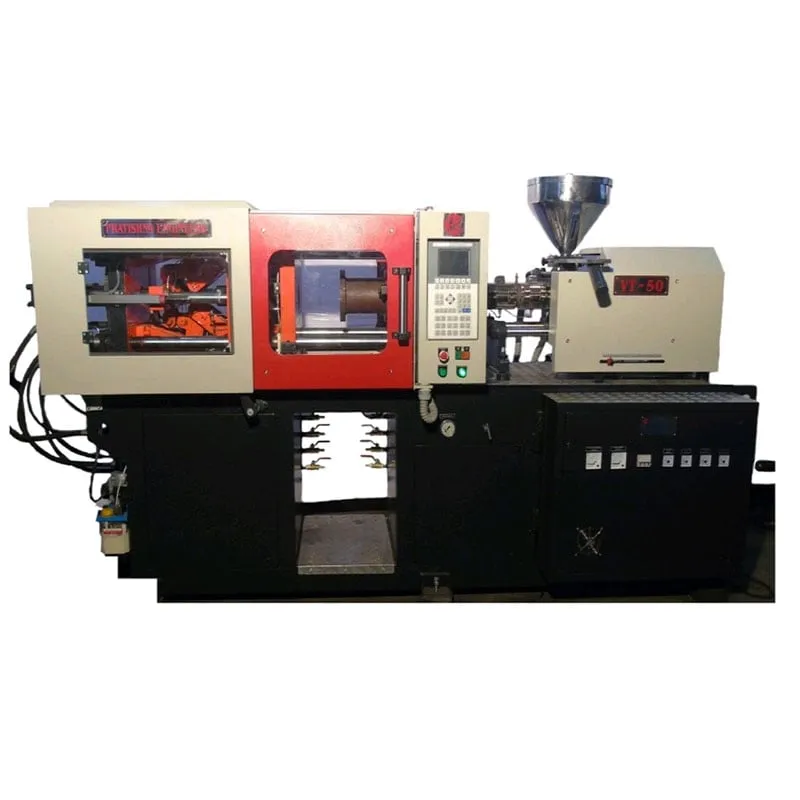

Start with one number: a PCO 1881 neck finish weighs 3.8 g against 5.1 g for the older PCO 1810, and the change cuts about 1.3 g from each preform. On an assumed 10 million preforms a year, that is 1.3 g × 10,000,000 = 13 tonnes of PET. PET preform moulding for beverage bottles is a game of such grams, weighed against taste, closure fit and the moulds you already own. For water, acetaldehyde adds a second limit that lightweighting can quietly make worse. The sections below take neck finish, weight and taste in turn.
Key Takeaways
- The PCO 1881 neck uses about 1.3 g less PET per preform than PCO 1810 and takes a lighter 28 mm closure, but conversion needs new preform and closure tooling.
- Cooling time follows wall thickness rather than weight, so a lighter preform with the same wall barely shortens the cycle and spends longer as melt in the barrel.
- Acetaldehyde matters most for water, where small levels affect taste; sugar in carbonated drinks and juices masks it, so water preforms need the tightest melt control.
- Packaged drinking water bottles in India must use plastics to the Indian Standards listed under the FSSAI Packaging Regulations, with transparency of at least 85%.
Which neck finish should a beverage preform use?
Use the neck finish your filling line and closure supplier already run, unless the volume justifies a change. PCO 1881 saves PET and closure weight over PCO 1810 on 250 ml to 2 L soft-drink bottles, but adoption is voluntary and needs new preform and closure moulds.
The neck is the one part of the preform that the blowing stage does not stretch. Its weight stays in the bottle as moulded, and its dimensions must match the closure exactly. The shorter 1881 neck is 17 mm tall against 21 mm for 1810, and it uses two thread starts instead of three.
Two common soft-drink neck finishes compared
| Feature | PCO 1810 | PCO 1881 |
|---|---|---|
| Neck weight | 5.1 g | 3.8 g |
| Neck height | 21 mm | 17 mm |
| Thread starts | 3 | 2 |
| Preform weight | Baseline | About 1.3 g lighter |
| Standard 28 mm polyolefin closure | Baseline | About 0.5 g lighter |
The savings reach beyond the preform, since the matching closure is about 0.5 g lighter as well. The cost sits with the bottler and the mould shop: one published estimate put a bottling plant's conversion cost as high as EUR 250,000, so a neck change is a decision for high volumes and long product runs.
Where does PET preform moulding for beverage bottles lose or save resin?
Savings come from the neck and thinner body walls, while resin is lost to rejects and degraded melt. In PET preform moulding for beverage bottles, a lighter preform only saves resin if it still blows into a sound bottle and its melt is not overheated.
Cooling time follows wall thickness, not weight. Two preforms with the same wall, one twice as heavy as the other, may differ in cycle by only 1 to 2 s. So when you take weight out of a preform but keep the wall, the cycle barely moves and output in pieces per hour stays about the same.
The catch is on the injection side. A lighter shot from the same barrel at the same cycle means each gram of melt waits longer before it is injected. Residence time rises roughly in proportion: halve the shot on the same barrel and cycle, and residence doubles. That is where acetaldehyde comes back in.
A lighter preform can also change how the bottle blows, so put any weight cut through blowing trials on the actual bottle design before the preform mould is ordered. Thin spots that look acceptable on the preform can show up later as weak shoulders or bases on the filled bottle.
Why does acetaldehyde matter more for water bottles?
Acetaldehyde, a by-product of heating PET, affects the taste of still water at small levels, while the sugar in carbonated drinks and juices masks it. That makes water the product where melt temperature, residence time and resin grade need the closest control in preform moulding.
AA rises linearly with residence time and exponentially with temperature. Moisture in the resin also breaks chains and creates more of it, which is why drying sits upstream of every AA problem. A resin temperature of 165 °C at the extruder throat has been reported as optimal for low AA.
Start with the resin. A still-water grade such as Relpet G5761 is specified at 1.0 ppm acetaldehyde maximum in the chip and IV 0.76 ± 0.02 dl/g, which leaves the moulding process to add as little as possible on top. Some preform makers also track AA as an early sign of screw and barrel wear, because wear raises shear.
Our position is plain: if you plan to run lightweight water preforms, size the barrel for the water job, not for the heaviest preform you might make one day. In India, packaged drinking water bottles must also use plastics to the Indian Standards listed under the FSSAI Packaging Regulations, 2018, such as IS 12252 for PET.
What should you send before sizing a preform job?
Send the preform drawing and weight, neck finish, product (still water, carbonated or juice), resin grade, cavitation and target output, plus your current barrel size if you are lightweighting an existing job. Then check residence with the example below. For preform machines, see the PET injection moulding machine page.
Frequently Asked Questions About PET Preforms for Beverage Bottles
What is the difference between PCO 1810 and PCO 1881?
PCO 1881 is a shorter, lighter neck finish that replaced PCO 1810 on many 250 ml to 2 L soft-drink bottles. Its neck is 17 mm tall and weighs 3.8 g against 21 mm and 5.1 g, with two thread starts instead of three, and it needs matching closures.
Does a lighter preform run on a faster cycle?
Not by much if the wall stays the same. Cooling time follows wall thickness, so two preforms with equal walls can differ in cycle by only 1 to 2 s even when one is twice the weight. Lightweighting mainly saves resin, not machine time, and it lengthens residence.
What causes high acetaldehyde in water preforms?
High melt temperature, long residence time and moisture in the resin are the main drivers. Acetaldehyde rises linearly with residence and exponentially with temperature, and wet resin creates more of it. Check drying, keep melt temperature no higher than needed, and avoid a barrel far larger than the shot.
Which Indian rules apply to PET bottles for drinking water?
The FSSAI Packaging Regulations, 2018 require plastics in food contact to meet listed Indian Standards, including IS 12252 for PET. For packaged drinking water bottles, the listed plastics must meet their standards and the bottle needs transparency of at least 85%. Check the current compendium before finalising a design.
Can I convert existing preform moulds to a lighter neck?
Not usually by adjustment alone. A new neck finish means new neck inserts or a new preform mould, matching closure moulds and changes on the filling line. Compare the resin saved each year with the full conversion cost, including the bottler's side, before you decide.
Related Articles
- The Role of Toggle Moulding Machines in High-Precision Manufacturing
- The Benefits of Vertical Injection Moulding Machines for Compact Spaces
- Revolutionizing PET Manufacturing with PET Injection Moulding Machines
- PET Injection Moulding Machines: Mastering PET Processing
Sources & References
- Packaging Digest, A. Steeman: Short, Shorter, the Shortest (Jan 2014)
- PETplanet Insider, O. Brandau: Bottles, Preforms and Closures extract, 3.6 Acetaldehyde in PET Bottles (Vol. 16, 03/2015)
- Reliance Industries: Relpet G5761 typical properties
- FSSAI: Food Safety and Standards (Packaging) Regulations, 2018, compendium
Technical Disclaimer
Disclaimer: The information provided in this document is for general informational and educational purposes only. It is based on technical references and industry information available at the time of preparation and may be subject to change. It does not constitute engineering, technical, commercial or professional advice, nor does it constitute a quotation, specification, warranty or contractual commitment by Pratishna Engineers.
Actual injection moulding machine and process requirements vary according to the component design, material, mould, production volume, machine configuration and operating conditions. The information, examples, calculations and recommendations provided should be independently evaluated and verified for the specific application before making any equipment, process or production decision. Information obtained from third-party sources remains subject to the accuracy and limitations of those sources.
Limitation of Liability: Pratishna Engineers makes no representation or warranty, express or implied, regarding the completeness, accuracy or suitability of the information for any particular application. To the extent permitted by applicable law, Pratishna Engineers shall not be liable for any loss, damage, cost or consequence arising from reliance on or use of the information contained in this document. Final machine selection, configuration and application suitability should be confirmed with Pratishna Engineers based on complete and accurate project requirements.

