






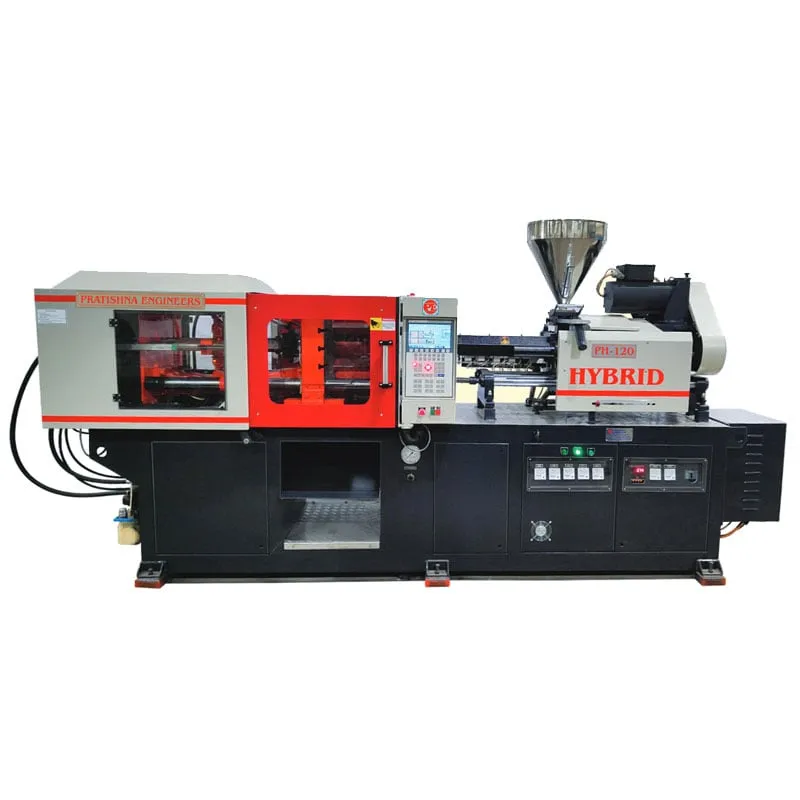

Log a hydraulic machine for an hour and suppose it reads 24 kWh while moulding and 18 kWh while idling with heaters on and the pump running. That 18 kWh, three quarters of the total, is base load: energy spent whether parts are made or not. An energy survey guide notes standard hydraulic machines can reach 75% or more, against about 10 to 20% for hybrid and all-electric machines. That gap is where hybrid moulding machine energy efficiency comes from. Heaters, chillers and dryers draw much the same whatever the drive.
Key Takeaways
- A hybrid saves energy mainly by cutting base load, because injection and screw recovery run on electric drives instead of a continuously running pump.
- Barrel heating, typically 10 to 25% of a machine's energy input, does not depend on the drive; insulation can cut it by up to half.
- Chillers, dryers and compressed air sit outside the machine, so a hybrid leaves them untouched; plan those savings separately, with their own meters and targets.
- Measure before you buy: a clamp-meter logger can profile a machine in as little as 30 minutes, and in Maharashtra kVAh billing makes power factor part of the bill.
Where does a hybrid machine save energy?
Savings come from the drive side. With injection and screw recovery on electric servo drives, power is drawn mainly when an axis moves, not continuously. Base load falls toward the 10 to 20% range reported for hybrid and all-electric machines, and peak power demand drops.
On a fixed-pump hydraulic machine, the motor and pump are the largest energy users and keep turning through cooling, mould open and idle time. An energy survey writer notes that many older fixed-speed, fixed-volume machines are still in service with very high energy demand. Those are the machines where a hybrid replacement shows the clearest difference.
An electric screw drive also cuts peak power during recovery, which can allow a smaller main motor on the hydraulic side. Peak demand matters because MSEDCL bills demand charges on kVA, so lower peaks help the demand part of the bill as well as the energy part.
Electric injection also tends to repeat speed and position closely, and fewer rejected shots mean less energy per good part. Count energy per good kilogram, not per hour: a machine that saves kWh but scraps more parts has saved nothing.
Where does hybrid moulding machine energy efficiency stop?
It stops at the barrel and outside the machine. Heaters, chillers, mould temperature controllers, dryers and compressed air draw much the same energy whatever drives the screw. A hybrid also keeps a hydraulic clamp, so clamp moves, ejection and core pulls still use pump energy.
Barrel heating is typically 10 to 25% of a machine's energy input, and insulating jackets can cut that by up to 50%. In a typical plant, chillers take around 11% of energy and compressed air about 10%. Raising chilled water by 1 °C cuts chiller cost by about 3%.
What a hybrid drive changes and what it leaves alone
| Energy use | Changed by a hybrid drive? | Where to act instead |
|---|---|---|
| Pump running through idle and cooling | Yes, injection and recovery no longer need it | Log idle draw before and after |
| Peak power during screw recovery | Yes, the electric screw drive lowers it | Check contract demand on the bill |
| Barrel heating (10 to 25% of input) | No | Insulating jackets, correct set points |
| Clamp moves, ejection, core pulls | Partly, these stay hydraulic | Variable-speed or servo pump on the clamp circuit |
| Chillers and mould cooling | No | Raise chilled water where the part allows |
| Dryers (up to 15% of process energy) | No | Dryer sizing and insulated hoppers |
| Compressed air | No | Leak survey, lower system pressure |
Drying can use up to 15% of process energy, and idle time is a trap on any machine. Measured idling machines have drawn between 52% and 97.5% of their full moulding energy. A hybrid lowers the floor, but heaters stay on, so long breaks still waste energy unless someone switches the machine off.
The biggest leak is size. A high base load can mean the machine is too large for the job, and a large machine moulding small parts is inefficient whatever its drive. Size the clamp and barrel to the part first; choose the drive second. A hybrid bought oversize will disappoint.
How do you measure the saving before you buy?
Log your current machine on a real job, then ask for a trial log of the hybrid on the same mould, material and cycle. A clamp-meter data logger can profile a machine in as little as 30 minutes. Compare kWh per good kilogram, not motor ratings.
Record three readings: a full moulding hour, an idle period with heaters on, and heater load averaged over 10 to 15 minutes. The idle figure divided by the moulding figure gives the base load share. If it is near 75%, the drive is the main target; if it is low, look at heaters and auxiliaries first.
In Maharashtra, MSEDCL bills energy in kVAh, so power factor counts. At a power factor of 0.85, about 15% of the power drawn does no useful work, and 100 kWh becomes about 117.6 kVAh on the bill; at 0.95 it is about 105.3. MSEDCL recommends capacitors or APFC panels to correct it.
Over ten years, energy for a moulding machine costs more than the machine in almost every case, according to one energy survey guide. That makes the logged figure, not the brochure, the number to judge by. Ask for the trial log in writing with cycle time, shot weight and good-part count.
What should you log and send?
Send your part drawing, material, cavities, cycle time and the logged kWh, idle draw and power factor from your current machine. With that, a like-for-like trial can be planned and the saving checked on your job. Add a recent electricity bill, since tariffs have changed. Compare drive options on the hybrid injection moulding machine page.
Frequently Asked Questions About Hybrid Machine Energy Use
Is a hybrid machine as efficient as an all-electric one?
Reported base loads for both sit at about 10 to 20% of total energy, mostly barrel heating. The difference is the clamp. A hybrid still moves its clamp, ejectors and cores hydraulically, so on jobs with long strokes or many core pulls an all-electric machine can use less. On injection-heavy jobs the gap is smaller.
Does a hybrid machine reduce heater energy?
No. Barrel heating, typically 10 to 25% of a machine's energy input, depends on set temperatures, barrel size and insulation, not on how the screw is driven. Insulating jackets can cut heater energy by up to 50%, and that works on hydraulic, hybrid and all-electric machines alike.
Can I convert an existing hydraulic machine instead of buying a hybrid?
Often, partly. Retrofit options include variable-speed motors, variable-volume pumps and servo motors driving fixed pumps, and an electric screw drive can lower peak power. List the motor and pump type on each machine first. A conversion suits a sound machine; a worn screw or barrel will waste energy whatever the drive.
Should a hybrid machine be switched off during long breaks?
For long stops, usually yes. Measured idling machines have drawn from 52% to 97.5% of their moulding energy, and one study found idle periods longer than about 1.5 hours may be cheaper to switch off and restart. Heaters are the slow part of restart, so plan start-up times into the shift.
Why does power factor matter for moulding machines in Maharashtra?
MSEDCL bills energy in kVAh and demand in kVA, so poor power factor raises both. At 0.85, about 15% of the power drawn does no useful work. Servo drives and large motors affect power factor differently, so measure it at the machine and at the meter, and correct it with capacitors or an APFC panel.
Related Articles
- Vertical Injection Moulding Machine for Precision Moulding
- Revolutionizing PET Manufacturing with PET Injection Moulding Machines
- Hybrid Injection Moulding Machines: Bridging Efficiency and Precision
- Hybrid vs Hydraulic Injection Moulding Machine
Sources & References
- ExxonMobil, AMI and Tangram Technology: An Energy Saving Guide for Injection Moulders
- PlasticsToday, R. Kent: Getting to know your real energy use and cost (Jan 2010)
- SPE Plastics Engineering, R. Kent (Tangram Technology): Energy-Saving Tip 67: Injection Molding: get the right motor (Sept 2016)
- MSEDCL: kVAh Billing: Frequently Asked Questions
Technical Disclaimer
Disclaimer: The information provided in this document is for general informational and educational purposes only. It is based on technical references and industry information available at the time of preparation and may be subject to change. It does not constitute engineering, technical, commercial or professional advice, nor does it constitute a quotation, specification, warranty or contractual commitment by Pratishna Engineers.
Actual injection moulding machine and process requirements vary according to the component design, material, mould, production volume, machine configuration and operating conditions. The information, examples, calculations and recommendations provided should be independently evaluated and verified for the specific application before making any equipment, process or production decision. Information obtained from third-party sources remains subject to the accuracy and limitations of those sources.
Limitation of Liability: Pratishna Engineers makes no representation or warranty, express or implied, regarding the completeness, accuracy or suitability of the information for any particular application. To the extent permitted by applicable law, Pratishna Engineers shall not be liable for any loss, damage, cost or consequence arising from reliance on or use of the information contained in this document. Final machine selection, configuration and application suitability should be confirmed with Pratishna Engineers based on complete and accurate project requirements.

