






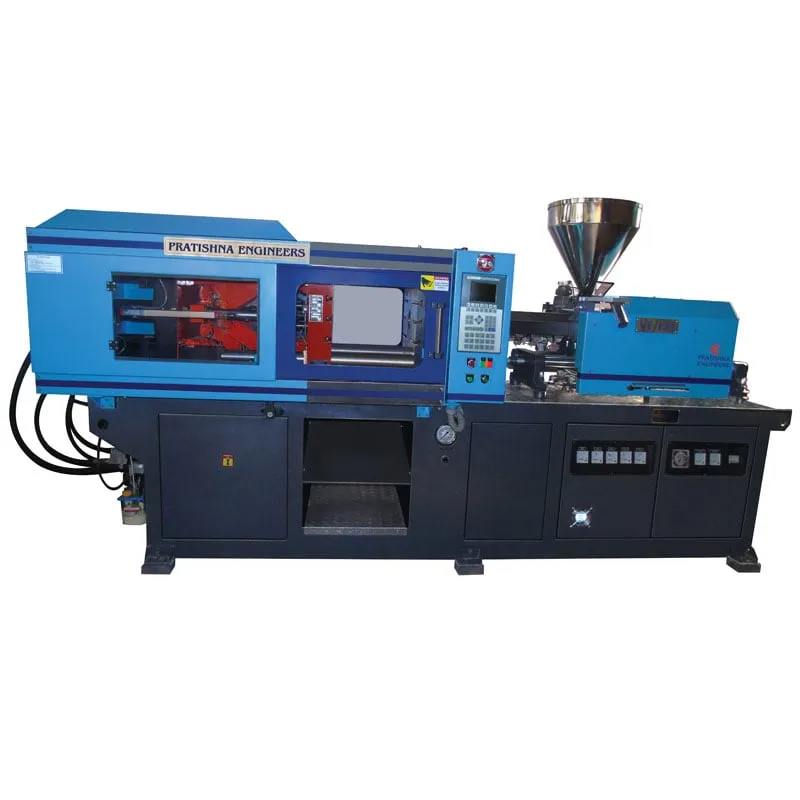

Before you shortlist an injection moulding machine for caps and closures, check these six points against your closure drawing and your target output.
1. Neck finish and closure height, which set part weight, mould height and opening stroke.
2. Cavitation, worked back from daily output, cycle time and good-shot share.
3. Clamp force for all cavities together, with a stated reserve.
4. Injection speed and shot control suited to thin, fast-filling walls.
5. Resin grade, usually HDPE or PP, and its food-contact compliance.
6. Tethered-cap needs if you supply bottlers who export to Europe.
If a machine passes all six, the mould and the cooling water decide the rest.
Key Takeaways
- Size cavitation from the output you must ship, not from the largest mould the clamp can hold; spare clamp costs energy on every cycle.
- Closures are short-cycle, thin-section parts, so injection speed, clamp speed and cooling water capacity matter more than the tonnage on the nameplate.
- HDPE and PP are the usual closure resins; check that the grade carries the BIS designation and food-contact standards your customer asks for.
- A move to a shorter neck finish or a tethered design means new moulds, and possibly a different shot size, stroke and cooling layout.
What decides the cavitation of a closure mould?
Cavitation comes from three numbers: the caps you must ship per hour, the cycle time the closure wall allows, and the share of shots that are good. Divide the hourly target by what one cavity gives per hour, then round up to a mould layout your toolmaker builds.
Cycle time on a closure is mostly cooling. Cooling time rises with the square of wall thickness, so a cap wall 20% thinner needs about 36% less cooling (0.8 squared is 0.64). That is why lightweighting a closure can raise output on the same machine, as long as mould cooling keeps pace.
Good-shot share is the number buyers forget. A mould running 98% good parts loses two caps in every hundred, and short shots in a few cavities often point to an unbalanced hot runner or a blocked cooling circuit rather than a machine fault.
Cavitation also sets the shot and the clamp. Every extra cavity adds projected area and shot weight, so a 48-cavity mould needs a different machine from a 24-cavity mould making the same cap. Settle the cavity count with your mould maker before you ask anyone for a machine proposal.
Closure features and what they ask of the machine
| Closure feature | What it changes | Machine check |
|---|---|---|
| Neck finish (for example, a shorter soft-drink finish) | Closure height and weight | Opening stroke, shot size |
| Cavitation | Projected area, shot weight | Clamp force, platen size, barrel |
| Wall thickness | Cooling time, filling pressure | Injection speed and pressure, chiller capacity |
| Tamper band or tether | Mould actions, ejection | Ejector stroke, core pull or unscrewing outputs |
| Resin (HDPE or PP) | Melt temperature, shrinkage | Barrel heating zones, screw design |
How do you size an injection moulding machine for caps and closures?
Size the clamp from the projected area of every cavity, plus any cold runner, times a tonnage factor for the resin, then add a stated reserve. Size the injection unit so the shot uses 25% to 65% of barrel capacity, and check that injection speed suits thin closure walls.
Most closure moulds run on hot runners, so only the cavities count toward projected area. Published tonnage factors run from 2 to 8 US tons per square inch, with polyethylene at the low end. In metric terms, factors of 2 and 3 equal about 0.281 and 0.422 t/cm². Thin-wall work sits higher, at 5 to 8 US tons per square inch.
Shot size is the second check. Machine ratings are given in grams of polystyrene, and polyolefin melts are lighter, so work in volume rather than grams. Keeping the shot between 25% and 65% of the barrel avoids poor melt uniformity at the low end and unmelt at the high end.
Speed matters as much as force. Thin-wall parts with flow length to wall ratios of 100:1 to 200:1 need high injection velocity and fill times under one second, and the platens must stay stiff enough to stop flash at the parting line. A 10% clamp reserve is a starting margin, not a rule.
Our view: buy injection speed and cooling capacity before you buy tonnage. A closure machine that uses half its clamp is the wrong machine.
Which resins and rules apply to closures in India?
For still water, edible oil and milk, the usual closure resins are HDPE and PP; the FSSAI Packaging Regulations, 2018 suggest PP or HDPE caps for milk, fats and oils, and point to Indian Standards such as IS 10146 for polyethylene and IS 10910 for polypropylene.
Indian resin makers sell bimodal HDPE grades made for closures. One such grade lists an MFR of 1.6 g/10 min, density 0.954 g/cm³, processing at 180 to 220 °C and the BIS designation IS 7328-3B-CB-FDB, with a sister grade carrying slip additive for carbonated-drink closures. Ask for the data sheet before you fix barrel heating and screw design.
Shrinkage is where HDPE closures go wrong. Published mould shrinkage for polyethylene runs from 1.5% to 4.0%, more than PP and far more than amorphous resins, and it moves with melt temperature, cooling rate and wall thickness. A thread that measures right at the press can still drift once the cap has cooled.
Export customers add one more layer. Under EU Directive 2019/904, plastic caps on beverage containers up to 3 litres must stay attached during use from 3 July 2024. A tethered cap needs a new mould and often a different tamper band cut, so plan the change with your bottler first.
What should you send before you ask for a closure machine proposal?
Send the closure drawing, neck finish, cap weight, resin grade, target output per day and the mould maker's cavity layout. With those, a supplier can check clamp, shot, stroke and injection speed against your part rather than a catalogue. See the FMCG packaging solutions page for related applications.
Frequently Asked Questions About Caps and Closures Moulding
Can one machine run both PP and HDPE closures?
Yes, in most cases, because both are polyolefins with similar melt temperatures and screw needs. Purge well between them, check that the barrel heating zones hold both sets of settings, and expect different shrinkage, so thread gauges and mould dimensions may need checking when you switch resin on the same mould.
Why do closure moulds use hot runners?
A hot runner removes the cold runner from every shot, so less resin is reground, the shot is smaller and the cycle is not held back by a thick runner cooling. On high-cavity closure moulds it can also keep filling even, provided each nozzle zone is controlled and balanced.
What is a tethered cap?
A tethered cap stays attached to the bottle after opening. The EU requires this for plastic caps on beverage containers up to 3 litres from 3 July 2024, with harmonised standard EN 17665 covering attachment strength. If you supply exporters, ask whether their European buyers need tethered designs before you order moulds.
How does a shorter neck finish affect the machine?
A shorter neck finish makes the preform and the closure lighter. One published comparison found the PCO 1881 finish saved about 1.3 g of preform and about 0.5 g of a standard 28 mm closure against PCO 1810. Moulds must be retooled, and the lighter shot may sit low in your existing barrel.
How often should closure moulds be checked?
Set the interval by shot count rather than calendar days, and check vents, thread cores, tamper band details and cavity cooling flows. Vents can coin shut under repeated clamping, and a blocked cooling circuit shows first as rising cycle time or out-of-round caps in a few cavities, so log both by cavity.
Related Articles
- Injection Moulding Machine for Medical & Science
- Injection Moulding Machine for Agriculture & Water Management
- How PET Injection Molding Machines Revolutionize the Beverage Industry
- Plastic Injection Machine: Revolutionizing Mass Production
Sources & References
- AIMPLAS: The EU Mandates Attaching Caps to Plastic Bottles and Containers (June 2024)
- Reliance Industries: Relene 54GC016 Technical Data Sheet (Feb 2026)
- FSSAI: Food Safety and Standards (Packaging) Regulations, 2018, compendium
- PlasticsToday, G. Tremblay: Never too thin (Oct 2007)
Technical Disclaimer
Disclaimer: The information provided in this document is for general informational and educational purposes only. It is based on technical references and industry information available at the time of preparation and may be subject to change. It does not constitute engineering, technical, commercial or professional advice, nor does it constitute a quotation, specification, warranty or contractual commitment by Pratishna Engineers.
Actual injection moulding machine and process requirements vary according to the component design, material, mould, production volume, machine configuration and operating conditions. The information, examples, calculations and recommendations provided should be independently evaluated and verified for the specific application before making any equipment, process or production decision. Information obtained from third-party sources remains subject to the accuracy and limitations of those sources.
Limitation of Liability: Pratishna Engineers makes no representation or warranty, express or implied, regarding the completeness, accuracy or suitability of the information for any particular application. To the extent permitted by applicable law, Pratishna Engineers shall not be liable for any loss, damage, cost or consequence arising from reliance on or use of the information contained in this document. Final machine selection, configuration and application suitability should be confirmed with Pratishna Engineers based on complete and accurate project requirements.

