






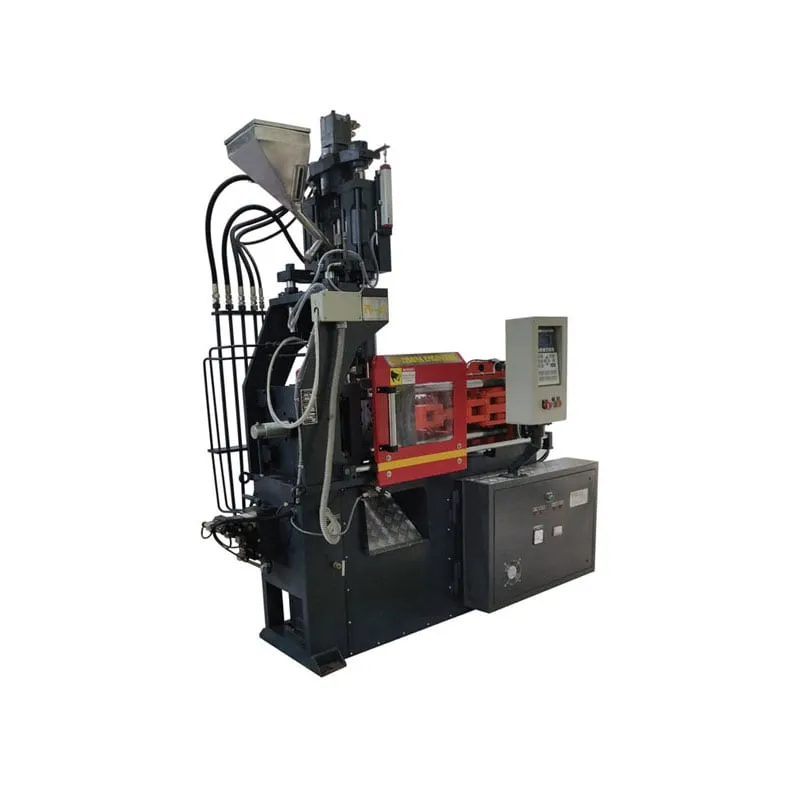

When you search for injection moulding machine manufacturers near me, distance is not about convenience. It decides three things you will feel for years: how fast a service engineer reaches a stopped machine, whether you can run your mould on the maker's floor before you order, and how quickly a failed part comes off a shelf and into your plant. A maker within a short drive turns a breakdown from a lost week into a lost shift. Pratishna Engineers builds its machines in Andheri (E), Mumbai, so this page uses a Mumbai plant as the example, but the same checks work in any city. Read it as a set of questions to put to any nearby maker, not as a ranking.
Key Takeaways
- Measure distance in hours to your gate, not kilometres on a map, because traffic and route decide how long a stopped machine waits for an engineer.
- Run your own mould on the maker's floor before you order; a trial shows fit, fill, cycle and power draw on real steel.
- Ask which spares sit on the shelf at the factory and which must be ordered, then plan your own critical spares around that answer.
- A nearby maker earns its place only if it also builds and tests in-house; a local sales office alone does not shorten a repair.
How close should injection moulding machine manufacturers near me really be?
Close enough that a service engineer can reach your machine within the same shift you call. For a plant running two or three shifts, that usually means a drive of a few hours at peak traffic, not a flight. Beyond that, every breakdown costs a day before diagnosis starts.
Start with the clock, not the map. A short distance across the city can take longer at peak hours than a much longer run on an open highway, so ask the maker where its service engineers are based and how they travel. A team that leaves the factory with tools and common spares in the vehicle is worth more than one that must collect parts first.
Next, ask what happens on the phone before anyone travels. A maker that built the machine can often read alarms, hydraulic pressures and heater faults with your operator over a video call, then bring the right part on the first visit. That first-visit fix rate matters more than the distance itself.
Finally, think about your shifts. If you run round the clock, ask whether the service team attends at night and on Sundays or only during office hours. A machine that stops late on a Saturday and waits until Monday morning has cost you two days of output, however close the factory is.
Why does a mould trial at the maker's factory matter?
A trial on your mould is the only test that shows whether the machine fits, fills and cycles your part before money changes hands. It is far easier to arrange when the maker is nearby, because you can carry the mould over, watch the run and return the same day.
Use the trial to check fit first. The mould should sit within the tie bars, or at least the projected area of the parts must sit inside them, because platens can pull in near the tie bars and wear the parting line. Check the shut height against the machine's range and confirm the opening stroke is at least 2.5 times the part height.
Then watch the process. Note the fill, the cushion, the cooling time the part needs and the dry cycle of the clamp. Weigh parts shot by shot, check dimensions after they settle, and run long enough for the barrel and mould to reach a steady temperature.
Ask to log the power while your mould runs. A clamp-meter data logger can measure a machine in as little as 30 minutes, which gives a real energy figure for your part instead of a nameplate rating. MERC issued a fresh order on MSEDCL tariffs on 25 March 2026, so apply your latest bill to that reading.
What to check during a mould trial at the maker's factory
| Check | What to look for | Why it matters |
|---|---|---|
| Mould fit | Mould within the tie bars; shut height inside the machine range | Platens can pull in near the tie bars and wear the parting line |
| Opening stroke | At least 2.5 times the part height | The part must clear the core and drop or be picked |
| Shot consistency | Steady cushion and part weight, shot to shot | Shows the injection unit holds the process |
| Cycle | Cooling time your part needs, plus clamp dry cycle | Sets your real output per hour |
| Power | Clamp-meter log over at least 30 minutes | Gives running cost on your part, not a nameplate figure |
How quickly can you get spares from a nearby maker?
Ask for a list of spares held at the factory, with likely failures marked. A nearby maker with stock lets you collect a heater band, a valve or a seal the same day, while parts from a distant warehouse add courier time to every repair.
Split spares into two groups. Wear parts such as heater bands, thermocouples, seals, filters and the check ring on the screw tip belong in your own store, because you replace them on a schedule. Larger items such as a servo drive, a pump, a proportional valve or a control card can sit at the maker's end, as long as it can deliver them quickly.
Ask how the maker identifies parts. A machine built in-house comes with the maker's own part numbers and drawings, so the person who answers your call can match a failed part to stock without a site visit. Bought-out components should carry their original make and rating, so you can source them yourself in an emergency.
Keep a short log of every failure in the first year. It tells you which spares to stock next year and gives you facts to discuss with the maker at the annual service visit, instead of memories of the worst breakdown.
What should you ask before you visit a nearby maker?
Ask whether the company designs, machines, assembles and tests the machine itself, and ask to see each of those areas. A nearby trading office cannot shorten a repair the way a nearby factory can, because the people who built the machine are the ones who fix it fastest.
Book the visit on a working day and walk the machine shop, assembly bay and test area. Look for machines at different stages of assembly, test records beside finished machines and a stores area with spares on labelled racks. These are hard to stage for a single visit.
Ask to speak with a service engineer, not only the sales team. Find out how many machines each engineer looks after, which areas they cover and how calls are logged and closed. A clear call log with response and repair times is better evidence than any brochure.
Finally, ask for two or three customer references in your own region and phone them before you order. Ask how long their last breakdown took to fix, measured from the call to the first good part, and whether the maker kept the response time it promised.
How Pratishna Engineers supports plants near Mumbai
Pratishna Engineers was founded in Mumbai in 1991 by Nandkumar R. Kushe, a first-generation engineer, and works from A1-4, Vaibhav Ind. Premises, Saki Vihar Road, Andheri (E), Mumbai 400 072. Its Mumbai manufacturing facilities cover about 25,000 sq ft, with CNC turning centres, vertical and horizontal machining centres, jig boring machines, and assembly and testing facilities.
Design, manufacturing, assembly, testing and service are done in-house, which is the point of buying from a nearby maker: the people who answer your service call work under the same roof as the people who designed the machine. With 35+ years of experience, 9,000+ machines and 1,000+ customers in India and international markets, the team can talk through your part before suggesting a machine.
- Range: horizontal, vertical, PET, two-platen and hybrid machines, plus special-purpose builds.
- Selection order: Component, Material, Mould, Production Requirement, Machine Configuration.
What should you do before calling a nearby maker?
Write down your part, material, mould size and shut height, the output you need per shift and the response time your plant can live with. Send that to two or three makers you can reach in a few hours, and book trials with the ones that answer clearly. Start with the injection moulding machine range.
Frequently Asked Questions About Injection Moulding Machine Manufacturers Near You
Does a nearby manufacturer always give faster service?
Not always. Distance only helps if the maker keeps service engineers and spares at the same site and answers calls outside office hours. Ask for its call log, the average time from call to arrival and the share of faults fixed on the first visit, then compare those figures rather than kilometres.
Can I take my mould to a manufacturer for a trial before buying?
Makers that build machines in-house can often arrange a trial if a suitable machine is free on the assembly or test floor. Bring the mould, a sample of your material, the part drawing and your target cycle. Agree in advance what will be measured and who keeps the trial parts.
Which spares should I keep in my own plant?
Keep the wear parts you replace on a schedule: heater bands, thermocouples, seals, filters, hydraulic oil and the check ring assembly for your screw size. Hold one of each part whose failure stops the machine and whose lead time is longer than a day. Review the list after twelve months of running.
Is buying from a local trader the same as buying from a local manufacturer?
No. A trader may stock machines and arrange service, but design, assembly and testing happen elsewhere, so complex faults can still wait for someone from the factory. Ask who built the machine, where it was tested and which people will attend a breakdown before treating a local office as a local maker.
Where is Pratishna Engineers located in Mumbai?
Pratishna Engineers is at A1-4, Vaibhav Ind. Premises, Opp. Oxford Chambers, Saki Vihar Road, Andheri (E), Mumbai 400 072. Design, manufacturing, assembly, testing and service are done in-house at its Mumbai facilities, so you can arrange a visit to see machines under assembly and discuss your part with the engineering team.
What should a service agreement with a nearby maker include?
It should state the response time for a call, the hours covered, which spares are held for your machine, the charge basis for visits after warranty, and how remote diagnosis works. Ask for these terms in writing with the order, so both sides measure the same thing when a machine stops.
Related Articles
- Injection Moulding Machine Suppliers Comparison Mumbai
- Injection Moulding Machine Price in Mumbai
- Why PVDL Series Vertical Locking Machines Are Ideal for Medical Equipment Parts
- Why Electric Injection Moulding Machines Are Becoming Industry Favorites
Sources & References
- MoldMaking Technology, B. Catoen: Machine Sizing and Specification for Optimal Mold Performance, Part 1 (Aug 2025)
- PlasticsToday, R. Kent: Getting to know your real energy use and cost (Jan 2010)
- Deccan Chamber of Commerce, Industries and Agriculture, Pune: Circular No. 085: MERC Order dated 25th March 2026 (27 Mar 2026)
Technical Disclaimer
Disclaimer: The information provided in this document is for general informational and educational purposes only. It is based on technical references and industry information available at the time of preparation and may be subject to change. It does not constitute engineering, technical, commercial or professional advice, nor does it constitute a quotation, specification, warranty or contractual commitment by Pratishna Engineers.
Actual injection moulding machine and process requirements vary according to the component design, material, mould, production volume, machine configuration and operating conditions. The information, examples, calculations and recommendations provided should be independently evaluated and verified for the specific application before making any equipment, process or production decision. Information obtained from third-party sources remains subject to the accuracy and limitations of those sources.
Limitation of Liability: Pratishna Engineers makes no representation or warranty, express or implied, regarding the completeness, accuracy or suitability of the information for any particular application. To the extent permitted by applicable law, Pratishna Engineers shall not be liable for any loss, damage, cost or consequence arising from reliance on or use of the information contained in this document. Final machine selection, configuration and application suitability should be confirmed with Pratishna Engineers based on complete and accurate project requirements.

