






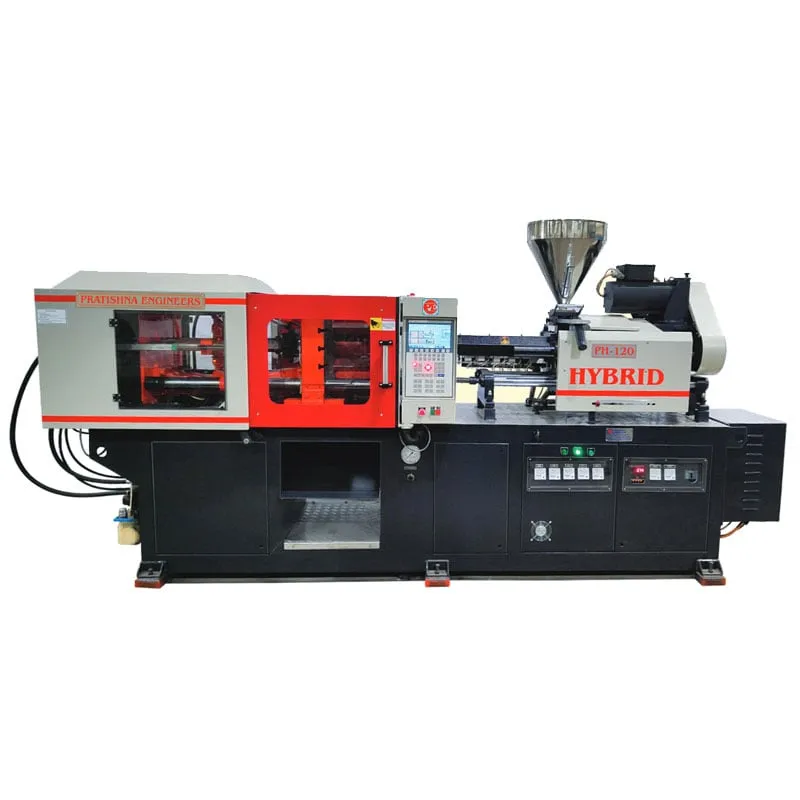

Use this four-point checklist to judge electric injection molding machine benefits against your own jobs.
1. Base load: does the job spend long spells in hold, cooling or idle while a hydraulic pump keeps running?
2. Repeatability: do your parts need tight shot weight and dimensions, hour after hour?
3. Billing: do you pay for energy on kVAh, where idle draw shows up on every bill?
4. Clamp and cores: does the mould need long, high-force hold or hydraulic core pulls?
Yes to the first three and no to the fourth makes a strong case for all-electric. A yes on the fourth points to hydraulic or hybrid.
Key Takeaways
- All-electric and hybrid machines run at a base load of about 10 to 20% of total energy, against 75% or more on a standard hydraulic machine.
- Electric injection reads plastic pressure directly, at an effective 1:1 ratio, which removes oil as a source of drift in shot weight and pressure.
- In Maharashtra, MSEDCL bills many industrial users on kVAh, so idle draw and poor power factor both add to the energy you pay for.
- Large clamps, long high-force holds and hydraulic cores still favour hydraulic or hybrid machines; buy the drive for the job, not the label.
What are the real electric injection molding machine benefits?
The main gain is energy at low demand. An all-electric machine drives each axis with its own servo motor, so it draws little power while the mould is closed and cooling. Base load drops to about 10 to 20% of total energy, mostly barrel heating.
Compare that with a standard hydraulic machine, where base load can be 75% or more of total energy, because the pump keeps turning whether the screw moves or not. One energy guide for moulders puts possible all-electric savings at up to 60%, and notes that ten years of energy usually exceeds the purchase cost.
Idle time widens the gap. Measurements on idling machines found them drawing 52% to 97.5% of their full moulding energy. A hydraulic machine waiting for a mould change or a material delay keeps paying for its pump, while an electric machine in the same wait draws mainly heater power.
The gain shrinks on jobs where the machine is busy all the time, such as thick parts with long, high-pressure hold. There the load is real work rather than waste, and the difference between drive types narrows. Measure your own duty cycle before you count on the headline figure.
Under kVAh billing the waste costs a little more again. MSEDCL bills energy on kVAh, and at a power factor of 0.85, 15% of the power drawn does no useful work. Capacitors or an APFC panel correct the power factor, but only a lower base load cuts the energy underneath it.
Why do electric machines repeat shot weight more closely?
An electric injection unit moves the screw with a servo motor and ball screw, so position and speed follow the controller. There is no oil to warm up, compress or leak past seals, which removes one source of drift between the first shot of a shift and the last.
Pressure reading is the second difference. On a hydraulic machine, plastic pressure is worked out from oil pressure through the intensification ratio, which ranges from about 6:1 to 43:1 and changes with screw size. Electric machines read plastic pressure directly, so the figure on the screen is the figure in the melt.
Drive types compared on the points that decide the choice
| Point | Hydraulic (fixed pump) | Hybrid (hydraulic clamp, electric injection) | All-electric |
|---|---|---|---|
| Base load share of total energy | 75% or more on standard machines | About 10 to 20% | About 10 to 20%, mostly barrel heating |
| Plastic pressure reading | From oil pressure via intensification ratio | From the electric injection drive | Direct, effectively 1:1 |
| Long, high-force hold | Suited | Suited | Check servo duty rating |
| Hydraulic core pulls | Built in | Built in | Needs a separate power pack or electric cores |
| Typical best fit | Large clamps, simple long-hold jobs | Mid-size jobs needing clamp force and repeat shots | Small precise parts, long hours at low demand |
That matters most for small, precise parts: connectors, medical components, optical parts and thin-wall packaging. A small change in shot volume is a large share of a small shot, so any drift shows up quickly as short shots or flash.
Repeatability still depends on the rest of the process. Dry resin, a steady mould temperature and a barrel sized so the shot sits in its normal window matter as much as the drive. An electric machine will repeat a poor process as faithfully as a good one.
Where does a hydraulic or hybrid machine still fit better?
Hydraulic and hybrid machines still fit large clamps, long high-force hold, deep moulds and moulds with hydraulic cores or unscrewing. A hybrid keeps a hydraulic clamp and moves injection to an electric drive, so you gain much of the shot repeatability without giving up clamp force.
Clamp style plays a part. Toggle clamps are valued for reliability, simplicity and rigidity, and are reported to lock up slightly faster with greater opening force, which suits deep-draw parts. Direct hydraulic clamping is reported to give finer pressure control, mould protection and a wider die-height range.
Older hydraulic machines also have a route short of replacement. Many still run fixed-speed, fixed-volume pumps with very high energy demand. Variable-speed motors, variable-volume pumps or servo motors on fixed pumps can cut that demand, and some new hydraulic machines come close to all-electric energy use.
A flat view from the shop floor: buy electric for the job, not for the label. If the part is small, precise and runs long hours, the case is strong. If the part is large, thick and clamp-heavy, a well-specified servo hydraulic or hybrid machine will usually serve you better.
How should you compare drive types for your own jobs?
Log one month of running hours, idle time and kVAh for the machine you plan to replace, list the parts the new machine will run, and note any hydraulic cores. Then set the energy saved against the extra purchase cost of each drive. See the hybrid injection moulding machine page for a middle route.
Frequently Asked Questions About Electric Injection Moulding Machines
Does an all-electric machine use hydraulic oil at all?
The main axes do not. Clamp, injection, screw rotation and ejection run on servo motors and mechanical drives. Some machines still carry a small hydraulic unit for core pulls or nozzle movement, so check the specification. Less oil means fewer leaks and less cooling load, but not always zero oil in the building.
Is an electric machine always cheaper to run?
Not always. The saving comes mainly from low base load and low idle draw. On a job where the machine works hard all cycle, with long high-pressure hold on thick parts, the gap narrows. Measure your own duty cycle and idle hours before you rely on a published saving figure.
Can an all-electric machine run moulds with hydraulic cores?
It can, with an added hydraulic power pack or by converting the cores to electric drives. Both add cost and complexity. If most of your moulds use hydraulic cores or unscrewing, a hybrid or servo hydraulic machine may be the simpler choice, since the hydraulics are already built in.
Can an old hydraulic machine be upgraded instead of replaced?
Often, yes. Machines with fixed-speed, fixed-volume pumps can take a variable-speed motor, a variable-volume pump or a servo motor on a fixed pump. These cut energy when oil is not needed. Check the frame, hydraulics and controls are sound first, because an upgrade will not fix a worn machine.
How do I measure what my current machine really uses?
Fit a clamp-meter data logger on the machine supply while it runs a normal job. A useful reading can come in as little as 30 minutes; average heater load over 10 to 15 minutes. Log idle periods separately, because idle draw is where hydraulic and electric machines differ most.
Related Articles
- Why PVDL Series Vertical Locking Machines Are Ideal for Medical Equipment Parts
- Why Automatic Injection Moulding Machines Are Perfect for Mass Production
- Hybrid Injection Moulding Machine for High-Efficiency Manufacturing
- Hybrid Injection Moulding Machine: Revolutionizing Production
Sources & References
- ExxonMobil, AMI and Tangram Technology: An Energy Saving Guide for Injection Moulders
- Plastics Technology, J. Bozzelli: Understanding Intensification Ratio
- PlasticsToday, R. Kent: Getting to know your real energy use and cost (Jan 2010)
- MSEDCL: kVAh Billing: Frequently Asked Questions
Technical Disclaimer
Disclaimer: The information provided in this document is for general informational and educational purposes only. It is based on technical references and industry information available at the time of preparation and may be subject to change. It does not constitute engineering, technical, commercial or professional advice, nor does it constitute a quotation, specification, warranty or contractual commitment by Pratishna Engineers.
Actual injection moulding machine and process requirements vary according to the component design, material, mould, production volume, machine configuration and operating conditions. The information, examples, calculations and recommendations provided should be independently evaluated and verified for the specific application before making any equipment, process or production decision. Information obtained from third-party sources remains subject to the accuracy and limitations of those sources.
Limitation of Liability: Pratishna Engineers makes no representation or warranty, express or implied, regarding the completeness, accuracy or suitability of the information for any particular application. To the extent permitted by applicable law, Pratishna Engineers shall not be liable for any loss, damage, cost or consequence arising from reliance on or use of the information contained in this document. Final machine selection, configuration and application suitability should be confirmed with Pratishna Engineers based on complete and accurate project requirements.

